
WEEK FOUR · CARRIACOU FIELD REPORT
On Carriacou, Grenada, Caribbean Reef Buddy is testing something our research couldn’t find anywhere else: growing plate corals from broken pieces, right on the reef.
Gaëlle Frères held up a photo of scroll coral. A spiral opening into a flat plate. Greenish brown in the middle, pale at the rim. She tapped the rim.
“Don’t touch this edge. This is where the growth happens!”
That was the most important point of the briefing before our first collection dive. It was also the start of something new. For years, Caribbean Reef Buddy volunteers on Carriacou have done the same work. They find coral that storms have knocked loose. Then, they tie it into the nursery. The next week, they return to brush off the algae. This week, Gaëlle, who manages operations for Caribbean Reef Buddy, wanted us to try something unique. We couldn’t find anyone else doing it. Take loose plate corals, break them into pieces, and hang the pieces in the garden to grow.
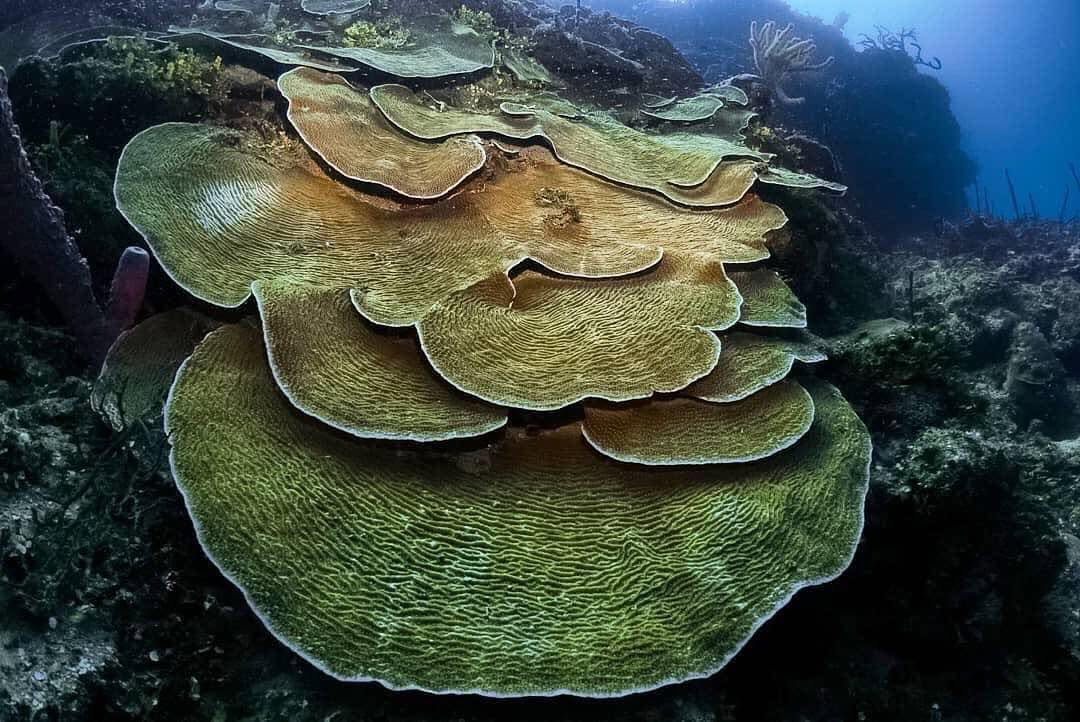
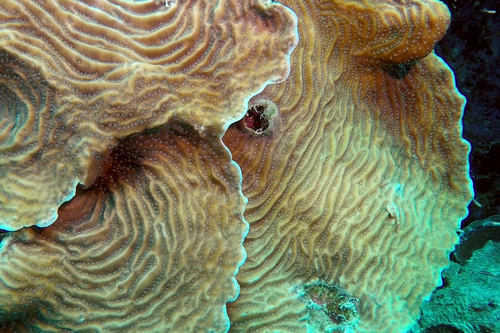
She chose two species: (Left) Scroll coral (Agaricia undata). Photo Credit: Christian Chiva. (Right) Whitestar or Lamarck’s sheet coral (Agaricia lamarcki). Photo Credit: Tom Heijnen
Here’s why.
They’re what’s left. Stony coral tissue loss disease (SCTLD) killed 70-80% of Grenada’s stony corals, including brain corals, during 2022 and 2023. Then, Hurricane Beryl wiped out the branching corals off Carriacou in 2024.
They’re healthy. SCTLD is still active on some of the island’s brain corals. It eats living tissue and leaves behind a white skeleton. Plate corals catch it too, but less often. So, the plate-coral wall at Upper Lighthouse, off Sandy Island, is thriving. Put a sick coral in a nursery, and you spread the problem.
There’s no lab. Florida labs cut stony corals into tiny pieces and grow them in land-based rearing tanks. Carriacou has no rearing tanks. Rearing tanks require more infrastructure, personnel, monitoring, and reliable power. Whatever Reef Buddy does has to happen in the ocean, with what’s on hand.
Gaëlle has worked this way before. On Pom Pom Island, close to Malaysian Borneo, she taught at TRACC, the Tropical Research and Conservation Center. Her students were volunteers. They learned to dive, trained to be divemasters, or worked as research assistants. She also helped lead the teams that laid out TRACC’s coral gardens.
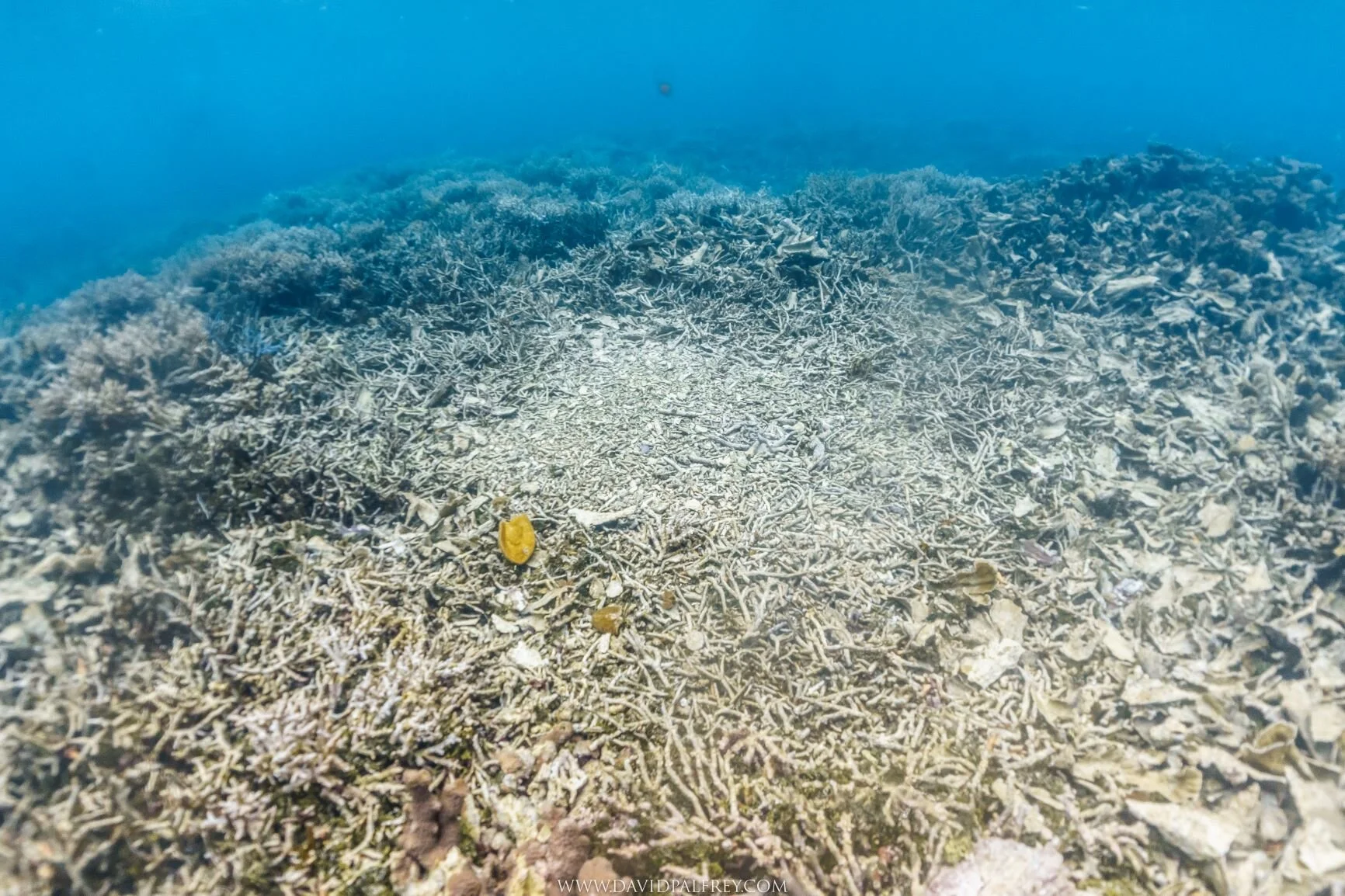
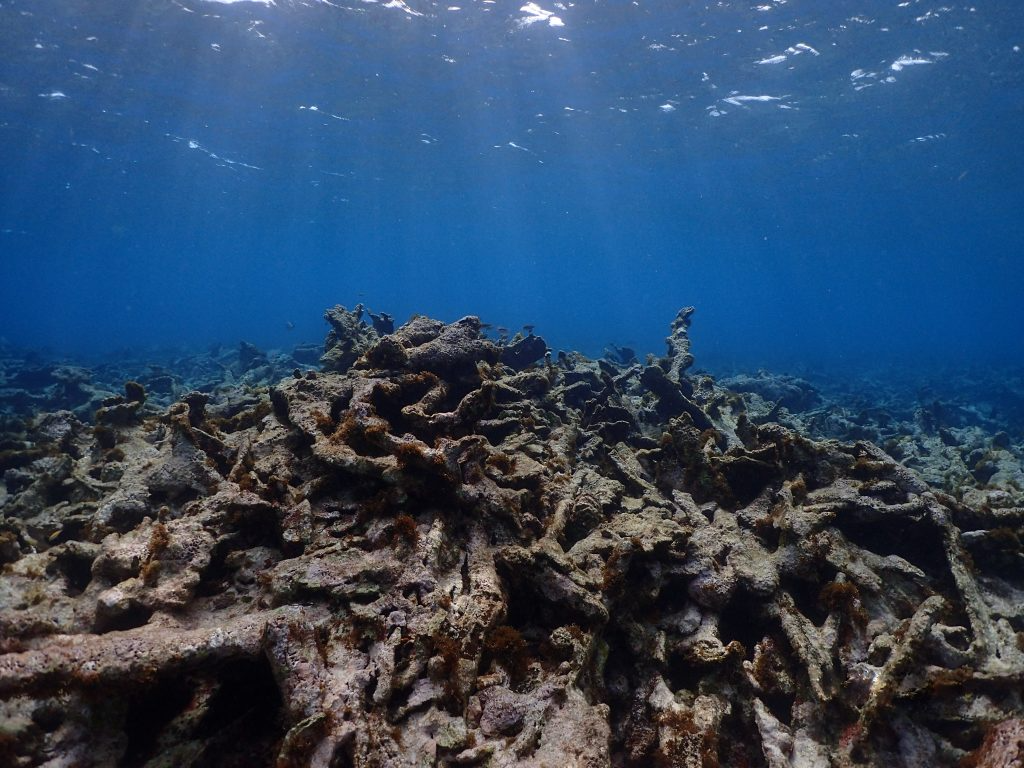
Once thriving coral reefs are now fields of dead coral skeletons covered in algae. (Left) Result of blast fishing in Malaysia. Photo Source: David Palfrey. (Right) Result of coral disease, ocean warming, and hurricane damage in the Caribbean. Photo Source: Ken Nedimyer
Fishermen used explosives to fish on Pom Pom’s reefs decades ago. Blast fishing is now illegal in Malaysia. The rubble remains, and coral cover fell to less than 5 percent. So TRACC built frames for coral to grow on. Divers choose healthy pieces that have come loose. They break these into smaller bits and either glue them onto frames or place them on cement biscuits. Gaëlle made those biscuits herself. Divers take pieces from many different colonies, so the reef doesn’t fill up with clones. And it all happens in the ocean.
TRACC’s team wrote one line every restoration program should tape to the wall: Pom Pom “does not play by the rules.” So, you test it, write it down, and do it better next time.
That’s the bigger goal here. Reef Buddy is restarting a coral propagation program. Volunteers can learn to divide and grow coral instead of only collecting it. Her volunteers took the same journey on Pom Pom. They began with no experience, assisted with research dives, and ended as divemasters. Propagation is the newest activity. This week was the pilot. We were the first class.
Deefer Dive Center’s new owner wants exactly that. Kevin Pernick is retiring from a finance job and finishing a master’s in marine biology. He already holds a doctorate in management. He wants the shop to try things, test them, and keep good records. Reef Buddy aims to publish peer-reviewed research with university partners. Kevin wants the universities to focus their research on Carriacou. A propagation program with real data is one way to give them a reason.
The growing edge
Reef Buddy’s coral garden is located off Jack-a-Dan Island, about 30 feet (9 meters) deep. It includes wire frames, cement biscuits, and structures made from cement and old beer bottles. If you read last week’s piece, you know that the heat destroyed the nursery in 2023 and a hurricane hit it in 2024. The nursery has only been growing corals big enough to replant since spring 2025.
Branching corals grow quickly and can break easily. This makes them ideal for nurseries. However, no staghorn or elkhorn corals remain on Carriacou. So we needed to find a new species to propagate. Plate corals are thin, leaf-like, and brittle. They make what branching corals can't. They create ledges and overhangs that protect young fish. They also form shingled tiers on a wall.
And they grow from one place. The thin, pale rim is the leading edge, where the plate adds new tissue. A piece cut from the middle of a sheet has no leading edge, and it may never grow.
We couldn’t find published propagation guidelines for either species. The closest was a 2018 experiment in Utila, Honduras, led by Jack Laverick. Whitestar fragments at 122 feet (37 meters) survived a bleaching event better than those at 40 feet (12 meters). We used NOAA’s restoration guide to create a plan. This plan involves collecting, fragmenting, and hanging the coral. We also focus on protecting the growing edge.
Thirty pieces of coral, two species, one week. Here’s what happened.
Tuesday: Garden preparation
Gaëlle made two long dives at the Jack-a-Dan South nursery. She surveyed, cleaned, measured, and planned where to place the plate coral fragments. Oscar and Teagan, the other volunteers, scraped fire coral from the rebar frames. This is where the plates would hang.
Fire coral is a stinging hydroid that colonizes anything left in the water. If you brush up against it, it burns almost at once, leaving red, swollen welts. The itchy rash can last two weeks, and it sometimes comes back days later, long after you think it’s healed. Clearing it off a frame is an hour of careful work in gloves. That’s the part of coral restoration nobody enjoys.
Wednesday: Seventeen pieces
The briefing guidelines called for pieces from hand size to 16 inches (40 centimeters). Loose pieces only. Nothing pried from the reef, nothing diseased. Handle it as little as possible.
We dove Upper Lighthouse at depths of 40 to 60 feet (12 to 18 meters). In forty-eight minutes, we collected seventeen pieces. Broken plates litter the reef, evidence of storm damage at the shallow edge of the corals’ range.
On the boat, the pieces went into shaded bins of seawater. Almost right away, they started releasing mucus. This is a coral's stress response. We picked up nine Whitestar, seven Scroll, and one Star Coral. The biggest was 10 by 14 inches (26 by 38 centimeters). The smallest fit in my palm.
Then the schedule caught up with us. Deefer’s open-water students needed the boat, and we needed about two and a half hours to complete the work. So, we did something the plan hadn’t anticipated. We dove to Jack-a-Dan East and left the coral fragments on the bottom overnight.
That afternoon, Gaëlle and I cut recovered fishing line into 8-foot (2.5-meter) lengths. It came from under the Hillsborough pier. On Monday, during a Dive Against Debris, we pulled up over fifty pounds of trash from under the dock. This included a heavy line a longliner had cut. Thick as a pencil lead, stiff as wire.
Thursday: three cuts
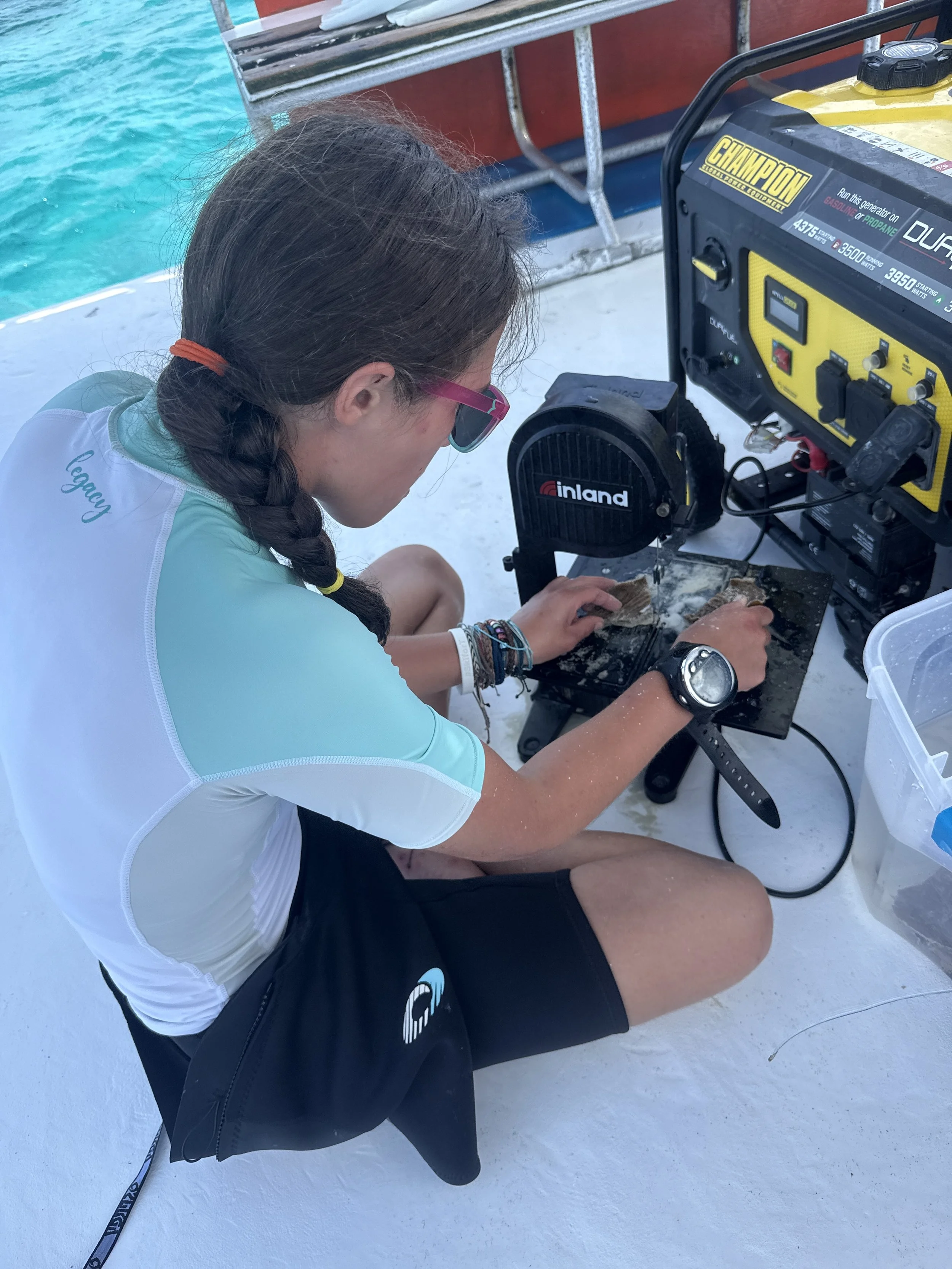
Teagan using the coral saw and a generator on the boat to fragment coral. The goal was to minimize time out of the water and return it quickly to the coral garden. Photo Credit: Denny Frazier
We’d asked everyone to come early to learn the knots we’d use. It’s the kind of idea that seems sensible the day before. The line was too stiff to tie a knot. At the dive site, another boat took the garden’s mooring. As a result, Gaëlle had to swim 650 feet (200 meters) against the current to fetch yesterday’s coral. It was hard on her, and it was hard on the coral.
Then we set up the saw, an Inland DB-100 water-cooled diamond band saw. Oscar had serviced it Monday. On a rolling deck, it made three clean cuts. Then it stopped, and no one on the boat could fix it.
So, we broke the rest by hand. We held each sheet at the edge and snapped it like a cracker, leaving a wedge with a piece of growing rim attached. Not the clean cut the plan called for. But plate corals break apart on their own. In Jamaica, researchers found that Whitestar often breaks into smaller pieces. These pieces continue to grow. And it heals well. In the Virgin Islands, scientists made small cuts in Whitestar colonies. They worked at depths between 43 and 135 feet (13 to 41 meters). Every one healed.
Since the knots didn’t work, we switched to zip ties to connect each fragment to the line. Three fragments to a line, 8 inches (20 centimeters) apart. It was crude. It was also the first thing that day that went quickly. And on Pom Pom, the island’s resort has zip-tied coral to steel frames since 2014. Give coral time, and it grows right over the tie.
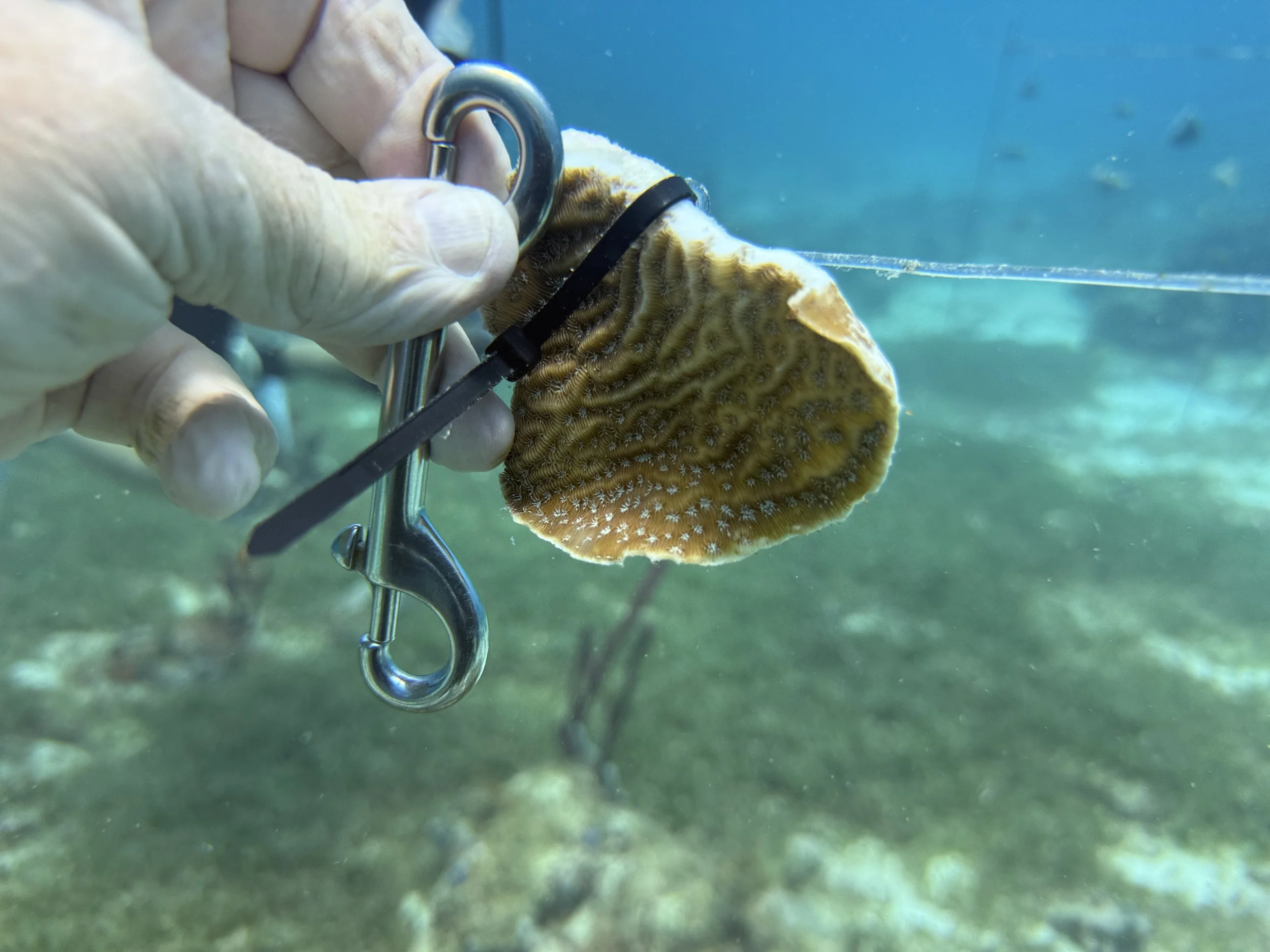
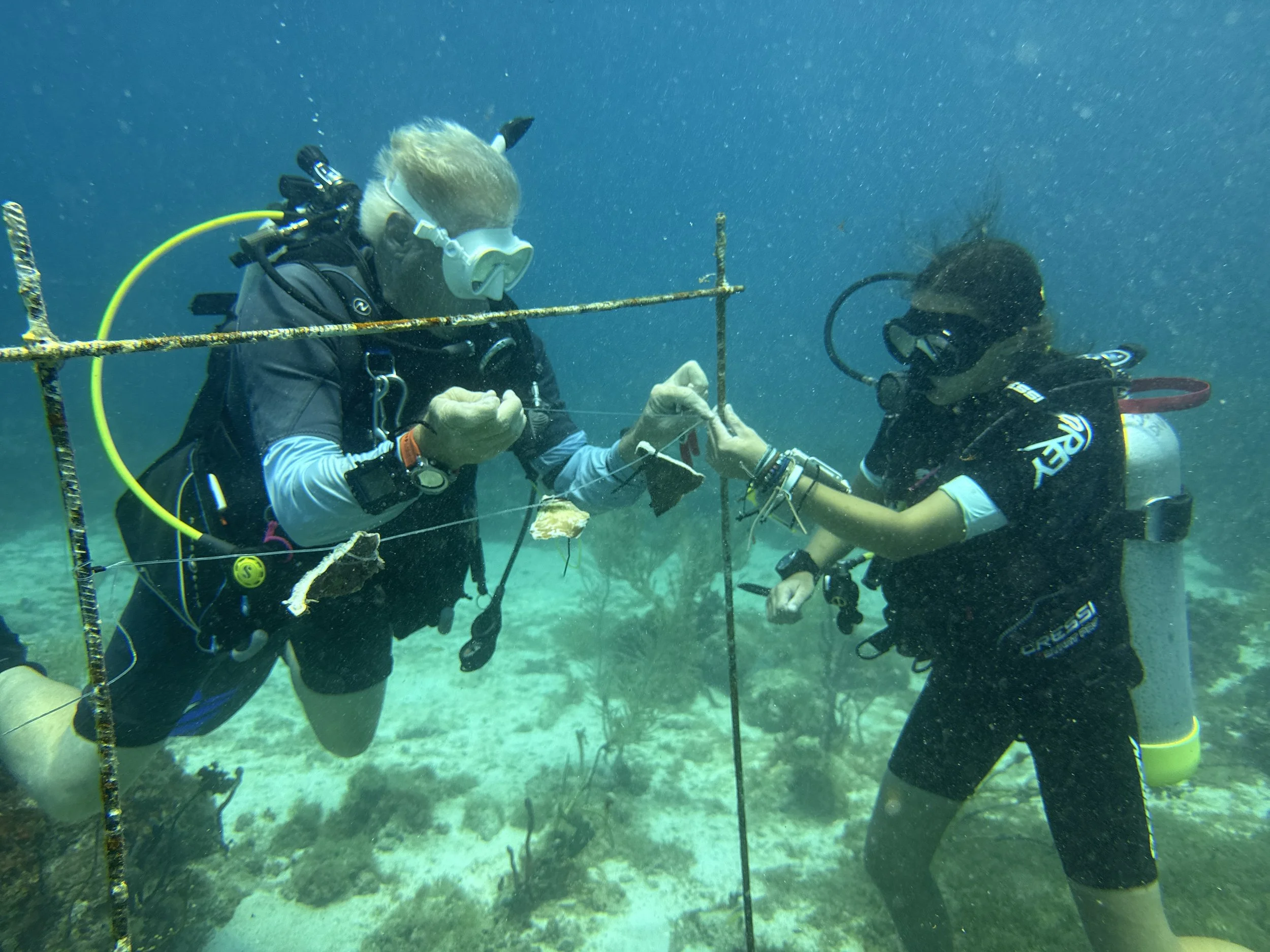
(Above)White Star (Lamark) Plate Coral. Photo Credit: Denny Frazier. (Below) Attaching the line on the rebar door frame. Photo Credit: Gaëlle Frères
We hung ten lines with thirty pieces of coral in total.
We split into two teams, one per rebar frame. We crimped each line to both uprights, so its three fragments hung in open water with their edges free. Five lines per frame. Fifty-seven minutes later, we photographed every fragment and surfaced.
Why not rearing tanks?
The saw that quit is the same tool that changed coral restoration.
In Florida, Mote Marine Laboratory cuts stony corals into tiny pieces. They glue these pieces to ceramic tiles and grow them in tanks on land. Cut coral heals fast, and small pieces have a lot of edge for their size. Mote calls it microfragmentation. Planted close together on a dead reef, the pieces fuse back into one colony. In a 2018 field trial, mountainous star coral grown this way produced ten times more living tissue than a larger fragment. But this only worked if fish didn’t eat the small pieces first.
So why doesn’t Carriacou do it? Chad Scott from Conservation Diver often receives questions about his Indo-Pacific centers. His answer fits this island almost word for word.
Rearing tanks need lights, pumps, and chillers, and they all run on electricity. Scott’s centers lose power every week. So does Carriacou, where our saw ran on a borrowed generator. A rearing tank that overheats for one afternoon can kill a year of work. Tanks also need daily monitoring, plus antibiotic dips and trained staff. A reef nursery needs a weekly visit. The ocean handles the rest.
And there’s a bigger question: what does this reef need? Microfragmentation helps with triage for rare species. Some have only a few dozen colonies, and each is too small to reproduce. But it multiplies one coral’s DNA. Scott prefers to have many parents. This genetic variety helps a reef survive unseen threats. That’s Gaëlle’s plan. Seventeen loose pieces from across Upper Lighthouse could come from many colonies. They heal in real seawater, under real light, with nothing to plug in.
Belize found a middle path. Fragments of Hope has created over twenty-three open-water nurseries. Some use steel tables with rope, a technique like our longline. In 2017, founder Lisa Carne and Mote’s David Vaughan cut elkhorn coral into small pieces. They planted these pieces directly on the reef, skipping rearing tanks or a nursery. Every piece survived its first month. They concluded that elkhorn pieces 5 centimeters (2 inches) or larger can skip the nursery.
Researchers have studied elkhorn for decades. As far as we could find, nobody has done this with plate corals. That’s the step Reef Buddy is taking now.
The plan and the pilot.
I want to talk about the plan we built, because the plan and the fieldwork diverged. The plan included a clean cut. Then we epoxied the fragments to cement biscuits. Finally, we placed them on a nursery rack. We used the frames that held the staghorn and elkhorn coral before Hurricane Beryl hit. We broke the plate fragments into smaller pieces, zip-tied them, and hung them on the frames. The plan also called for attaching the fragments and placing them in the garden within a few hours. Instead, they spent a night on the bottom.
None of that is a complaint. It’s the pilot.
A pilot helps improve the next attempt. Here’s the list of things to bring next time:
· Soap-free bucket to keep coral cool on deck
· Ruler or micrometer to document size
· Laminated Plate Coral ID cards, since plate corals look alike
· Drill to drill a hole in each fragment for the zip tie
· Dedicated boat for deployment
· Working coral band saw or hand tools to fragment
And a decision about heat. NOAA’s heat-stress alerts sat at Level 2 on the islands to the north, Martinique, St. Lucia, and St. Vincent, all summer, with an El Niño building. If the water warms here, those thirty fragments will show it first. The plan says shade them. Somebody must be there to do it.
What thirty pieces are worth
Here’s the number I keep coming back to. Not thirty. Two.
Two full-time staff, three volunteers, and a borrowed generator. A saw that stopped working. Recycled fishing line. That’s what plate-coral restoration on Carriacou looked like in September 2026. No lab. No boat of its own. A program has restarted its garden three times since 2023. This week, it tried a type of coral that no one else seems to be growing.
The reef would thrive with shelf coral. This type of coral grows on shelves, overhangs, and wall shingles.
A reef is rebuilt out of what’s left. The question is whether the people rebuilding it get to stay long enough to see it grow.
What you can do
Fund the boring things. A dedicated boat day, a working saw, a bucket. Restoration runs on gear nobody photographs.
Look at the pale edge. When you see a plate coral on a wall, that rim is the part that’s alive and growing. Don’t touch it.
If you can travel, volunteer with Caribbean Reef Buddy between May and September. Courses last from two weeks for beginners to twelve weeks for divemaster training. You can start without any experience.
Sources
Field notes and dive log, Carriacou, September 14–18, 2026. Plate Coral Fragmentation Pilot plan and diver briefing (September 14, 2026). Laverick & Rogers, Marine Environmental Research 134:37–43 (2018). Hughes & Jackson, “Population dynamics and life histories of foliaceous corals,” Ecological Monographs 55(2):141–166 (1985). Townsend et al., Coral Reefs 42 (2023). Forsman et al., PeerJ 3:e1313 (2015). Page, Muller & Vaughan, Ecological Engineering 123:86–94 (2018). Page & Vaughan, “The cultivation of massive corals using ‘micro-fragmentation’…,” poster, Mote Marine Laboratory (c. 2014). Carne & Vaughan, “Eliminating nursery time in Belize by adapting micro-fragmenting for direct outplanting…,” Reef Futures 2018 abstract. Chad Scott, Conservation Diver, “Coral Microfragmentation: what it is, and why we are not doing it” (YouTube). Fragments of Hope (fragmentsofhope.org). TRACC (tracc.org), including “Coral Fragmentation.” CORDAP, “Back from the blast.” Pom Pom Island Resort, “Coral Reef Restoration.” Caribbean Reef Buddy (caribbeanreefbuddy.org). NOAA Coral Reef Watch.
