
Why 30×30 Is a Floor, Not a Ceiling
Protecting 30% of the ocean by 2030 is the minimum the science demands — and right now, we’re moving in the wrong direction
By Denny Frazier · June 2026
BREAKING · June 2026
The Trump administration has now opened all five American marine national monuments to commercial fishing — including Papāhānaumokuākea, the Mariana Trench, and Rose Atoll. These actions are being challenged in federal court. The rollback of US ocean protections is the largest in American history.
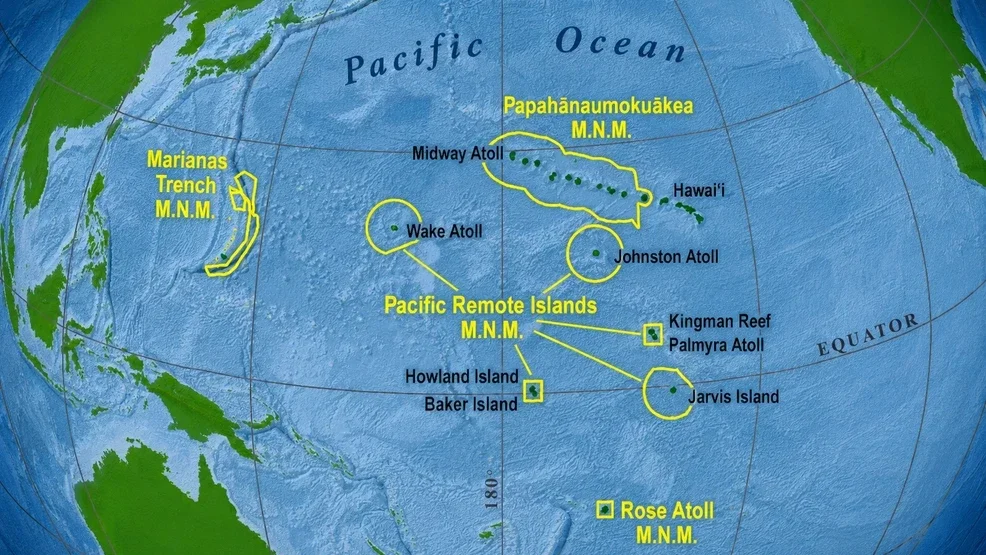
Source: KVAL 13 News
I’ve been diving Bonaire long enough to know what real protection looks like.
The fish are bigger. There are more of them. The coral cover is higher than on unprotected reefs in the same region. You feel it the moment you drop below the surface — a reef that’s been allowed to recover, managed for decades, defended from the pressure that has hollowed out so much of the Caribbean. That’s not luck. It’s what protection actually does.
So when I hear 30×30 described as ambitious, or bold, or a stretch goal — I want to push back.
Thirty percent isn’t ambitious. It’s the minimum. Ecologists didn’t arrive at that number through political horse-trading. They arrived at it through the science of how reefs recover, how fish populations rebuild, how ecosystems survive stress and bounce back. Below 30 percent, the losses compound. The math stops working in our favor.
We’ve spent years celebrating progress toward doing the least the science says is necessary. And right now, we’re not even doing that.
Where We Actually Stand
About 10 percent of the global ocean is now designated as protected. That sounds like real progress toward 30. It isn’t the full story.
Of that 10 percent, only around 3.3 percent is effectively protected — active management, real enforcement, actual prohibitions on destructive activities. The rest is paper. Bottom trawling continues inside many designated marine protected areas. Industrial fishing operates where it was supposed to stop. That gap — between designation and protection — isn’t a technicality. It’s the difference between a reef that’s recovering and one that isn’t.
10%
of ocean designated as protected globally — but only 3.3% is effectively enforced (MPAtlas, March 2026)
The money tells the same story. Just $1.2 billion a year flows to ocean protection globally. The price tag for actually delivering 30×30 is $15.8 billion annually. That gap — $14.6 billion — is less than half a percent of what the world spends on defense each year. We’re not failing for lack of resources. We’re failing for lack of will.
At current rates, the world will protect roughly ten percent of the ocean by 2030. Not 30. Ten. And that assumes no further rollbacks. Which brings us to the United States.
The American Retreat
In April 2025, President Trump signed an executive order to review all existing marine national monuments — with the goal of opening them to commercial fishing. The rationale was American seafood competitiveness. The reality has been the systematic unraveling of protections built over decades, by administrations of both parties, Republican and Democrat alike.
The Pacific Islands Heritage Monument went first. A federal court in Honolulu ruled the action violated required legal processes — but the fight continues. The Northeast Canyons and Seamounts off New England followed in February 2026. And just this week, three more: parts of Papāhānaumokuākea, the Mariana Trench, Rose Atoll.
All five of America’s marine national monuments are now open to commercial fishing.
“These monuments took decades to build. Past presidents from both parties protected them. All this does is strip protections from the most sensitive ocean habitats under American jurisdiction.”
Legal challenges are moving through the courts. Earthjustice, NRDC, Conservation Law Foundation — they’re fighting every proclamation. Some will succeed. But the immediate damage to ecosystems, to Indigenous communities whose cultural identity is woven into these waters, is already happening while the cases work their way through the system.
And here’s the part worth sitting with: the tuna fleet already catches its full quota every year. Opening these monuments won’t land a single additional fish. What it does is hand over the country's most ecologically irreplaceable ocean habitats to industrial gear. For nothing.
What Protection Actually Does
Back to Bonaire for a moment, because it matters here.
Bonaire’s marine park is one of the oldest in the Caribbean. Strict no-take zones. Real enforcement. A dive community that treats the reef as something worth protecting rather than something to extract from. The result, measured and documented, is a reef carrying more fish, bigger fish, and higher coral cover than unprotected reefs in the same waters. Even now — stressed by marine heat waves, hit by stony coral tissue loss disease — it’s more resilient than it would be without that protection. Decades of consistent management built that resilience. You can’t manufacture it overnight. And once it’s gone, rebuilding it takes a generation.
That’s what’s at stake when we talk about whether 30×30 gets implemented or rolled back. Not a policy target. Living reefs. Fish populations. Ecosystems that either recover or don’t, depending on what we decide to do right now.
50%+
of global ocean enabled by the High Seas Treaty — in force January 2026, creating the first legal pathway to protect waters beyond national jurisdiction
The High Seas Treaty entered into force in January 2026, and it’s genuinely historic. For the first time, there’s a legal framework for establishing marine protected areas in the waters beyond national jurisdiction — waters covering more than 60 percent of the global ocean that were previously unprotected by any conservation agreement. Seventy-eight nations and the European Commission have ratified it. It makes 30 percent possible in a way it simply wasn’t before.
But a framework isn’t protection. MPAs still have to be proposed, negotiated, designated, funded, and enforced. The treaty opened a door. Someone has to walk through it.
30 Percent Is Where We Start
Here’s what I actually believe: 30 percent isn’t enough.
The science that established the 30 percent target didn’t stop there. It also looked at what higher levels of protection produce. Fifty percent delivers substantially better outcomes. In some ecosystem models, protecting closer to half the ocean is what’s actually needed to maintain the biodiversity and function that healthy seas provide. We landed on 30 because it seemed achievable. Because it was a number governments could say yes to in a room. That’s not nothing — building momentum around an achievable goal is how you get anything done. But achievable and sufficient are not the same thing.
“We settled on 30 percent because it seemed achievable. Achievable and sufficient are not the same thing.”
Fight hard for 30. We absolutely have to get there. But get there knowing it’s the first stage, not the finish line. The ocean covers 71 percent of the Earth’s surface. It regulates the climate, produces more than half the oxygen we breathe, absorbs a third of the carbon we emit, and feeds more than three billion people.
We’re proposing to meaningfully protect 30 percent of it.
That’s a floor. Not a ceiling.
What You Can Do Right Now
The monument rollbacks are in court. Earthjustice, Conservation Law Foundation, NRDC, and the Marine Conservation Institute are fighting every one. The Surfrider Foundation’s Defend Marine Protected Areas campaign is tracking every rollback and mobilizing public pressure. These groups need support — financial and visible.
The High Seas Treaty needs implementation. If your country hasn’t ratified, contact your representatives. If it has, push for concrete MPA proposals under the new framework. The door is open. Somebody has to keep walking through it.
And when you hear 30×30 described as ambitious, push back. It’s the minimum. When someone celebrates a new designation, ask whether it’s enforced. The gap between the ocean we need and the ocean we’re protecting doesn’t close with announcements. It closes with management, funding, and the will to treat the sea as something worth defending — not just on paper, but in practice.
What would it mean to you if the ocean lost the protections it has right now? And what would it take for you to help defend them?
By Denny Frazier · see-the-sea.com · Impacts