
Coral Reefs
Rainforest of the Ocean:
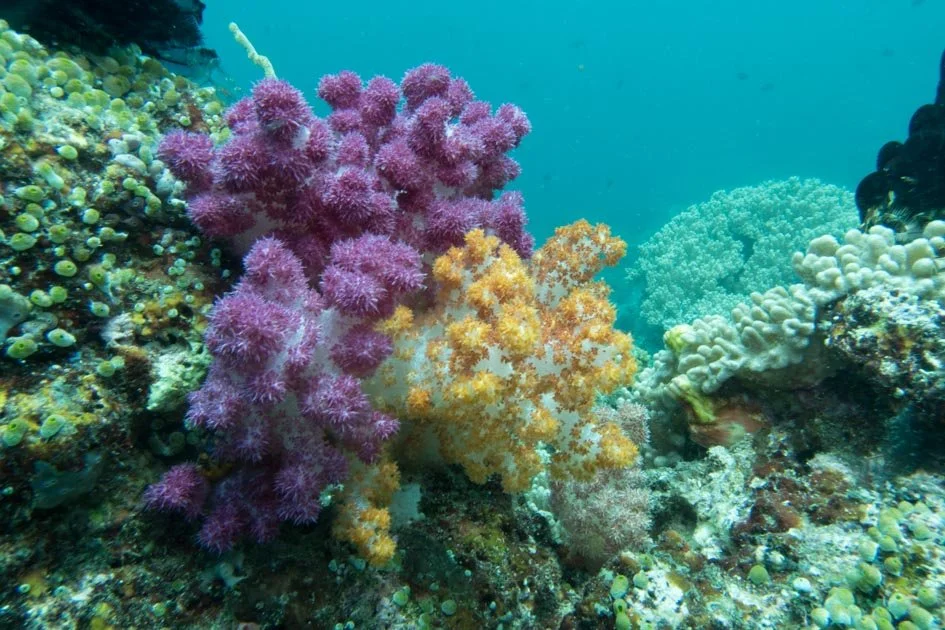
Coral reefs are vibrant ecosystems built by tiny coral polyps, forming limestone structures that support 25% of all marine life while covering less than 1% of the ocean floor. Known as the "rainforests of the sea," they provide coastal protection, food, and economic benefits. However, climate change, pollution, and unsustainable fishing are causing
widespread reef degradation.
Key Takeaways:
Biodiversity hotspots: Coral reefs support 25% of all marine life while covering less than 1% of the ocean floor
Built by tiny animals: Corals are polyps that secrete calcium carbonate to form reef structures, creating habitats for countless species
Coastal protection: Reefs absorb up to 97% of wave energy, shielding over 500 million people from storms and erosion
Economic importance: Coral ecosystems generate billions annually through fisheries, tourism, and medicine
Severe threats: Climate change, pollution, overfishing, and coastal development have caused ~50% of reefs to disappear in 30 years
Coral bleaching: Rising ocean temperatures stress corals, leading them to expel nutrient-providing algae, which can kill the reef
Potential losses: If global temperatures rise 1.5°C, up to 90% of reefs could be lost; at 2°C, nearly all could disappear
Restoration efforts: Coral farming, transplanting, and artificial reefs are helping damaged ecosystems recover
Education matters: Learning about marine conservation helps people protect reefs and the species that depend on them
What Exactly Is Coral?
Coral reefs are among the most biologically diverse ecosystems on the planet, often referred to as the "rainforests of the sea." They provide habitat, food, and protection to an estimated 25% of all marine species, despite covering less than 1% of the ocean floor. Corals themselves are tiny animals called polyps, which build vast reef structures by secreting calcium carbonate. These structures serve as a foundation for entire marine communities, creating a rich and complex environment that supports fish, crustaceans, mollusks, and countless other marine organisms.
The Importance of Coral Reefs:
Coral reefs are vital for both marine life and humans. They protect coastlines by absorbing up to 97% of wave energy, reducing damage from storms, tsunamis, and floods which safeguard over 500 million people who rely on them for food and livelihoods.
Reefs also support the global economy, generating billions each year through fisheries, tourism, and coastal protection. They are valuable for medical research, providing compounds used to treat cancer, arthritis, and bacterial infections.
Threats to Coral Reefs:
Despite their importance, coral reefs are in grave danger. Over the past 30 years, approximately
50% of the world’s coral reefs have been lost due to climate change, pollution, and destructive
human activities. Rising ocean temperatures cause coral bleaching, a process where stressed
corals expel the symbiotic algae that provide them with nutrients and color. If the stress continues, corals die, leading to the collapse of entire reef ecosystems. Scientists warn that if global temperatures rise by 1.5°C above pre-industrial levels, up to 90% of coral reefs will be lost, and
at 2°C, nearly 99% will disappear.
Overfishing:
Other significant threats include overfishing, which disrupts reef ecosystems by removing key species, and coastal development, which destroys reef habitats through dredging and pollution. Agricultural runoff and plastic waste further degrade coral reefs by introducing harmful chemicals
and suffocating marine life. The destruction of coral reefs not only impacts biodiversity but also
puts human communities at risk, as millions rely on them for food and economic stability.
Coral Restoration Efforts:
To combat coral reef decline, scientists are using coral farming, where corals are grown in nurseries and transplanted onto damaged reefs. This method has successfully revived reefs in Bonaire, the Coral Triangle, and the Great Barrier Reef, boosting biodiversity and fish populations. Additionally, artificial reef structures made from eco-friendly materials provide a stable foundation for coral growth, helping restore damaged ecosystems and attract marine life.
Marine Conservation Education:
To better understand and protect our oceans, consider taking the courses below.
Marine Ecology Course:
An introduction to ocean ecosystems and the intricate relationships between marine species.
Coral & Fish Identification:
Learn how to recognize and classify different coral species and marine fish.
Sea Turtle & Manta Ray Ecology:
Explore the behaviors, migration patterns, and conservation challenges facing these magnificent creatures.
