
Oyster Reef Ecosystem:
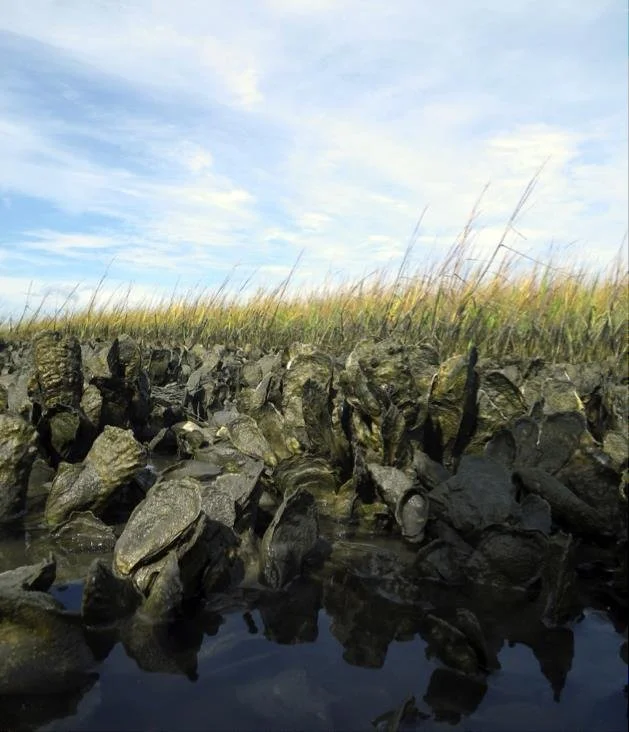
Oyster reefs are complex, underwater structures built by oysters attaching to each other, forming vital habitats that filter water, protect shorelines from erosion, and support diverse marine life, acting as natural breakwaters and nurseries
for fish and crabs.
These "ecosystem engineers" improve water quality by removing algae and sediment but
have faced severe decline due to pollution, overharvesting, and habitat loss, leading
to restoration efforts worldwide.
The Living Infrastructure Beneath the Tides
Oyster Reefs
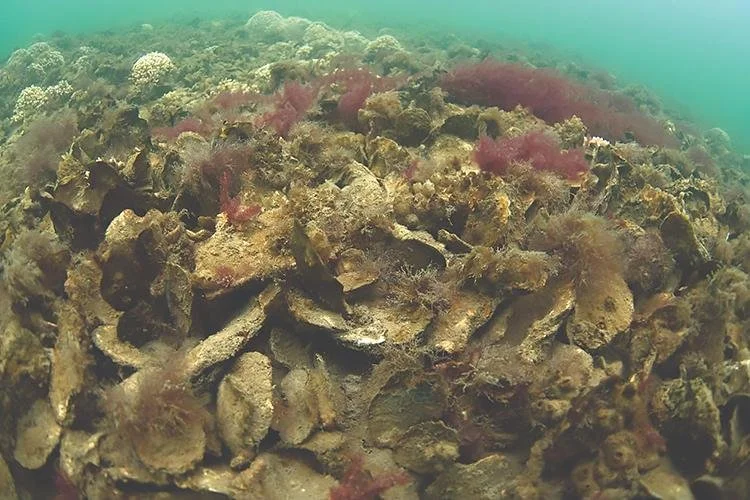
At first glance, an oyster reef may look unremarkable but linger for a moment, and the scene comes alive. Tiny fish dart between crevices. Crabs wedge themselves into shadowed pockets. Algae and sponges cling to hard surfaces rarely found in soft-bottom estuaries. With every passing hour, the oysters themselves quietly filter the water, reshaping their environment in ways that ripple far
beyond the shoreline.
Oyster reefs are among the most productive ecosystems on Earth, rivaling coral reefs and tropical rainforests in the services they provide. Built shell by shell over decades or centuries, these living structures form where rivers meet the sea. Their benefits extend underwater and onto land, supporting wildlife, stabilizing coastlines, and sustaining human communities.
Architects of Estuaries
Unlike solitary shellfish, oysters are ecosystem engineers. When oyster larvae settle, they cement themselves to hard surfaces, often the shells of older oysters. Over time, generations stack atop
one another, forming dense reefs that rise from the seabed like submerged breakwaters.
These reefs create rare hard habitat in estuaries otherwise dominated by mud and sand. The nooks and crannies formed by layered shells offer shelter from predators and currents, transforming open water into a three-dimensional refuge. Juvenile fish, shrimp, worms, snails, and crabs all find homes here, using the reef as a nursery during vulnerable life stages.
Because estuaries serve as gateways between rivers and oceans, the species supported by oyster reefs often fuel larger food webs offshore. Fish that shelter among oyster shells as juveniles may later migrate to coastal waters, supporting commercial and recreational fisheries far from the reef itself.
Nature’s Water Treatment System
Perhaps the most astonishing work oysters do happens invisibly. As filter feeders, oysters pump water across their gills, removing microscopic algae, bacteria, and organic particles. A single adult oyster can filter tens of gallons of water per day; a healthy reef filters millions.
This filtration improves water clarity, allowing sunlight to penetrate deeper into the estuary. Clearer water benefits seagrasses, which require light to photosynthesize and provide additional habitat and carbon storage. By removing excess nutrients, often from agricultural runoff or wastewater, oyster reefs also help reduce harmful algal blooms that can deplete oxygen and create “dead zones.”
In this way, oyster reefs act as biological kidneys for coastal waters, cleansing ecosystems stressed
by human activity and restoring balance between land and sea.
Coastal Protection You Can Grow
Oyster reefs don’t just shape life underwater, they also defend the land. Positioned along shorelines
or tidal creeks, reefs absorb wave energy and slow currents, reducing erosion in much the same way
a coral reef protects a tropical island.
As waves break against the rough, irregular surface of an oyster reef, their energy dissipates. Sediments settle instead of washing away, helping marsh grasses and coastal plants take root.
Over time, reefs and marshes reinforce one another: oysters calm the water, plants stabilize the
soil, and together they form a resilient living shoreline.
This natural defense becomes increasingly important as sea levels rise and storms intensify. Unlike concrete seawalls, oyster reefs can grow upward as sea levels increase, offering adaptive protection that strengthens rather than degrades surrounding ecosystems.
A Bridge Between Marine and Terrestrial Worlds
The benefits of oyster reefs extend inland. By stabilizing shorelines and reducing erosion, reefs protect coastal wetlands that serve as buffers between land and ocean. These wetlands absorb floodwaters, store carbon in their soils, and provide habitat for birds and other terrestrial wildlife.
Nutrients filtered from the water by oysters are repackaged into forms that fuel food webs, some
of which extend onto land. Shorebirds feed on reef-dwelling invertebrates during low tide. Fish supported by oyster nurseries become prey for birds, mammals, and humans alike.
In this way, oyster reefs knit together marine and terrestrial ecosystems, ensuring that energy
and nutrients flow across boundaries rather than being lost to pollution or erosion.
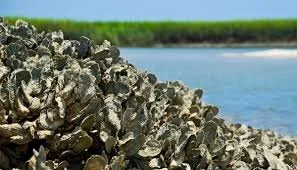
Despite their importance, oyster reefs are among the most endangered marine habitats on the planet. Over-harvesting, dredging, pollution, disease, and habitat destruction have eliminated an estimated 80–90% of historic oyster reefs worldwide. Where reefs once rose high enough to break the surface
at low tide, many estuaries are now left with flattened remnants incapable of performing their ecological roles.
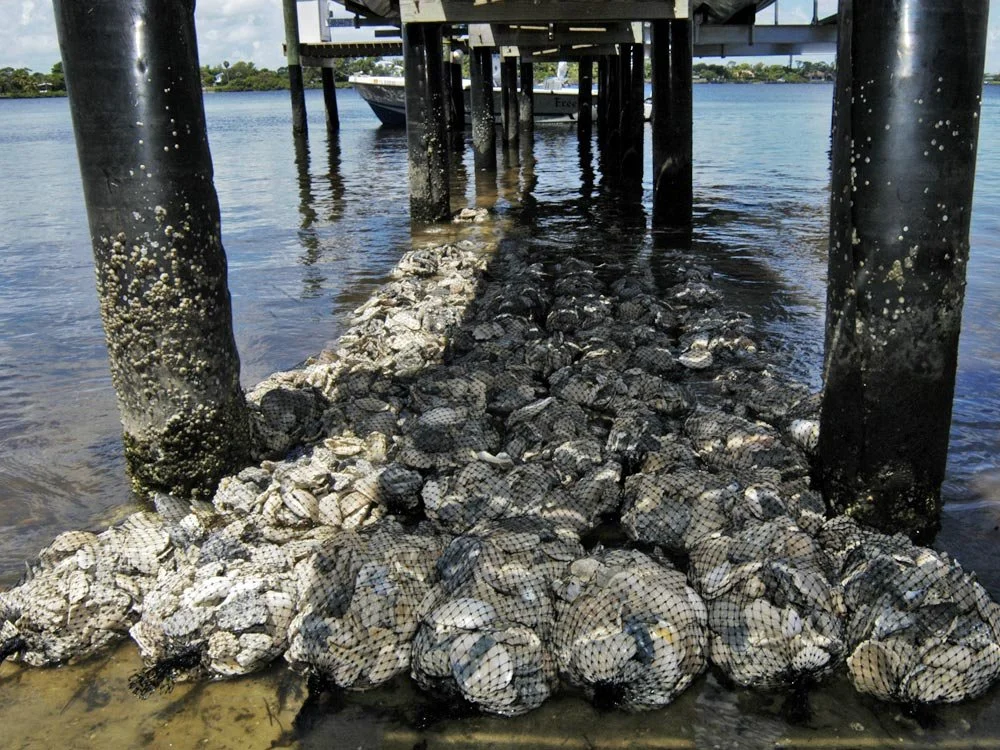
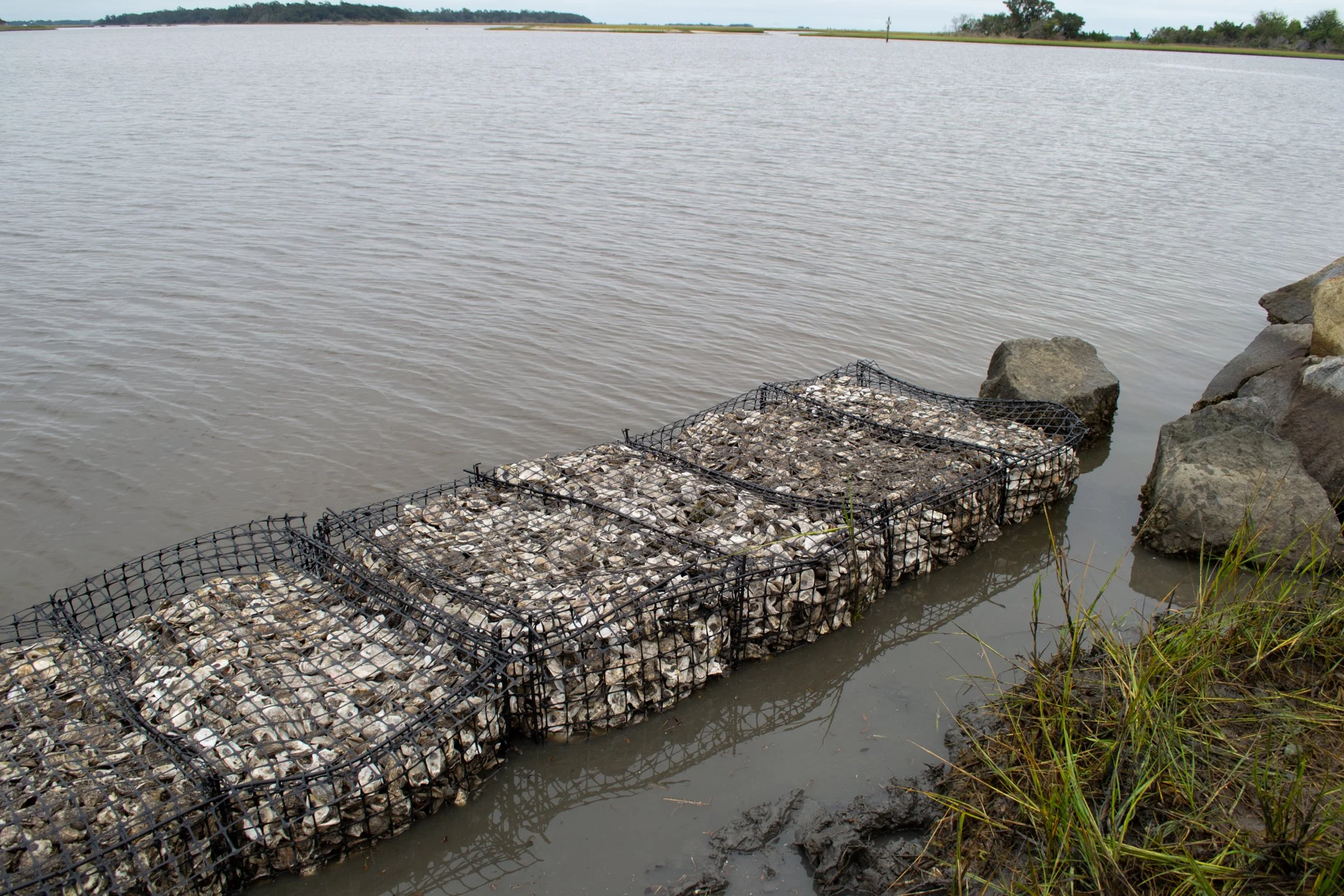
In response, restoration efforts are gaining momentum. Scientists, conservation groups, and coastal communities are rebuilding reefs using recycled shells, limestone, and carefully designed reef structures. These projects are not just about oysters, they are about restoring entire ecosystems, improving water quality, enhancing fisheries, and protecting coastlines naturally.
In some regions, restored reefs have shown measurable improvements within just a few years:
clearer water, increased fish abundance, and reduced shoreline erosion. Each new oyster that
settles adds another brick to a living infrastructure built not by machines, but by biology.
Loss, and a Growing Effort to Restore
A Quiet Keystone Beneath the Waves
Oyster reefs rarely inspire the awe reserved for coral reefs or the open ocean’s megafauna. Yet
their influence is profound. They clean the water, shelter life, protect land, and link ecosystems
while remaining largely unseen.
In a changing climate, their value only grows. Oyster reefs remind us that some of the most powerful solutions to environmental challenges are already in place, refined by evolution and waiting to be restored. Beneath the tides, shell by shell, oysters are building resilience for the sea, shore, and us.