
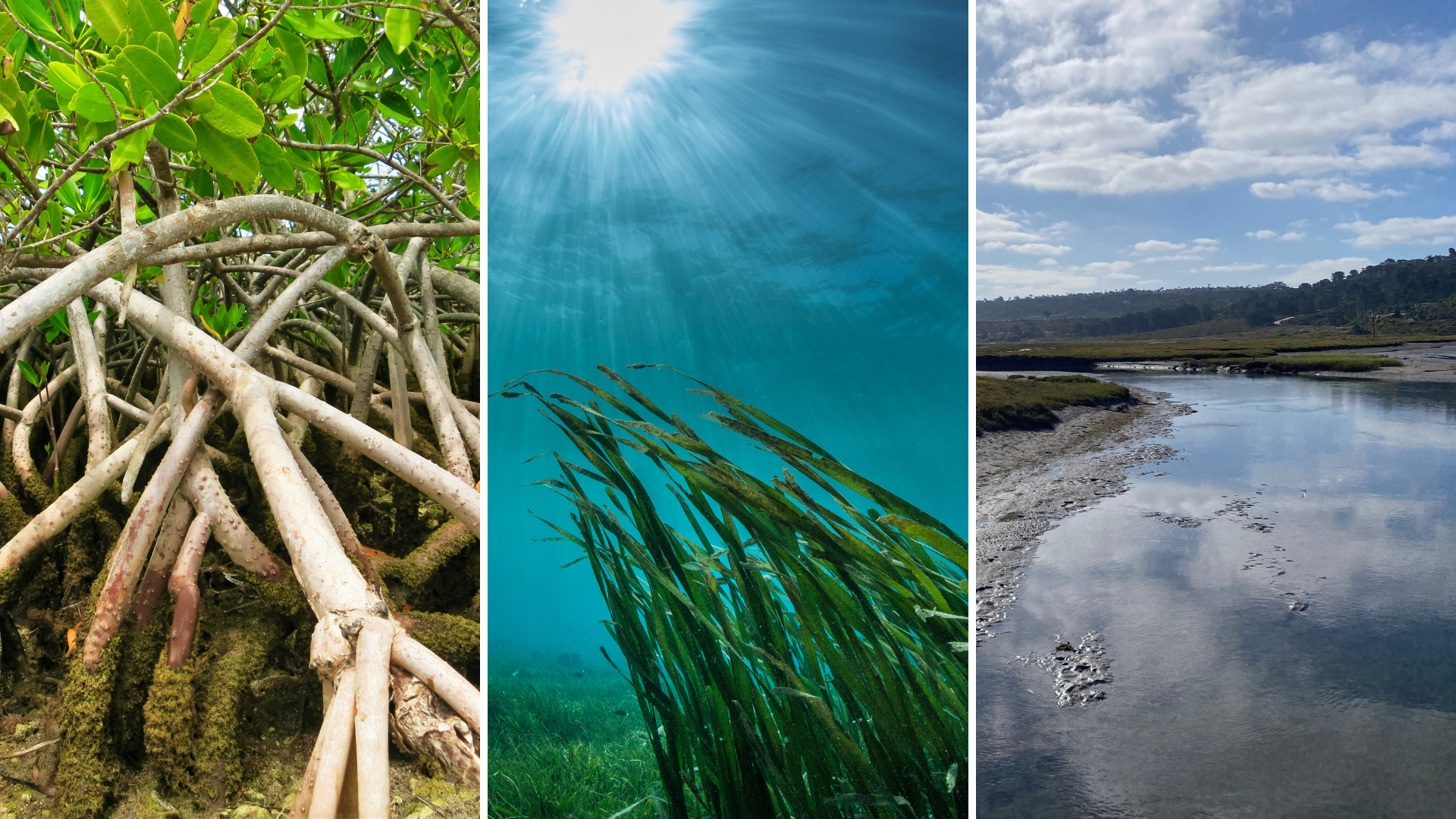
Blue Carbon
Why It Matters and How We Protect It:
Blue carbon ecosystems like mangroves, salt marshes, and seagrass store carbon for centuries and help fight climate change. Human activities have destroyed many of these habitats, releasing stored carbon. Global conservation efforts and restoration projects are helping protect and rebuild these vital ecosystems.
Key Takeaways:
Blue carbon ecosystems store carbon for centuries.
Mangroves, salt marshes, and seagrass trap carbon in plants, soil, and marine debris.
Human activities like development, pollution, and deforestation destroy them.
Climate change and rising seas make it worse.
Losing these habitats releases carbon and harms marine life.
Global efforts protect and restore these ecosystems.
Communities, scientists, and governments can help them recover.
What is Blue Carbon?
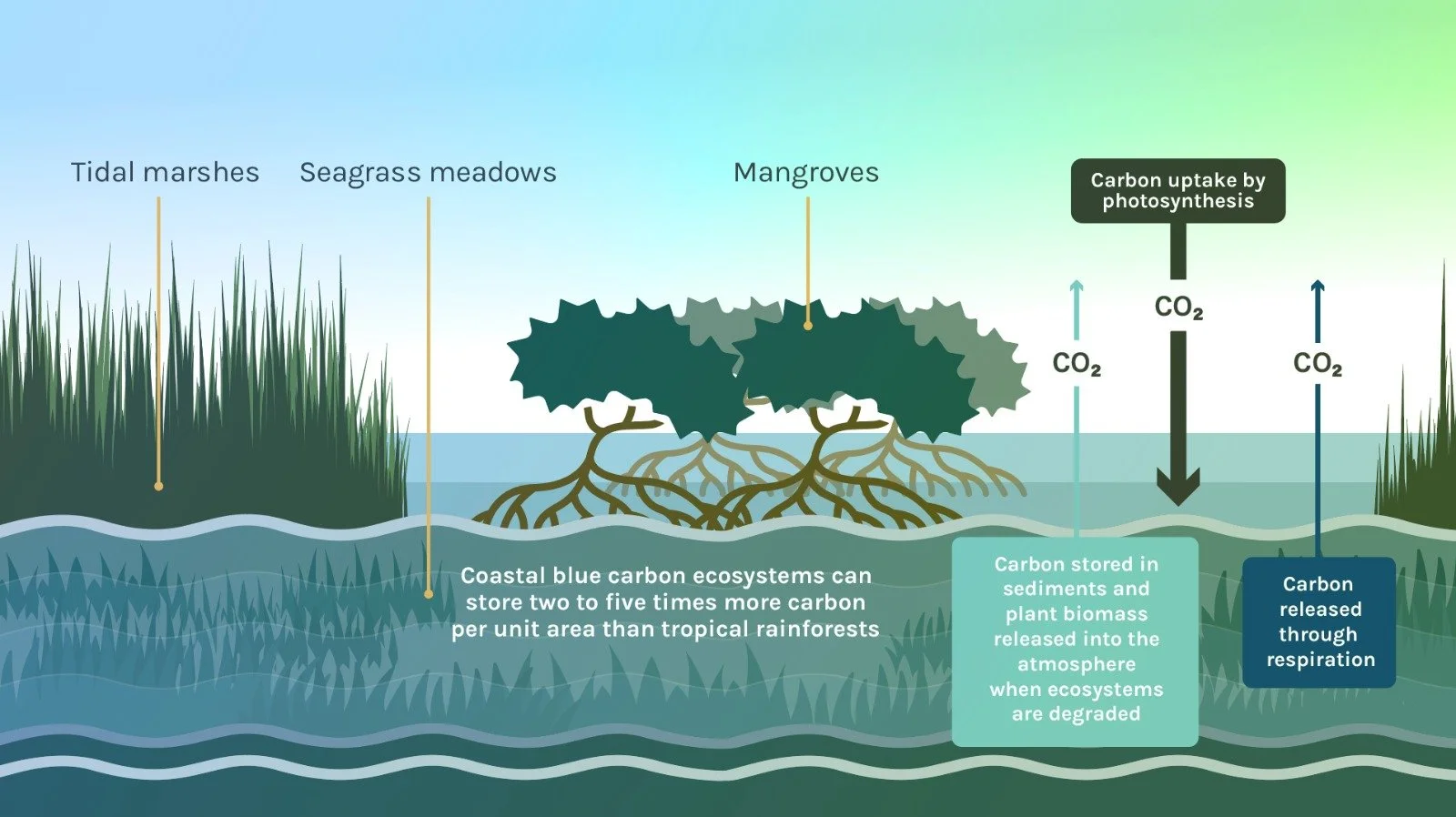
Blue Carbon Ecosystems Source: Ocean Panel
Blue carbon is carbon dioxide captured and stored in coastal and marine ecosystems, including mangroves, seagrass meadows, and tidal marshes.
Carbon Sink Efficiency: These ecosystems, covering less than 1% of the ocean floor,
significantly contribute to long-term carbon burial.Ocean's Role: The global ocean absorbs approximately 25-30% of human-caused CO₂
emissions, with blue carbon habitats playing a key role.Carbon Storage Mechanism: Rapid plant growth captures carbon, which is stored in
anaerobic soils, slowing decomposition and preventing CO₂ release.Protection and Restoration: Preserving intact blue carbon ecosystems prevents emissions, while restoring degraded areas actively removes carbon from the atmosphere.
Resilience Benefits: These ecosystems also enhance coastal resilience, support fisheries, and promote biodiversity.
Blue carbon conservation is a critical nature-based solution for combating climate change.
Blue carbon ecosystems act like giant, natural sponges for CO2. Here’s how they do it:
Carbon enters through runoff, photosynthesis, and wave action.
The roots of plants such as mangroves and seagrasses deposit carbon underground, where it stays locked away for centuries.
Dead plant material and organic debris settle into the low-oxygen soil, preventing carbon from being released back into the atmosphere.
Even marine life contributes! Detritus from sea creatures falls to the seafloor, adding
another layer to the carbon storage process.
Blue carbon ecosystems don’t just store carbon; they lock it away for thousands of years, making them some of Earth’s most effective defenses against climate change.
How Does Blue Carbon Work?
Over the past century, nearly 50% of mangroves, 35% of salt marshes, and 30% of seagrass meadows have been lost due to human activities. The biggest threats include:
Coastal Development: Cities, resorts, and infrastructure projects have cleared massive areas of mangroves and marshes.
Pollution & Runoff: Excess fertilizers and sewage cause algal blooms that suffocate
seagrass beds and disrupt the carbon cycle.Deforestation & Land Use Changes: Mangrove forests are cut down for shrimp farms, agriculture, and urban expansion.
Climate Change & Rising Sea Levels: Increased ocean temperatures and higher sea
levels threaten the survival of these habitats.
If this destruction continues, it will release billions of tons of stored carbon back into the atmosphere, accelerating climate change.
The Growing Threat to Blue Carbon Ecosystems:
Global Efforts to Protect and Restore Blue Carbon:
Thankfully, conservationists and governments worldwide are taking action! International
agreements now recognize blue carbon as a critical part of climate change mitigation.
Some key initiatives include:
The Paris Agreement: Encourages countries to incorporate blue carbon into
their climate policies.The Blue Carbon Initiative: A global program focused on conserving and restoring
coastal carbon sinks.Marine Protected Areas (MPAs): Governments are setting aside more protected
ocean areas to prevent habitat destruction.Community-Led Restoration Projects: Local conservation groups are replanting
mangroves, seagrass, and marshes to bring these ecosystems back to life.
In places like South Carolina’s salt marshes, Virginia the Gulf Islands’ eel grass beds, and Califorina’s kelp beds, large-scale restoration projects have successfully revived thousands of acres of lost blue carbon habitats. Volunteers, scientists, and coastal communities are working together to heal these vital ecosystems, showing that real change is possible.
