
What are the Threats to Marine Ecosystems?
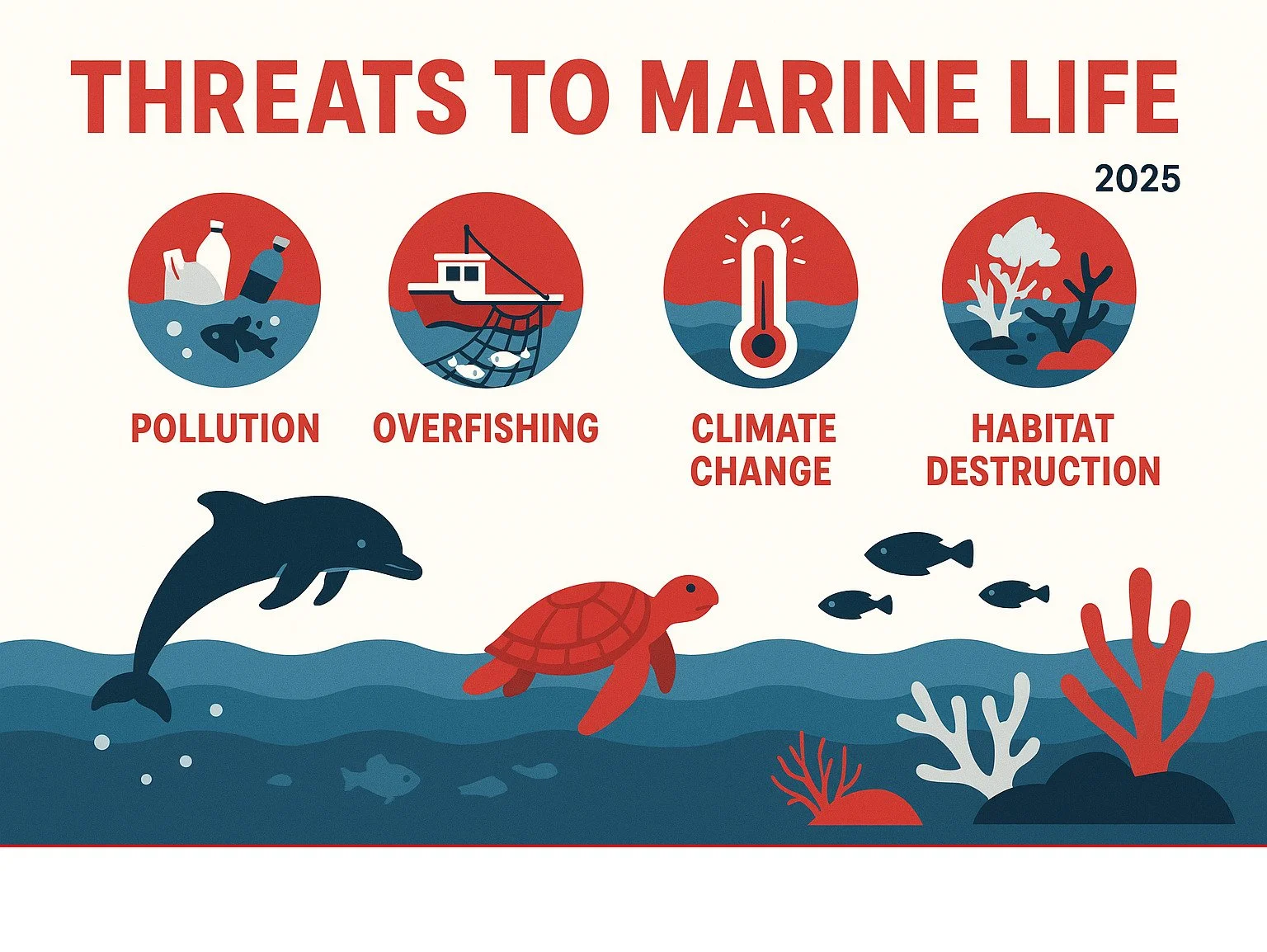
Major threats to marine ecosystems include overfishing, various forms of pollution, and climate change. Human activities, both on land and at sea, are the primary drivers of these stressors, leading to habitat destruction, biodiversity loss, and ecological imbalance. Source: North American Tint
Key Takeaways
Multiple human pressures are acting simultaneously on marine ecosystems.
These stressors reduce biodiversity, weaken natural coastal protection, and threaten food security.
Coordinated global action, sustainable management, and conservation are essential to protect ocean health.
1. Climate Change
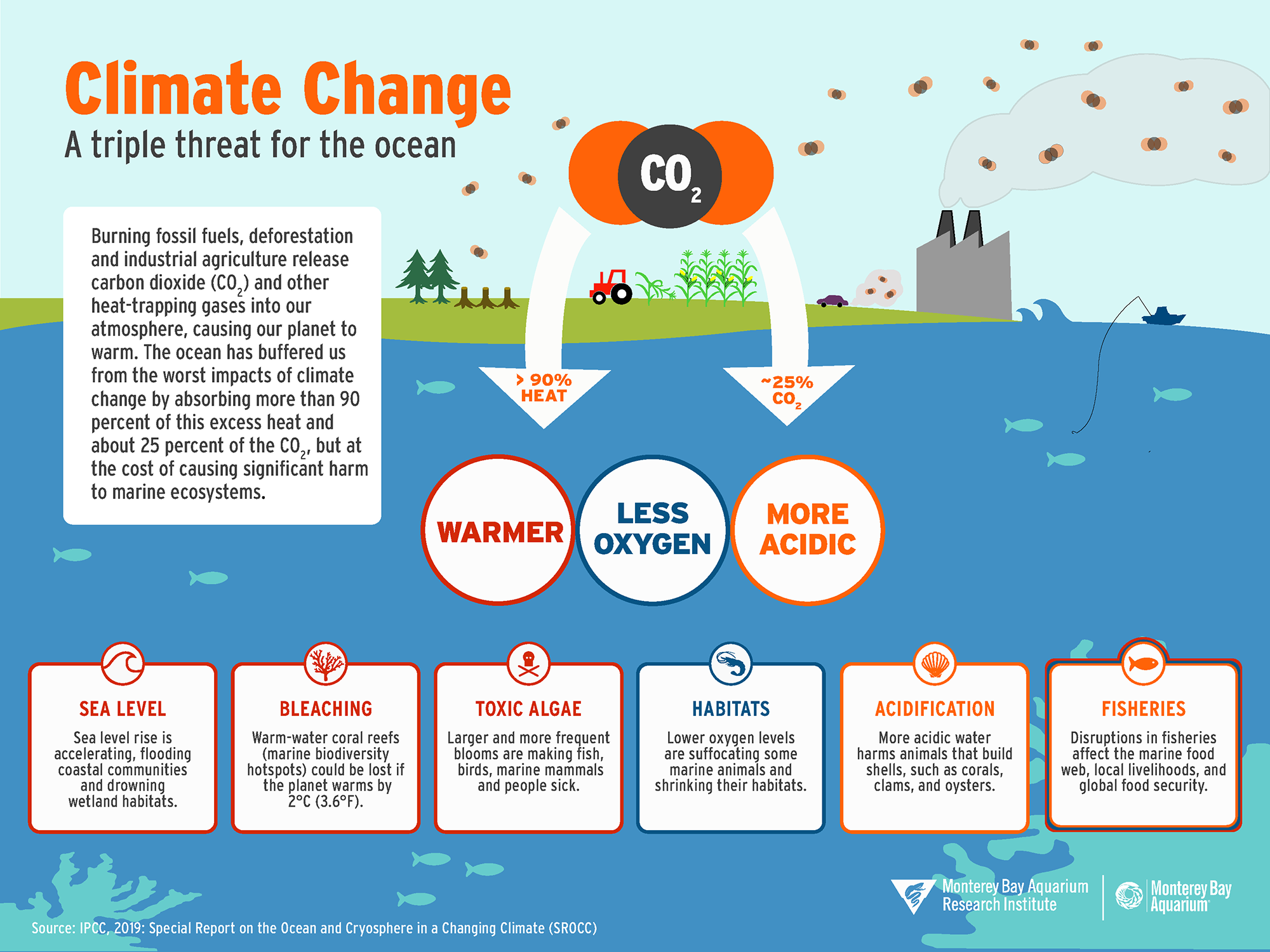
Oceans absorb over 90% of excess heat, leading to warming.
Impacts include coral bleaching, altered species migration, and ecosystem stress.
Oceans absorb approximately one-third of anthropogenic CO₂, thereby driving ocean acidification.
Melting glaciers and ice sheets accelerate sea level rise.
2. Sea Level Rise
Gradual inland movement of oceans reshapes coastlines.
Flooding, erosion, and saltwater intrusion threaten mangroves, salt marshes, beaches, and coral reefs.
Loss of breeding and nursery habitats for fish, turtles, seabirds, and invertebrates.
Increased storm surge intensity and coastal damage.
3. Overexploitation and Habitat Destruction
Overfishing depletes fish stocks and disrupts food webs.
Destructive fishing methods (bottom trawling, dredging) damage seafloor habitats.
Bycatch kills non-target species such as dolphins and turtles.
Loss of top predators destabilizes ecosystems.
Coastal development destroys mangroves, seagrass beds, and reefs.
Harmful subsidies and illegal, unreported, and unregulated (IUU) fishing worsen impacts.
4. Pollution
Chemical runoff introduces toxins that bioaccumulate in marine food webs.
Nutrient pollution causes harmful algal blooms and dead zones.
Oil pollution from large spills and frequent small releases harms marine life.
5. Plastic Pollution
8–11 million metric tons of plastic enter oceans annually.
Plastics persist for centuries and fragment into microplastics.
Over 2,000 species affected through ingestion and entanglement.
Plastic pollution harms wildlife, degrades habitats, and poses risks to human health.
6. Ocean Acidification
CO₂ absorption forms carbonic acid, lowering ocean pH.
Surface waters are ~30% more acidic than preindustrial levels.
Weakens coral reefs and shell-forming organisms.
Disrupts food webs, fisheries, and coastal economies.
7. Other Human-Driven Threats
Invasive species spread via ship ballast water.
Underwater noise disrupts marine mammal communication and navigation.
Sediment runoff from land clearing smothers habitats and blocks sunlight.
Climate Change
Climate change affects oceans through warming, acidification, and rising sea levels. Ocean warming has absorbed over 90% of the excess heat, causing coral bleaching and altering species migration patterns. Ocean acidification, driven by absorbing approximately one-third of human CO2, lowers the pH of seawater, harming organisms such as corals and plankton. Rising sea levels, resulting from melting ice, threaten coastal ecosystems through flooding and changes in salinity.
Sea Level Rise
Rising sea levels gently reshape our coastlines, gently reminding us of the delicate balance of marine ecosystems that have thrived over thousands of years at the land-sea boundary. As the oceans gradually move inland, vital habitats such as mangrove forests, salt marshes, sandy beaches, and vibrant coral reefs face challenges like being flooded, eroded, or affected by saltwater seepage. These changes impact many marine creatures, including fish, sea turtles, seabirds, and countless invertebrates, by depriving them of their safe breeding and nursery spots. Increased salinity can reach estuaries and freshwater aquifers, affecting sensitive plants and water quality. Moreover, as temperatures fluctuate and habitats shift, species are often forced to migrate, which can upset food webs and the fisheries that support millions of people. Rising sea levels can also make storm surges more intense, turning regular coastal storms into more damaging events that accelerate erosion and threaten remaining refuges. For coral reefs already stressed by warming and acidification, higher sea levels add additional strain, leading to bleaching and the loss of some of the ocean’s most diverse habitats. All these changes ripple through coastal ecosystems, putting species at risk, reducing natural protection from storms, and affecting ocean productivity—reminding us of the need to work together to protect our precious marine environments.
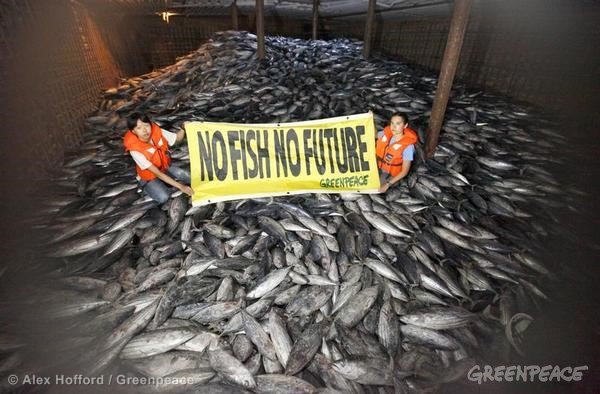
Credit: Alex Holford/Greenpeace
Overexploitation and habitat destruction
Overfishing has depleted global fish stocks, disrupted the marine food web, and led to the near extinction of key species, ultimately affecting the entire ecosystem. Practices like bottom trawling and dredging damage the seafloor. Bycatch, the accidental capture of non-target animals, such as dolphins and turtles, also reduces marine populations. Removing top predators like sharks and tuna creates an imbalance that ripples down the food web, leading to issues like jellyfish outbreaks and the loss of coral reefs. development, including land reclamation and shoreline construction, harms vital habitats such as mangroves, seagrass beds, and coral reefs. Governments provide an estimated $22 billion annually in harmful subsidies that keep unprofitable industrial fleets operating, even when fish stocks are depleted.Unregulated and unreported (IUU) fishing accounts for up to 30% of the catch for certain high-value species, netting criminals billions each year.
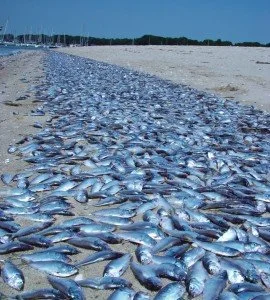
A menhaden fish kill in Narragansett Bay, Rhode Island, is due to a dead zone caused by nutrient pollution from fertilizers and sewage, which leads to an algal bloom.
Credit: Chris Deacutis
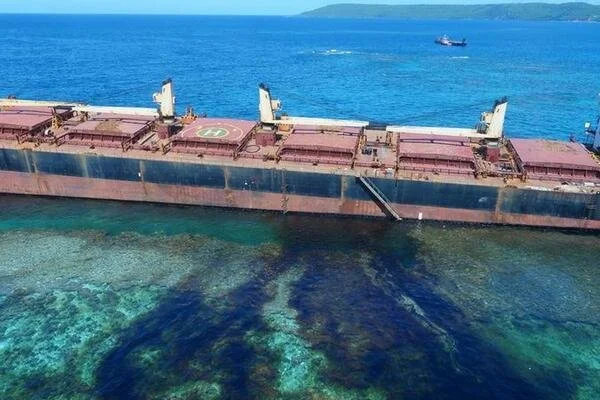
In 2019, Cyclone Oma drove the bulk carrier Solomon Trader onto a reef at Rennell Island, spilling 75 tons of heavy fuel oil. This raised concerns that the remaining fuel could contaminate Rennell Island, the world’s largest raised coral atoll, and home to unique species.
Credit: The Solomon Times
Pollution
Chemical pollution from land runoff carries toxins, waste, and pesticides, which accumulate in the food chain and cause health problems, including diseases and reproductive issues. Nutrient pollution from fertilizers and sewage leads to algal blooms that deplete oxygen, resulting in "dead zones" where marine life cannot survive. In addition to large tanker spills, thousands of smaller ones release toxic hydrocarbons every year, harming marine life.
Major tanker oil spills have declined sharply over the past five decades, marking a major success in maritime safety and regulation. Spills exceeding 7 tonnes now average only about 6–7 incidents per year worldwide—roughly a 90% reduction since the 1970s—owing to stricter international regulations, improved ship design, and better monitoring. Large-scale disasters still occur on rare occasions, such as the Deepwater Horizon spill in 2010, but they are no longer the dominant source of oil entering the ocean. Despite this progress, overall oil pollution remains a serious and ongoing threat. Hundreds of millions of gallons of oil are estimated to enter marine environments each year from small spills, operational leaks, illegal bilge dumping, pipeline discharges, offshore drilling, and land-based runoff.
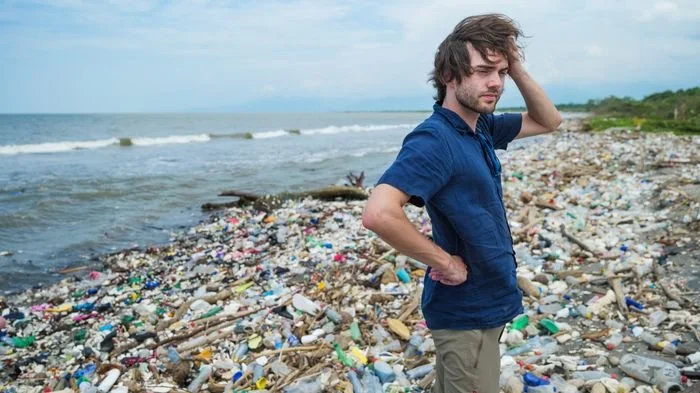
Boyan Slat, the founder and CEO of The Ocean Cleanup, stands on a beach in Honduras near the mouth of the Motagua River, which is heavily polluted with plastic. Credit: Oceanic Clean up
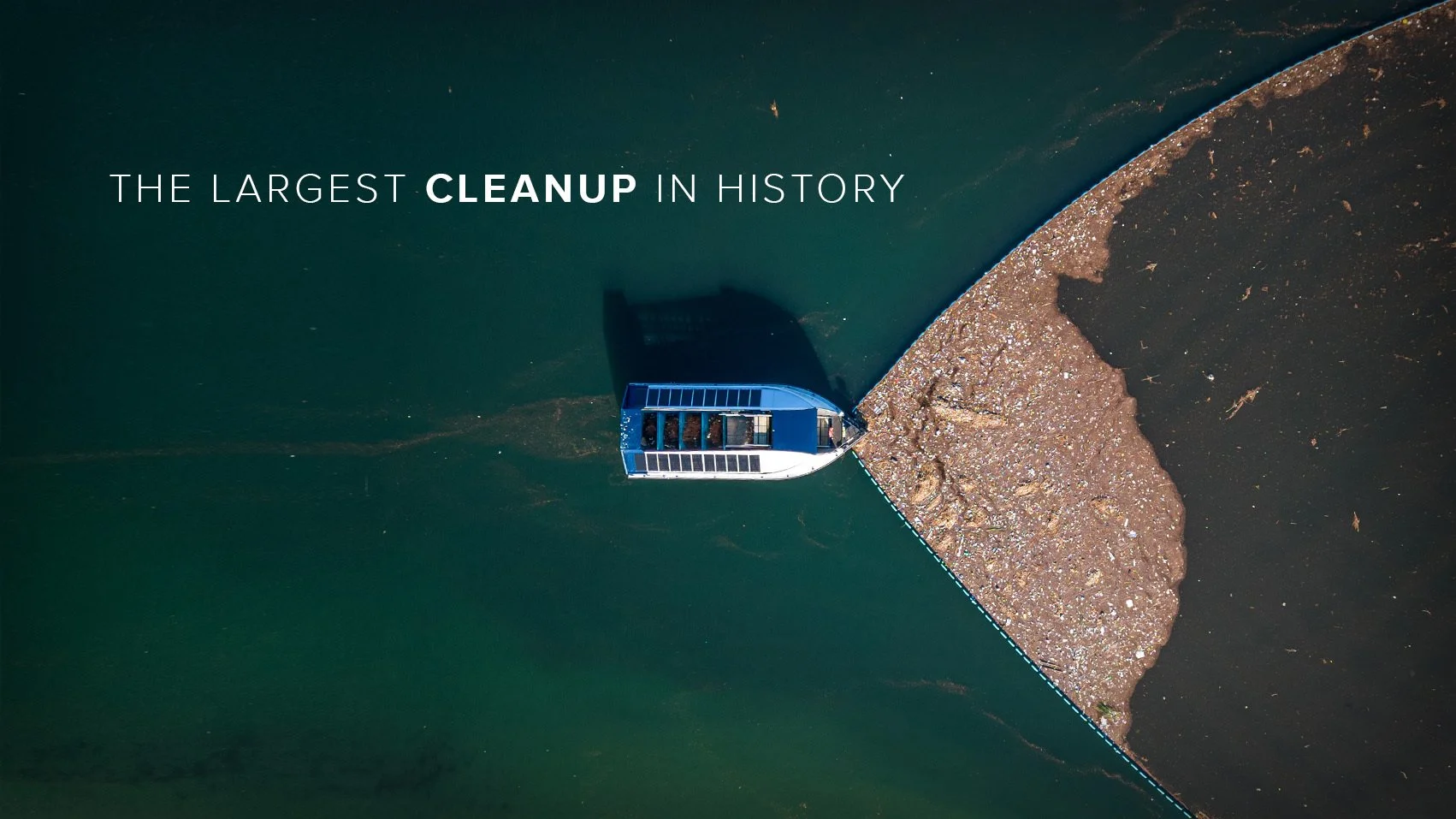
The Ocean Cleanup develops and scales technologies to remove plastic pollution from oceans and rivers worldwide, having deployed global cleanup systems for over a decade and removed tens of millions of kilograms of plastic. Facing a planet-scale crisis that threatens marine life and human health, the organization aims to eliminate 90% of floating ocean plastic by 2040 by cleaning existing pollution, stopping plastic at rivers, and advocating for stronger international regulations. Credit: Theoceancleanup.org
Plastic pollution
Plastic pollution is one of the most serious threats to marine ecosystems today. Plastic pollution introduces millions of tons of waste into the ocean each year. It is estimated that 8–11 million metric tons of plastic enter the ocean each year, where it persists for centuries and breaks down into microplastics that now contaminate every marine environment. Plastics are threatening over 2,000 marine species. Animals get tangled in plastic or mistake microplastics for food, risking starvation. Wildlife often mistake plastic for food or become entangled in debris, causing injury and death to over one million animals annually, including fish, seabirds, turtles, and marine mammals. As fish and shellfish ingest microplastics, pollution moves up the food web and onto our plates, with plastic particles now detected in human blood and organs. Beyond harming wildlife and human health, plastic pollution degrades habitats, weakens fisheries, and threatens the resilience of ocean ecosystems worldwide.
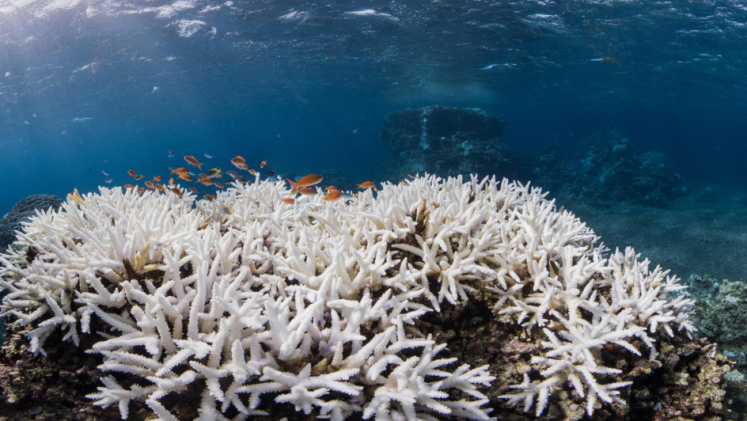
Increased ocean acidification interferes with calcium uptake in corals and shellfish. Credit: The Ocean Agency
Ocean acidification
The ocean has long acted as Earth’s silent buffer, absorbing nearly a third of the carbon dioxide released by human activity. Still, this vital service is now reshaping the sea itself. As CO₂ dissolves into seawater, it forms carbonic acid, lowering the ocean’s pH and reducing the carbonate minerals that corals and shell-building organisms need to survive. Since the industrial era, surface waters have become about 30 percent more acidic—a rapid chemical shift that weakens coral reefs, thins the shells of oysters and clams, and disrupts fish behavior and marine food webs. This invisible transformation is already threatening fisheries, coastal economies, and food security, revealing ocean acidification as a present-day consequence of climate change, unfolding quietly beneath the waves
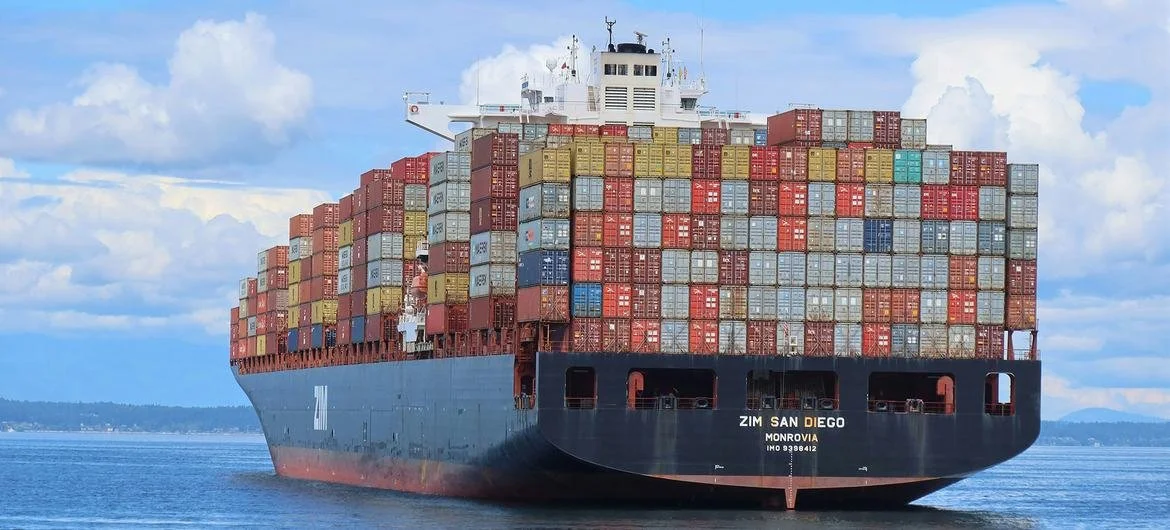
Long overlooked as a major contributor to global greenhouse gas emissions, the shipping industry is now at the forefront of international cooperation. Photo Credit: © Unsplash/Chris Linnett
Other Threats
Invasive species, often transported in ship ballast water, can outcompete native species, disrupt food webs, and cause economic harm. Underwater noise from shipping, sonar, and surveys interferes with the communication, migration, and hunting of marine mammals. Land clearing causes soil erosion, leading to sediment runoff that smothers bottom-dwelling organisms and blocks sunlight, disrupting photosynthesis.