
Related Articles
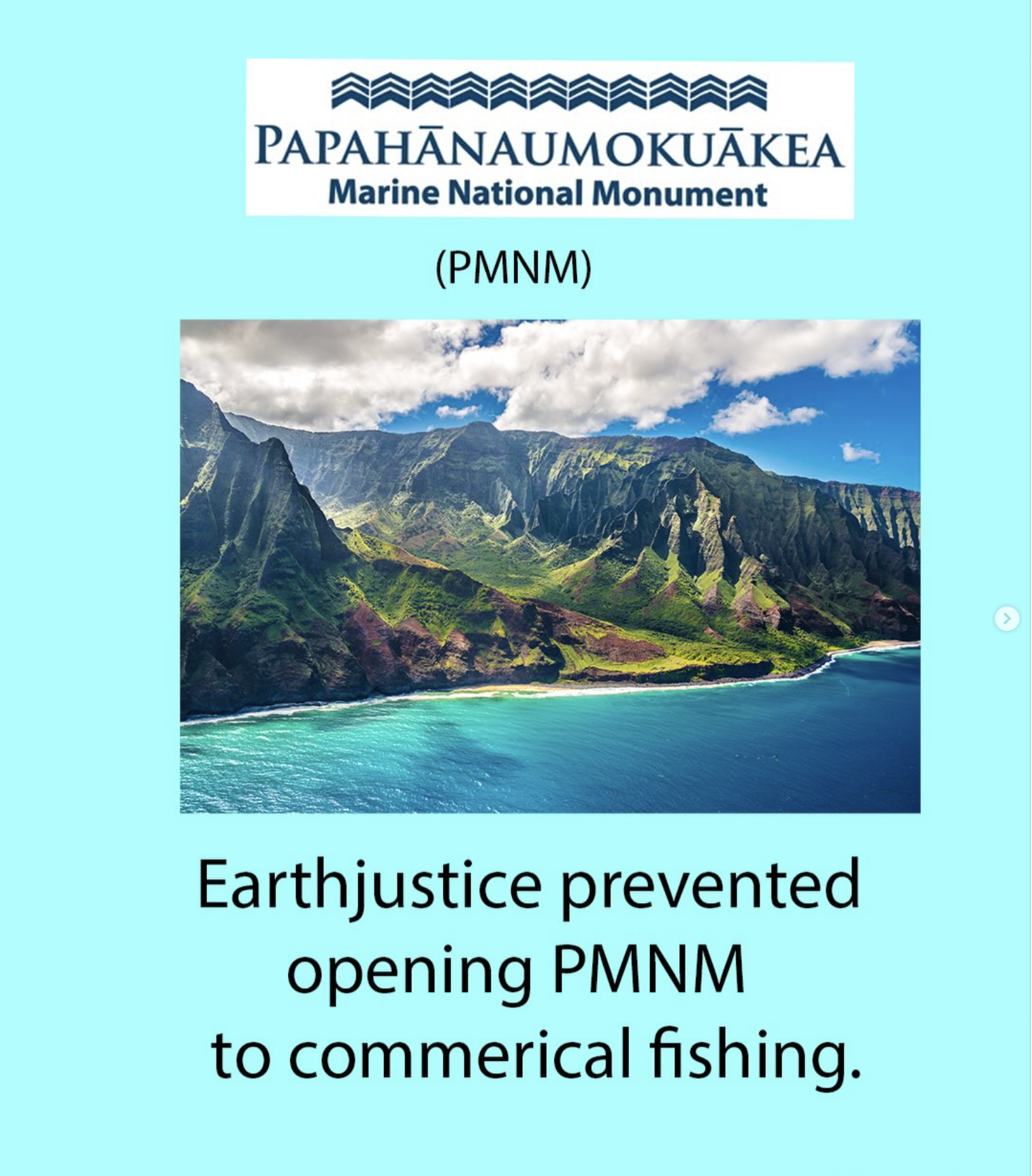
OCEAN PROTECTION | LEGAL
Courts and Conservationists Hold the Line at Papahānaumokuākea — For Now
Earthjustice won a landmark ruling protecting the world's largest marine monument from commercial fishing. Now the Trump administration is trying again.
June 12, 2026 see-the-sea.com
The battle over Papahānaumokuākea Marine National Monument — the vast, largely pristine chain of islands, atolls, and ocean stretching 1,500 miles northwest of Honolulu — has moved from the Oval Office to the federal courts, and back again. After environmental lawyers secured a significant legal victory blocking commercial fishing in the protected Pacific, the Trump administration has escalated its push to pry open America's most iconic ocean sanctuaries.
The latest chapter opened on June 11, 2026, when President Trump signed a new proclamation targeting parts of Papahānaumokuākea, the Mariana Trench Marine National Monument, and Rose Atoll Marine National Monument — threatening protection for some 500,000 square miles of ocean waters. The announcement came less than a year after a federal judge had blocked an earlier attempt to do exactly the same thing.
"Without fishing in the monuments, U.S.-based fisheries hit their catch limits for tuna every year."
— David Henkin, Earthjustice Mid-Pacific Office
A Monument Worth Fighting For
Papahānaumokuākea is not a typical marine reserve. As the largest protected place on the planet, it covers more than a half-million square miles of islands and atolls in the Pacific Ocean, sheltering coral reefs, seamounts, and open-water ecosystems that support thousands of marine species — many found nowhere else on Earth. It is also one of the most culturally significant landscapes in the Hawaiian and Pacific Islander worldview, considered an ancestral homeland and a place of deep spiritual importance to Native Hawaiian communities.
The monument was first established by President George W. Bush in 2006, expanded significantly by President Obama in 2016, and designated a National Marine Sanctuary under the Biden administration in January 2025 — adding an additional layer of legal protection just days before the presidential transition.
Trump's Opening Move
In April 2025, President Trump signed a proclamation opening the Pacific Islands Heritage Marine National Monument — a separate but related protected area encompassing roughly 490,000 square miles of ocean southwest of Hawaiʻi — to commercial fishing. That action alarmed conservationists, Hawaiian cultural practitioners, and marine scientists who had spent years securing those protections.
The same month, Trump signed an executive order directing the Secretaries of Commerce and the Interior to review existing marine monuments and recommend which should be opened to commercial fishing. The signal was clear: the administration intended to systematically dismantle the network of protected ocean areas established over the previous two decades.
Earthjustice Fights Back — and Wins
In May 2025, Earthjustice filed a lawsuit on behalf of Kāpaʻa, the Conservation Council for Hawaiʻi, and the Center for Biological Diversity, challenging Trump's proclamation as unlawful under the Antiquities Act. The legal argument was straightforward: the Antiquities Act gives presidents the power to create national monuments to protect objects of scientific and historic interest, but it does not give them the authority to shrink or dismantle those protections.
The courts agreed. In August 2025, Earthjustice won a ruling that halted commercial fishing in the Pacific Islands Heritage Marine National Monument. A judge found that the Trump administration had violated the Administrative Procedure Act by forgoing public comments or hearings before NOAA Fisheries issued a bulletin lifting the commercial fishing ban.
It was a significant win — both practically, in keeping fishing vessels out of protected waters, and legally, in establishing that the administration could not simply override monument protections by administrative memo without due process.
A Pattern of Escalation
Rather than accept the ruling, the administration doubled down. In February 2026, it extended its effort by reopening the Northeast Canyons and Seamounts Marine National Monument, off the New England coast, to commercial fishing. Environmental groups filed suit in response.
Now, with the June 11 proclamation, Trump has formally sought to open all five of the nation's marine national monuments to commercial fishing. The administration frames the move as economic common sense, arguing that federal laws and fisheries management programs already provide extensive safeguards for marine species and habitats.
But conservationists and fisheries scientists push back sharply on that framing. "Commercial fishing in our protected marine monuments would not only be disastrous for the environment, but also does nothing for the fishing industry," said David Henkin, deputy managing attorney with Earthjustice's Mid-Pacific Office. "Without fishing in the monuments, U.S.-based fisheries hit their catch limits for tuna every year."
What's at Stake
The ecosystems targeted by the proclamations are not incidental. Papahānaumokuākea's remote atolls and reefs provide critical nesting habitat for the endangered Hawaiian monk seal and the threatened Hawaiian green sea turtle. Its deep-water seamounts support endemic species that have evolved in isolation over millions of years. As a near-pristine reference ecosystem — largely free of industrial fishing pressure — it also serves as a living laboratory that scientists rely on to understand how healthy ocean systems function.
Cultural stakes are equally high. For Native Hawaiian communities, the Northwestern Hawaiian Islands are Papahānaumokuākea — a name that honors the union of two great ancestral figures — and are considered a pathway for ancestral spirits. The monument's protection is inseparable from that heritage.
The Legal Road Ahead
Earthjustice has vowed to take legal action in response to the June 2026 proclamation, and the legal precedent from last year's ruling is squarely on their side. The August 2025 court decision established that the administration cannot bypass procedural requirements when stripping monument protections — and the Antiquities Act argument, that presidents simply lack the authority to undo what their predecessors have protected, remains potent.
"It's showing that he's just doing it again, and we're watching the systemic dismantling of America's ocean protections, monument by monument, ocean by ocean," said Maxx Phillips, Hawaii and Pacific Islands Director for the Center for Biological Diversity.
The courts have already proven willing to intervene. Whether that pattern holds as the administration's legal challenges multiply across multiple monuments and jurisdictions remains the defining question for America's ocean heritage.
— • —
See the Sea will continue to follow this story. The legal case — Kāpaʻa, Conservation Council for Hawaiʻi, and Center for Biological Diversity v. Trump et al. — is ongoing in the District of Hawaiʻi.