
Ocean Acidification
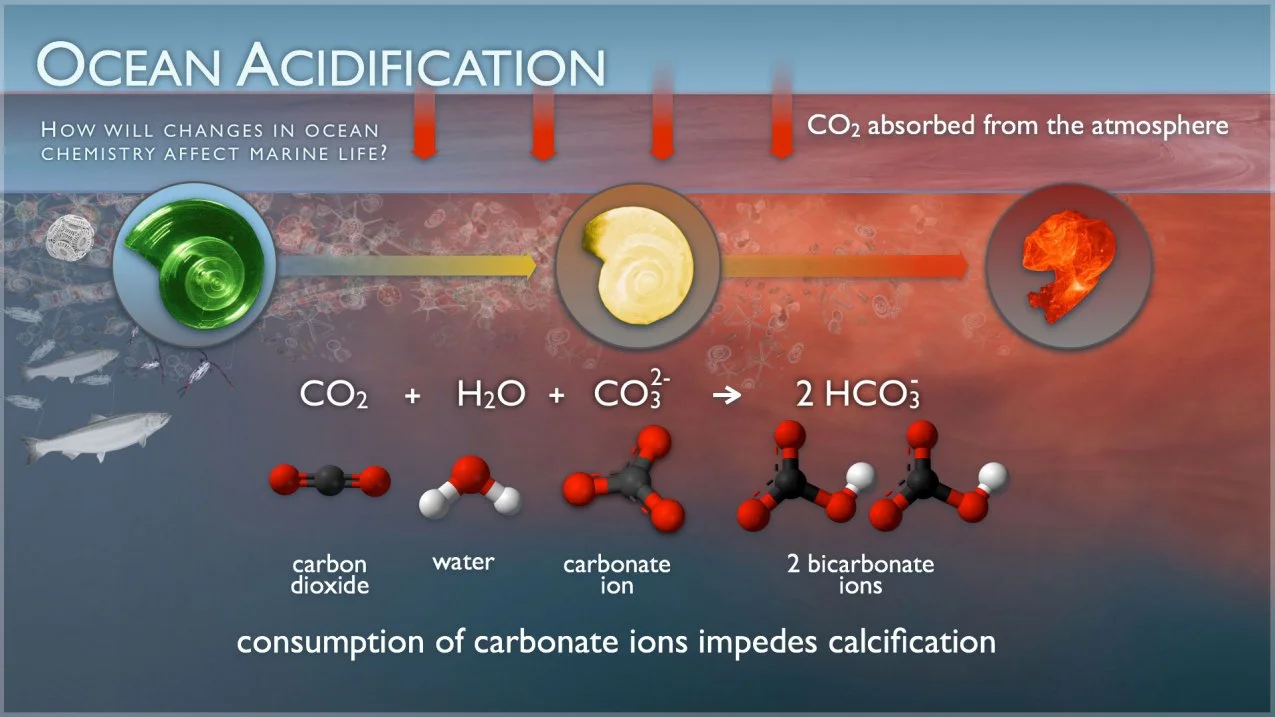
A pteropod shell is shown dissolving over time in seawater with a lower pH. When carbon dioxide is absorbed from the atmosphere into seawater, the chemistry of the seawater changes becaming more acidic. Credit: NOAA
The Silent Crisis Beneath the Waves
Our oceans are facing a silent but serious threat. As they absorb carbon dioxide from the atmosphere, seawater becomes more acidic, disrupting marine ecosystems and threatening the species that depend on them. From weakening shell-building organisms to damaging coral reefs, ocean acidification has far-reaching consequences for biodiversity, fisheries, and coastal communities.
Key takeaways:
Oceans absorb about 30% of human CO₂ emissions, which lowers pH and reduces essential carbonate ions.
Shell-building organisms like corals, oysters, and plankton struggle to grow, weakening the marine food chain.
Coral reefs are especially vulnerable—acidification slows growth, dissolves skeletons, and increases erosion risk.
The effects ripple through marine ecosystems, threatening biodiversity, fisheries, and coastal communities.
Ocean acidification is a global issue with serious ecological and economic consequences.
How Ocean Acidification Works
The oceans absorb about 30% of human-produced carbon dioxide (CO₂) from the atmosphere. While this helps slow climate change, it comes at a cost. When CO₂ dissolves in seawater, it triggers chemical reactions that lower the ocean’s pH, making the water more acidic and reducing carbonate ions that marine life depends on.
Impacts on Marine Life
Increased acidity makes it difficult for shell-building organisms—such as corals, oysters, and plankton—to form and maintain their calcium carbonate structures. As these organisms weaken, species that rely on them for food or habitat are also affected, disrupting entire marine food chains.
Coral Reefs at Risk
Coral reefs face a double threat from warming waters and acidification. Acidic conditions can slow coral growth and even dissolve existing skeletons, making reefs more fragile and vulnerable to erosion. As reefs decline, many marine species lose critical habitats.
Why It Matters
Ocean acidification is not just a deep-sea issue—it has global consequences. The loss of reefs and marine biodiversity threatens ocean ecosystems, fisheries, and coastal communities that depend on healthy oceans.
