
Biodiversity · Ocean Protection · June 2026
Can We Save 30% of the Planet by 2030?
It sounds like a bumper sticker. It turns out to be one of the most serious bets humanity has ever made on the future of life on Earth — including our own.
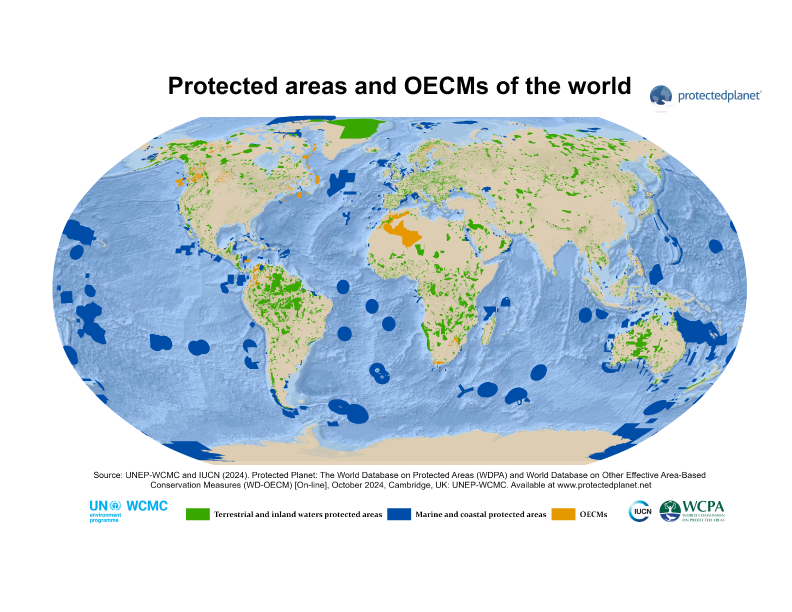
Picture a map of the world’s oceans. Now shade in everything that is formally protected — the marine reserves, the no-take zones, the national parks of the sea. You’d be coloring in less than 10% of the blue. The other 90-plus percent? Open for business. Fishable, mineable, pollutable, largely ungoverned.
That is the world as it exists today. And it is the world that nearly 200 nations, in a landmark agreement signed in Montreal in December 2022, sought to change. Their pledge: protect 30% of the planet’s land, freshwater, and ocean by the year 2030. Eight years to do something that has never been attempted at this scale. The initiative is called 30×30, and depending on who you ask, it is either the most ambitious conservation commitment in history or a deadline the world is already behind on.
Both things are true.
17.3%
of land & inland waters protected
Related Articles
10.1%
of marine areas protected
~190
nations adopted Kunming-Montreal
2030
the deadline that changes everything
How Did We Get Here?
To understand why 30×30 matters, it helps to understand what came before it. For most of the past century, conservation was largely a national hobby — countries protected what they felt was worth protecting, usually places that were too remote or too rugged to be worth developing. Beautiful, yes. Strategic, not always.
Then came the science. Ecologists started running models on what it would actually take to keep species from going extinct, to keep fisheries from collapsing, to keep coral reefs from bleaching into bone. The number they kept landing on was 30%. Not as a ceiling — as a floor. Below 30%, too many ecosystems are too fragmented to bounce back. The wildlife corridors break down. The fish run out of refuge. The whole system starts to fray.
By 2021, the research had moved into the policy room. President Biden signed an executive order committing the US to 30×30 domestically. The G7 pledged it together. Over 100 countries joined a coalition championing the target before the Montreal conference even opened. When the gavel came down on the Kunming-Montreal Global Biodiversity Framework that December, it had the backing of nearly every nation on Earth. For a brief, genuinely hopeful moment, it felt like the world had decided to try.
What’s at Stake
Here is what we stand to lose if it doesn’t work. Right now, one million species are at risk of extinction — a number so large it barely registers, until you start thinking about what each one of those species does. The insects that pollinate crops. The fish that feed billions of people. The mangroves that protect coastlines from storms. The phytoplankton, tiny beyond imagination, that generate more than half the oxygen in every breath you take.
And here is the thing that often gets lost in these conversations: protecting nature is not just about nature. It’s about us. Healthy oceans absorb roughly a quarter of the carbon dioxide humans pump into the atmosphere every year. Forests regulate the rainfall that fills rivers and reservoirs. Wetlands filter water that would otherwise cost billions to clean. When we let ecosystems collapse, we don’t just lose the wildlife. We lose the services those ecosystems quietly provide, free of charge, every single day.
“We must protect at least 30% of the planet’s lands and oceans by 2030 to have any chance of stemming the dual crises of biodiversity loss and climate change.”
— The Nature Conservancy
The Ocean Problem
If the land half of 30×30 is hard, the ocean half is harder. At least on land we have decades of practice — national parks, wildlife reserves, Indigenous protected territories. We know roughly how it works. The ocean is a different proposition.
The open ocean — the high seas, the vast international waters beyond any country’s border — covers more than 40% of the planet’s surface and had essentially no legal protection framework until January 2026, when the High Seas Treaty finally entered into force. That’s a big deal. But it’s a starting line, not a finish line. Right now, less than 2% of the high seas is under any formal protection. To hit 30% ocean coverage by 2030, the world needs to designate new protected ocean at a rate roughly equivalent to the size of the United States — every year, for four years.
And quantity isn’t everything. Scientists worry about “paper parks” — marine protected areas that look great on a map but have no rangers, no enforcement, no real restrictions. A reserve where industrial fishing is still allowed isn’t really a reserve. The Montreal agreement was explicit: these areas need to be “effectively conserved and managed.” That bar is higher than it sounds.
Who’s Actually Doing It
The most inspiring leadership on 30×30 has come from some of the smallest countries on Earth. Earlier this month, French Polynesia — a nation of 280,000 people spread across 118 Pacific islands — designated 515,000 square kilometers (nearly 200,000 square miles) of new, fully protected ocean in a single announcement. It was the largest contribution to the 30×30 goal ever made by a single country in a single act. Palau was the first nation to ratify the High Seas Treaty. Chile, Costa Rica, and small island states across the Pacific and Caribbean have punched far above their weight.
Meanwhile, the countries with the most ocean and the deepest pockets have been slower. The US made strong domestic progress under the previous administration but remains outside the High Seas Treaty for now. China played a constructive role in brokering the Montreal deal but faces pressure to do more at home. And the funding pledges that wealthy nations made — $20 billion a year in biodiversity finance by 2025 — have largely gone unmet. As of 2024, only two countries were paying their fair share.
“In French Polynesia, the ocean is much more than a territory — it is a source of life, culture, and identity. By protecting Tainui Atea, we are asserting our ecological sovereignty for our people and future generations.”
— President Moetai Brotherson, French Polynesia
Four Years Left
2030 is close enough to feel real, yet far enough away that it’s easy to look away. That’s the danger. The commitments made in Montreal were genuinely historic. The legal frameworks that have since fallen into place — the High Seas Treaty, the growing network of national marine reserves, the recognition of Indigenous communities as conservation partners rather than obstacles — represent a kind of infrastructure for ocean protection the world has never had before.
Whether that infrastructure will be used remains an open question. The science is not. Thirty percent isn’t an aspirational number someone invented in a conference room. It’s what the evidence says we need to give the ocean, and the land, and ultimately ourselves a fighting chance. It’s the minimum bet. The question is whether we’re willing to make it.
Sources: UNEP-WCMC, IUCN, Campaign for Nature, The Nature Conservancy, Marine Conservation Institute, Convention on Biological Diversity