
French Polynesia Just Did Something Extraordinary — Committed to the biggest Marine Protected Area in history
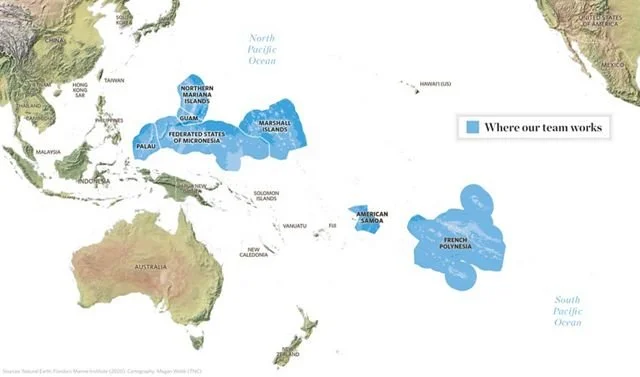
The Polynesia contribution to the global 30×30 goal to protect 30% of the world’s ocean by 2030Source: The Nature Conservancy
I want to share some genuinely good news. Because in ocean conservation, good news is something to hold onto.
On World Oceans Day — June 8, 2026 — French Polynesia announced the designation of 515,000 square kilometers of new, fully protected marine areas across the Austral and Marquesas Islands. To put that in perspective: that is an area nearly twice the size of continental France, handed back to the ocean.
Conservation International has called it the single largest contribution to the global 30×30 goal — the international commitment to protect 30% of the world’s ocean by 2030 — ever made by one nation in one act.
In French Polynesia, the ocean is much more than a territory — it is a source of life, culture, and identity.
Those are the words of President Moetai Brotherson, who made the announcement on World Oceans Day. And what strikes me most about this story is not just the scale. It’s where it came from.
These protections were not handed down from international bodies or pushed through by outside NGOs. Island councils across the Marquesas and Austral archipelagos have championed this for over a decade. More than 90% of French Polynesians backed the new protections in polling. The communities who depend on these waters — who have always depended on these waters — wanted this.
There is a traditional Polynesian practice called rāhui: the temporary closure of an area of ocean to allow marine life to recover. It is an Indigenous knowledge system, passed down through generations, that practiced what we now call conservation long before the word existed. The new MPA formally integrates rāhui into national governance. That feels significant.
• 21 shark species, 176 coral species, and over 1,000 fish species live in French Polynesia’s waters
• The Marquesas are home to endemic species found nowhere else on the planet
• The waters around Rapa (Australs) are one of the last places on Earth where large marine predators still dominate the food web as nature intended
• Deep-sea mining and commercial bottom trawling are now banned across the entire Economic Exclusion Zone
This announcement also comes at a time of real momentum for ocean protection. The UN High Seas Treaty entered into force in January 2026, giving the open ocean its first-ever legal protection framework. Global coverage of marine protected areas crossed 10% for the first time. Things are moving.
Not fast enough — we are still a long way from 30% by 2030, and what’s designated has to be genuinely enforced to mean anything. But French Polynesia’s announcement is a reminder that the gap is closeable, and that the leadership for closing it is coming from exactly the communities with the most to lose if we fail.
Pacific Island states have the smallest carbon footprints and the deepest ancestral connections to the sea. They are also becoming its most ambitious protectors. The rest of the world should be paying attention.
If this story gave you a moment of hope, share it. The ocean needs people to know that what we do matters — and this week, it did.
