
OPINION · SEE-THE-SEA.COM
The Climate Awakening: From Awareness to Action
Why knowing isn’t enough — and what stands between understanding and change
By Denny Frazier · June 2026
The Moments That Made It Real
Climate awareness rarely arrives as a single revelation. More often it comes as an accumulation — a series of events that, taken together, become impossible to look away from.
For millions of Americans, Hurricane Sandy was the first rupture. When it made landfall in October 2012, it flooded the New York City subway, knocked out power to two million people, and killed 43 in the city alone. The neighborhoods that bore the brunt — the Rockaways, Coney Island, Red Hook — discovered what sea level really means when a warming ocean supercharges a storm surge. Total damage: $19 billion. But the more serious damage was to the assumption that coastal cities were insulated from what was happening elsewhere.
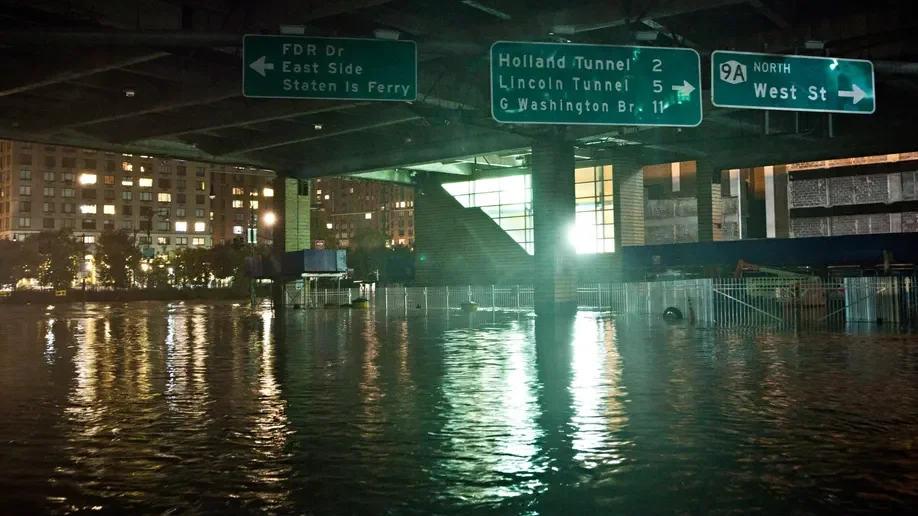
Hurricane Sandy flooded the Holland Tunnel and the New York City subway in October 2012, killing 254 people across eight countries and causing $70 billion in damages.
Photo: Fox News Weather
Then came the orange skies. In June 2023, wildfire smoke from Canadian forests drifted south and turned New York City an apocalyptic amber at noon. Hazardous air quality blanketed 18 states and 13 Canadian provinces. Hundreds sought emergency care for asthma attacks. For a generation raised on abstract warnings, the sky itself had become the evidence.

Smoke from wildfires in Canada caused New York City’s sky to turn orange, leading to hazardous air quality affecting millions in 18 states and 13 provinces and territories in Canada in June 2023.
Photo: Shutterstock
In January 2025, Los Angeles burned. The Palisades and Eaton fires tore through suburban neighborhoods with a ferocity that stunned even veteran firefighters — destroying more than 16,000 homes and structures across 57,000 acres. Official records counted 31 direct deaths. But researchers from Boston University and the University of Helsinki, analyzing all-cause mortality data, estimated the true toll at nearly 440 — almost 15 times higher. The fires didn’t discriminate by zip code. They moved through wealthy enclaves and working-class neighborhoods alike, leaving the same ash behind.
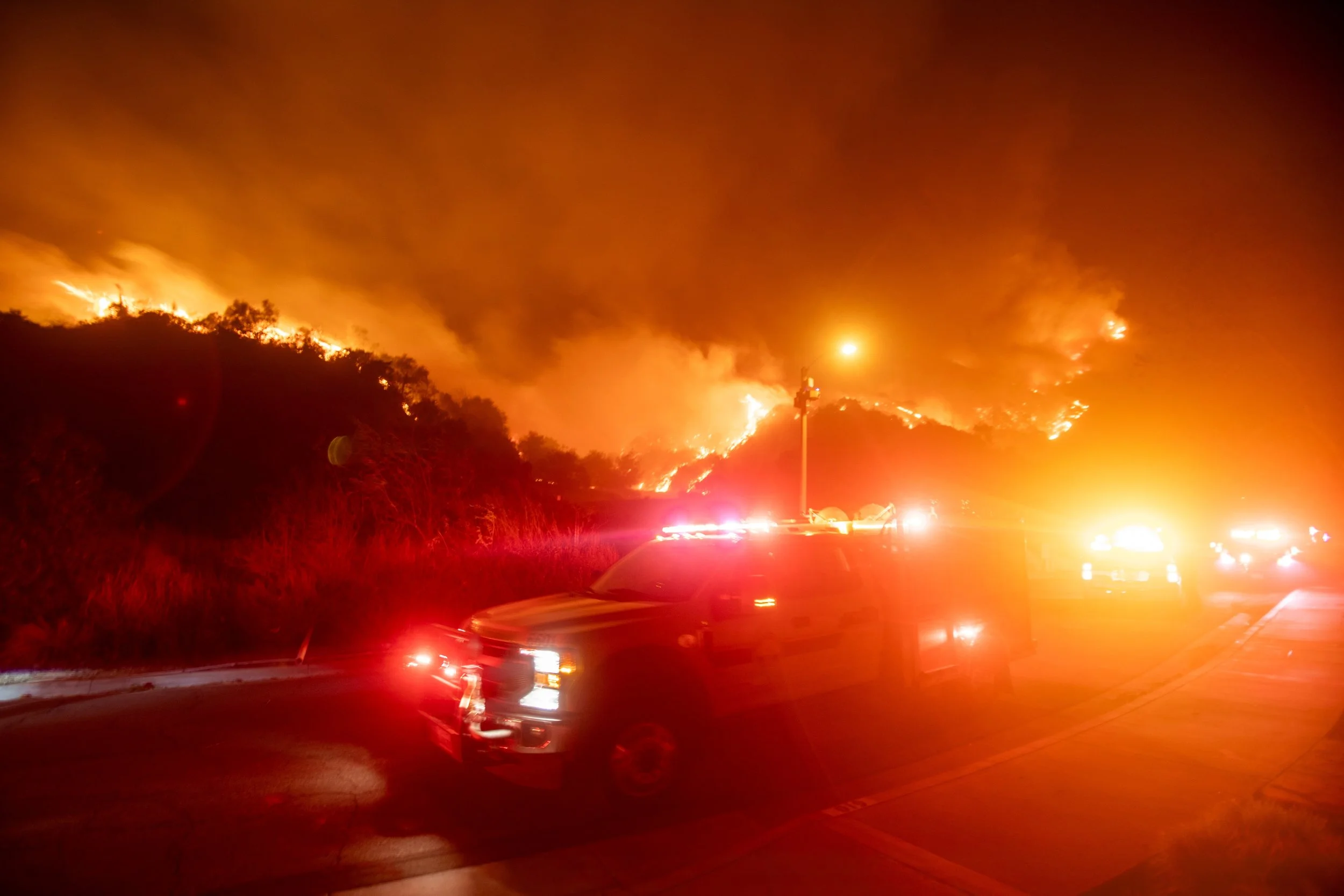
The January 2025 Los Angeles wildfires destroyed more than 16,000 structures across 57,000 acres. Researchers estimated the true death toll at nearly 440 — fifteen times the official count.
Photo: Getty Images
And in the mountains of western North Carolina, Hurricane Helene rewrote what inland communities thought they were safe from. The September 2024 storm caused 1,400 landslides, damaged 6,000 miles of roads, destroyed an estimated 126,000 homes, and killed at least 106 people in North Carolina alone. Total damage exceeded $59 billion — the worst in the state’s history. More than a year later, communities are still waiting. Roads still closed. Families still displaced. The mountain towns that had never flooded before have a new and permanent relationship with the word “before.”
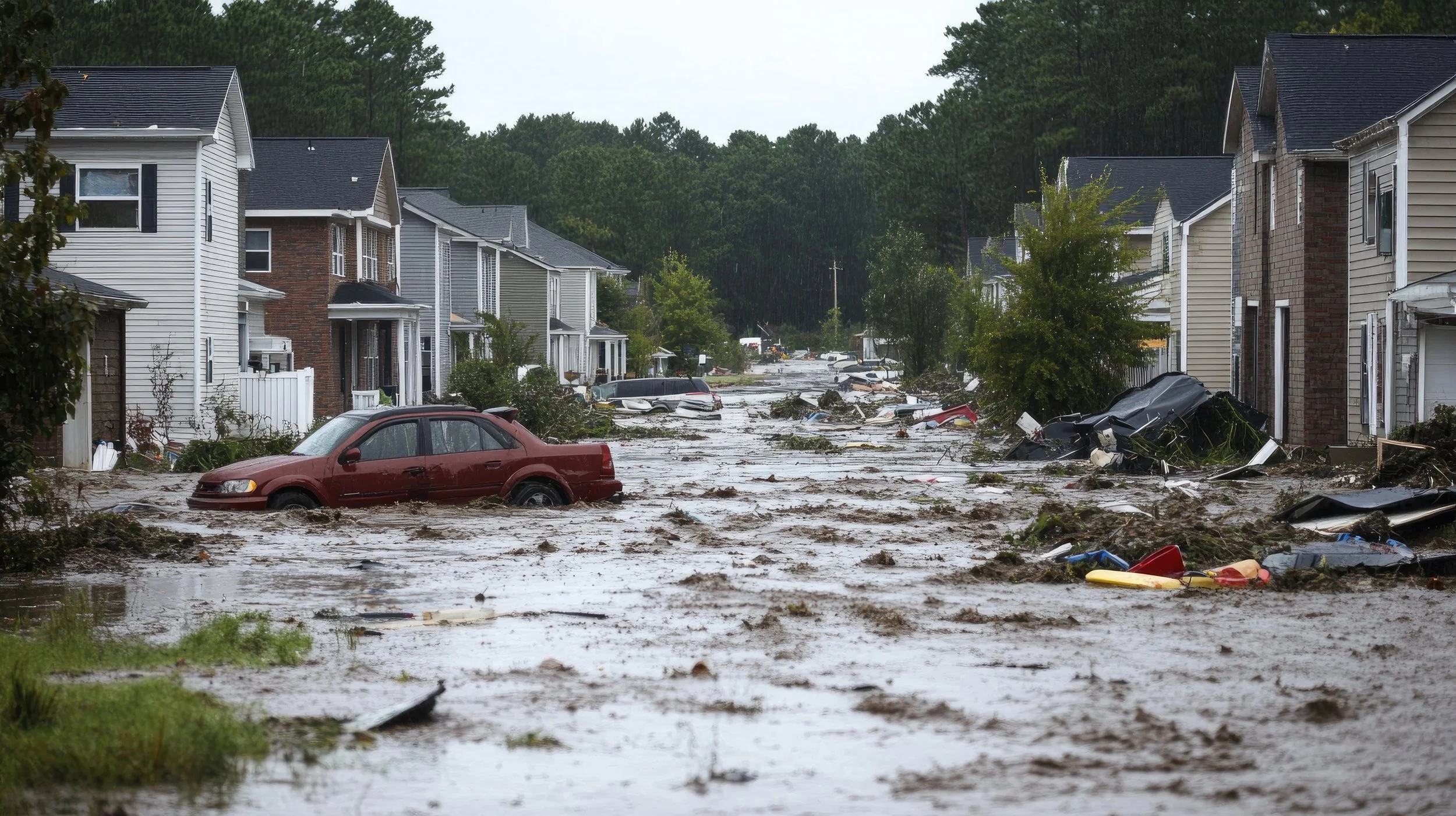
Hurricane Helene caused catastrophic flooding across western North Carolina in September 2024, triggering 1,400 landslides and damaging 126,000 homes. Recovery in many communities continues more than a year later.
Photo: AP Photo / Mike Stewart
“The mountain towns that had never flooded before now have a permanent relationship with the word ‘before.’”
A Nation Waking Up
The data confirm what these events suggest. Nearly 72 percent of Americans now believe global warming is happening — a record high. About 65 percent say they are at least somewhat worried. Believers outnumber skeptics by more than five to one. Roughly two-thirds of registered voters believe climate change is already affecting their cost of living, through higher insurance premiums, energy bills, and disaster recovery expenses.
Communities of color report the highest levels of concern — not because of ideology, but because of geography. Black and Hispanic Americans are more likely to live in areas hit first and hardest: urban heat islands, flood-prone neighborhoods, regions with poor air quality. Climate change has never been abstract for communities already living on the front lines.
72%
of Americans now believe global warming is happening — a record high
(Yale CCAM, 2025)
The Weight Between Knowing and Acting
So why doesn’t awareness automatically produce action? It’s not apathy. It’s grief.
In 2003, Australian philosopher Glenn Albrecht coined the word solastalgia: the distress of being homesick without leaving home — of watching the place you love transform into something unrecognizable. It is one of a family of what researchers now call eco-emotions: eco-anxiety, ecological grief, climate despair. The American Psychological Association defines eco-anxiety as a chronic fear of environmental doom. In a 2020 survey, more than two-thirds of American adults reported experiencing it.
The weight falls hardest on young people. A 2025 study in the Proceedings of the National Academy of Sciences found that one in five Americans aged 16 to 24 are afraid to have children because of climate change. A 2024 Lancet study found that 58 percent of young people felt ignored or dismissed when they tried to talk about climate anxiety — and more than 66 percent wished older generations would try to understand.
Elisabeth Kübler-Ross’s five stages of grief — denial, anger, bargaining, depression, acceptance — were designed for personal loss. But climate psychologists have found them strikingly applicable to ecological awareness. Many people stall at depression, overwhelmed by the scale of what’s been lost and what’s still coming. The gap between knowing the house is on fire and being able to move isn’t weakness. It’s a human response to an almost inhuman scale of loss.
“The gap between knowing and acting isn’t apathy. It’s grief. And grief, unprocessed, becomes paralysis.”
From Grief to Agency
What moves people through it? Research points consistently to two things: community and concrete action. Psychologist Susan Clayton has found that social connection and involvement in climate work are among the most effective antidotes to paralyzing anxiety — not because any single action solves the problem, but because it converts helplessness into agency.
Albrecht called the counterweight to solastalgia soliphilia: the love of and responsibility for a place, and the will to protect it. The people who moved from grief to action in his research were almost always the ones who had found others to act with. The youth climate strikes weren’t primarily about policy. They were about young people discovering they were not alone in what they felt.
This is why visible wins matter beyond their immediate impact. A recovered species, a protected reef, a restored wetland — these are not just ecological facts. They are evidence that the story isn’t over. And that evidence is what keeps people in the fight rather than retreating from it.
Awareness Was Never the Finish Line
The events of recent years — Sandy, the orange skies, the LA fires, the mountains of North Carolina — have done something that decades of scientific reports could not: they made the crisis personal for millions of people who didn’t previously feel it as theirs. That shared experience is the raw material of a movement.
Awareness was always a beginning, not a destination. What we do with the grief — the solastalgia, the eco-anxiety, the fear that feels too large to hold — is the actual question. Whether we let it settle into paralysis or find each other and convert it into something that moves.
What did it take to make climate change feel real to you? And when it did — what did you do with that feeling?
By Denny Frazier · see-the-sea.com · Impacts