
The Mangrove Maniacs of Bonaire:
Guardians of the Green Frontier
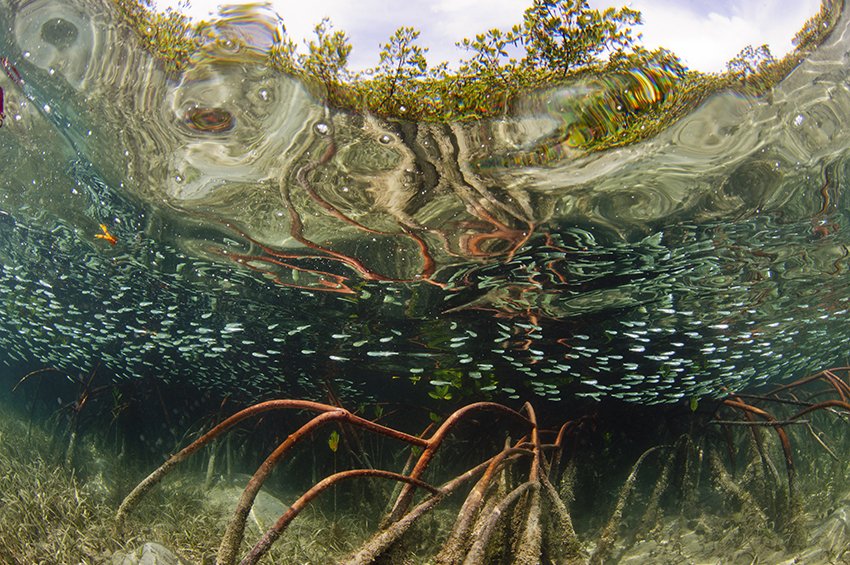

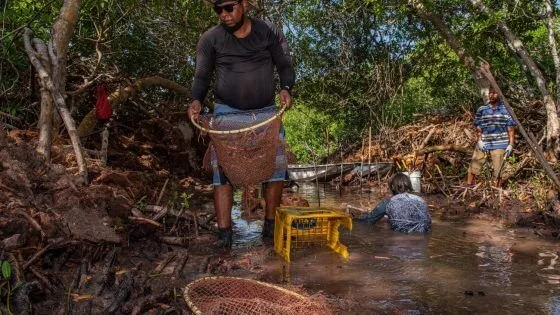
Beneath the blazing Caribbean sun, a quiet army of volunteers gathers along the edges of Lac Bay, Bonaire's largest and most complex natural lagoon. They call themselves the Mangrove Maniacs, and with a name like that, they mean business. Armed with rakes, shovels, and an unshakable love for the island, these men and women are restoring one of the planet's most important yet overlooked ecosystems, the mangrove forest.
A Living Shield Between Land and Sea
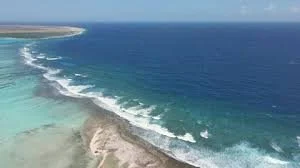
Lac Bay sprawls across more than 1,700 acres, roughly the size of 1,300 football fields. It's a mosaic of life made up of three intertwined ecosystems: coral reef, seagrass beds, and mangroves. On the bay's eastern edge, a barrier reef acts as a bulwark against the Atlantic's relentless waves. Here, boulder and mustard hill corals build mounds that shelter brain, staghorn, and elkhorn corals, each a bustling city of marine creatures.
Beyond the reef, the seafloor softens into lush meadows of seagrass, where green turtles glide lazily through underwater pastures. Among the native turtle grass and manatee grass now grows an uninvited guest, the invasive Halophila Stipulacea, a broadleaf seagrass that hitched a ride from the Indian Ocean through the Suez Canal. First spotted in Grenada in 2002, it has since spread rapidly across the Caribbean, changing the very fabric of these coastal ecosystems. Halophila Stipulacea can form dense mats with over 6,000 blades per square meter, making it nearly impossible for other seagrass species to coexist with this invasive plant.
And then, tucked safely behind these meadows, rise the mangroves, tangled, breathing fortresses of roots and leaves. They are nature's sentinels, protecting the island from storms, filtering the water, and providing nurseries for fish, crabs, and birds.
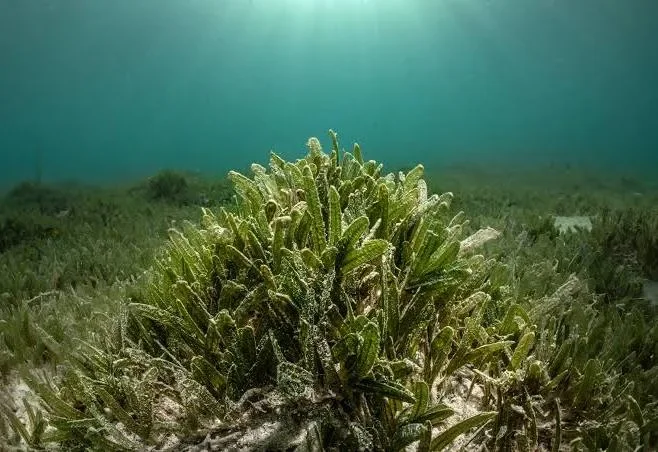
Halophila Stipulacea
A Battle to Keep the Forest Alive
But even nature's strongest defenses can weaken. Over the years, sediment runoff from land development and overgrazing began choking the mangrove channels of Lac Bay. Heavy rains washed loose soil into the forest, blocking water flow and suffocating trees from the roots up.
Stagnant pools replaced once-thriving waterways. Mosquitoes flourished where fish used to feed. The mangroves were literally dying from lack of breath.
That's where the Mangrove Maniacs
stepped in.
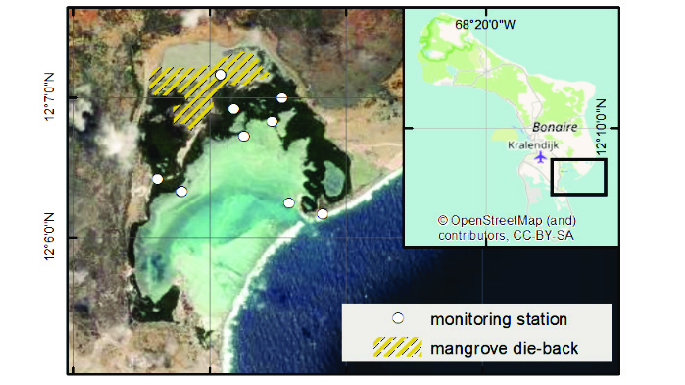
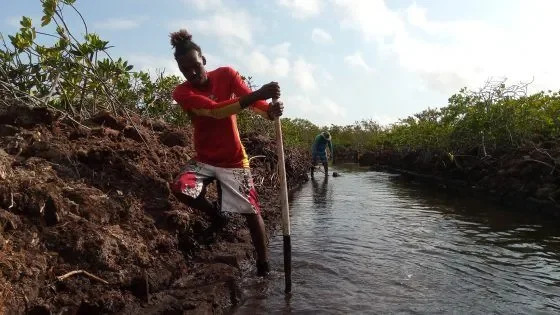
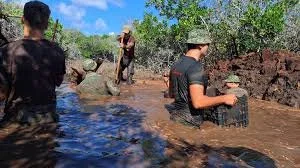
Formed under the guidance of STINAPA, Bonaire's National Parks Foundation, the group's mission is simple yet monumental: to heal this ecosystem one channel at a time. Every week, volunteers don gloves and boots, pushing their way into the dense mangrove maze. They dig, clear, and reopen old channels that once allowed tides to circulate life-giving oxygen and nutrients through
the forest.
"The mangroves can't thrive if they can't breathe," says one longtime volunteer, echoing a belief shared by everyone on
the team.
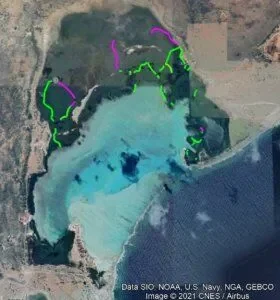
Satellite images from 2016 to 2018 show a striking transformation — a new lifeline carved through the mangrove heart. What was once a mosquito-ridden bog is now a rejuvenated corridor of blue.
Nurseries of the Future
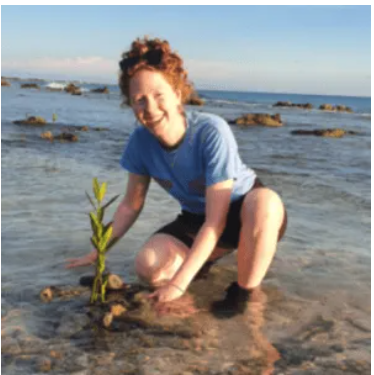
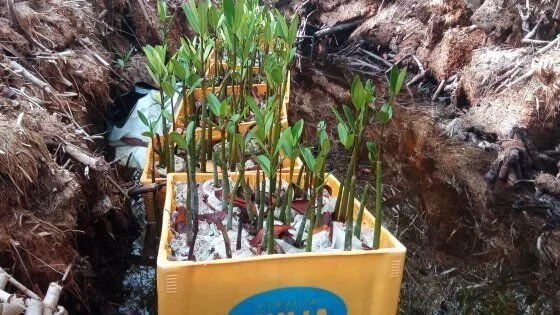
Restoration here doesn’t stop at the waterline. Alongside the channels, the Maniacs have built mangrove nurseries, natural incubators designed to raise the next generation of trees. Red and black mangrove propagules, the
cigar-shaped seedlings that float and take root in shallow waters, are collected from healthy areas and nurtured for at least six months before being replanted in degraded zones.
Each nursery mimics real conditions, including fluctuating tides, saline water, and exposure to sunlight. By testing different locations with varying salinity and light, the team is learning what makes mangroves most resilient. This is a crucial step as sea level rise and weather patterns grow unpredictable.
Once matured, the young trees are outplanted along the island’s southern coast, forming new lines of natural defense. These restored mangroves not only protect shorelines from
storm surges and erosion, but also help neighboring coral reefs thrive by reducing sediment runoff and improving water clarity.
Community Roots Run Deep
At the heart of the project lies a deep belief: conservation must come from community. The Maniacs know that lasting protection depends not only on science and funding but also on fostering local pride and stewardship.
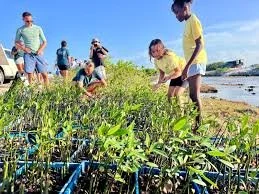
They host kids’ days, school field trips, and community events where families wade into the mangroves to plant seedlings and learn about the ecosystems that sustain them. Visitors are invited to volunteer, lending their hands and hearts to the restoration effort. “When you plant a mangrove,” one volunteer smiles, “you plant a future.”
Blue Carbon: Nature’s Hidden Wealth
Mangroves may appear unassuming, but they are among the most powerful carbon sinks on Earth. Their roots trap organic matter and store carbon in the soil for centuries, making them vital allies in the fight against climate change.
The Maniacs, working alongside international researchers and universities, are helping unlock the secrets of this “blue carbon.” Since 2021, they have supported over 30 students and scientists studying mangrove health, water quality, and carbon storage. The data they collect feeds into a growing body of research aimed at understanding how these coastal forests can help the world reach net-zero goals.
“We’re building not just mangroves, but knowledge,” says one STINAPA coordinator. “Every root system we restore becomes part of a global story about resilience.”
The Challenges Ahead
Despite the progress, the fight is far from over. Rising seas, stronger storms, and unchecked development continue to threaten the fragile balance of Lac Bay. Each heavy rainfall risks filling newly opened channels with fresh sediment. And the invasive seagrass species still spreads, quietly reshaping the underwater landscape.
But the Maniacs are undeterred. Their strategy is adaptive, guided by careful monitoring and constant learning. Already, they’ve seen measurable improvements, including clearer water, healthier mangrove roots, and the return of fish and birds to once lifeless areas.
Science Meets Sweat
This is not a haphazard clean-up crew. Each action is guided by a blend of science, tradition, and technology. Using satellite imagery, local fishermen’s knowledge, and ecological mapping, the Maniacs identify historic waterways that can be safely reopened without disturbing wildlife.
Two main methods drive their restoration efforts: maintaining existing channels by clearing sediment and regrowth, and reopening long-lost channels buried under years of silt. The results have been dramatic. In the once-stagnant Taco Channel, where water once lay still and lifeless, fish now dart through clear currents, and wading birds return to hunt.
Support also comes from BEST 2.0+, a European Union funded program focused on biodiversity conservation in Overseas Territories. Through this partnership, the Bonaire Mangrove Restoration Project has expanded its reach by improving water flow, replanting mangroves, and raising public awareness across the island.
The Maniac Spirit
Each week, the team returns to the bay, shovels in hand, sweat on brows, laughter echoing through the forest. They clear another channel, plant another seedling, and measure another sign of progress. It’s hard, messy work, but every tide that flows freely again is proof that their efforts matter.
As the sun sets over the island, the mangroves glow in golden light, their roots reflecting on the calm water like veins of life. This is where science meets passion, where community meets nature, and where hope takes root.
Because here on Bonaire, the Mangrove Maniacs are not just restoring a forest. They’re restoring the future.