
Marine Ecosystems
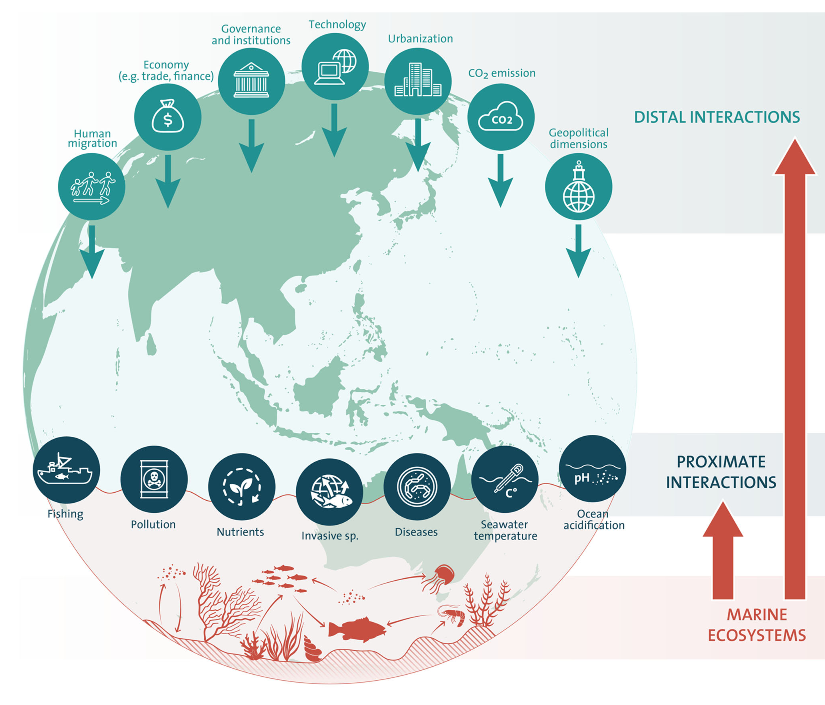
Marine ecosystem science on an intertwined planet. Changes in marine ecosystem dynamics are influenced by socioeconomic activities (for example, fishing, pollution) and human-induced biophysical change (for example, temperature, ocean acidification) and can interact and severely impact marine ecosystem dynamics and the ecosystem services they generate to society.
Source: "Marine ecosystem science on an intertwined planet". Ecosystems, 19 (1): 1–8.
From the air, coastlines appear as thin, shifting boundaries. On the ground, they are anything but fragile. Marine ecosystems, including reefs, wetlands, and submerged meadows, form one of Earth’s most powerful living systems, sustaining life far beyond the water’s edge. Together, the ocean and
its coastal habitats generate roughly half of the oxygen we breathe, absorb vast amounts of carbon dioxide, regulate the planet’s climate, and provide food, medicine, and livelihoods for billions of people. They buffer shorelines from storms, enable global trade and transportation, and offer
places of recreation and renewal that nourish human well-being.
At the heart of this coastal resilience are salt marshes, seagrass beds, and mangroves, often known
as blue carbon ecosystems. Though they cover only a sliver of the planet’s surface, their impact is immense. Dense grasses and tangled roots slow waves, trap sediment, and build land upward as seas rise. Beneath the surface, thick, oxygen poor soils lock away carbon for centuries, helping stabilize
the climate. Above and below the waterline, these habitats serve as nurseries for fish and shellfish, feeding coastal communities and supporting global fisheries. Quietly and continuously, they protect shorelines while sustaining extraordinary biodiversity.
Yet these natural defenses are vanishing. Coastal development, pollution, dredging, and accelerating climate pressures are erasing blue carbon ecosystems at alarming rates. When they disappear, stored carbon is released back into the atmosphere, coastlines are left exposed to erosion and storm surge, and vital nursery habitats for fish, birds, and other wildlife, both marine and terrestrial, are lost.
What was once a living shield becomes an open wound.
Protecting and restoring these ecosystems is not simply about conservation. It is about resilience. Safeguarding salt marshes, seagrass beds, and mangroves strengthens coastlines, supports food security, and invests in a future shaped by rising seas. This page explores why these ecosystems matter, how they function, and why restoring them may be one of the most powerful tools we have
to protect both nature and ourselves in a changing world.