
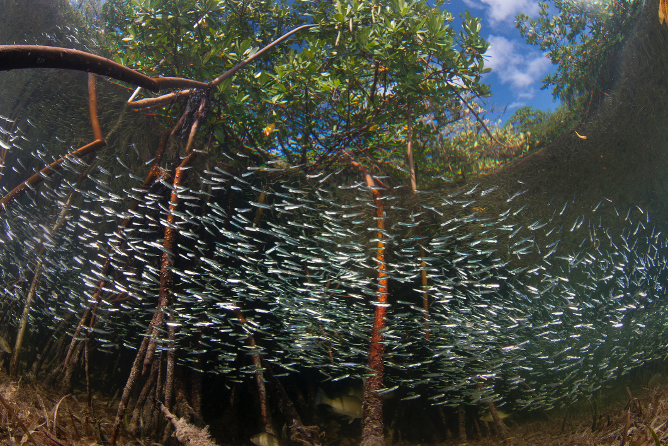
Rewiring how the world values mangroves
How Mangrove Projects Build Opportunity and Resilience for Coastal Communities
The world is waking up to the need to secure the future of this extraordinarily valuable ecosystem. "Mangrove forests are among the most valuable and threatened ecosystems on Earth. We have lost one million hectares of mangroves since 1996-far too much," said Jennifer Morris, Chief Executive Officer of The Nature Conservancy.
Mangroves have been lost globally due to coastal development, aquaculture expansion, logging, and pollution. Although the rate of loss has slowed in the last decade, degradation continues in many regions, placing coastal communities, fisheries, biodiversity, and climate stability at risk.
Mangroves are uniquely powerful coastal ecosystems-they store up to four times more carbon per hectare than terrestrial forests. Globally, Mangroves store the carbon equivalent of over 22 gigatons of CO2. For example, the entire United States emits about 6.7 gigatons of CO2-equivalent per year.
A fringe forest of mangrove, 100 meters wide, can reduce the height of a wave by 66%. During Hurricane lan, mangroves buffer coastlines against storm surge.
Hurricane lan (2022): Mangroves are estimated to have prevented approximately $4 billion in flood damage. In areas of Collier, Lee, and Charlotte Counties, they reduced flood depths by over a meter in some neighborhoods.
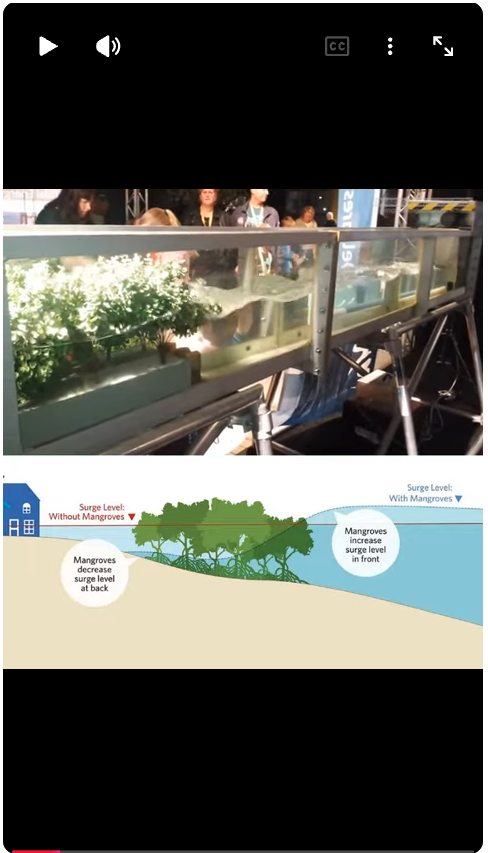
How mangrove forests protect the coast

Flood Production Benefits of Mangroves
There's also a more recent study (reported by Earth.com) that mangrove-associated species contribute substantially to food production, and that in some places up to 80% of species targeted by fisheries depend on mangroves in at least part of their life cycle.
They support an estimated 4.1 million small-scale fishers who rely on them for their livelihoods. Additionally, 210 million people live near mangroves and benefit from the fisheries associated with them. Economically, mangroves support the production of around 1.4 trillion commercially important fish, prawns, bivalves, and crabs each year.
The 2022 United Nations Climate Change Conference, the 27th "Conference of the Parties"(COP), over 30 national and subnational governments endorsed Mangrove Breakthrough when it was purposed, including Australia, Brazil, Colombia, Germany, Mexico, the United Kingdom, and the United Arab Emirates. They recognized the urgent challenges that mangrove forests are facing, so the Mangrove Breakthrough was launched. The Global Mangrove Alliance, and the UN High-Level Climate Champions are leading the global effort. Their goal is to secure the protection and restoration of 15 million hectares of mangroves by 2030, supported by US$4 billion in sustainable finance.
Objectives of the Mangrove Breakthrough
Halt mangrove loss by 2030.
Restore degraded mangrove ecosystems using science-based methods.
Mobilize US$4 billion in sustainable finance.
Strengthen community-led stewardship and governance.
Integrate mangroves into national climate commitments and adaptation strategies.
Build global monitoring using standardized science and remote sensing.
Here are some Case Studies of Projects funded by Mangrove Breakthrough
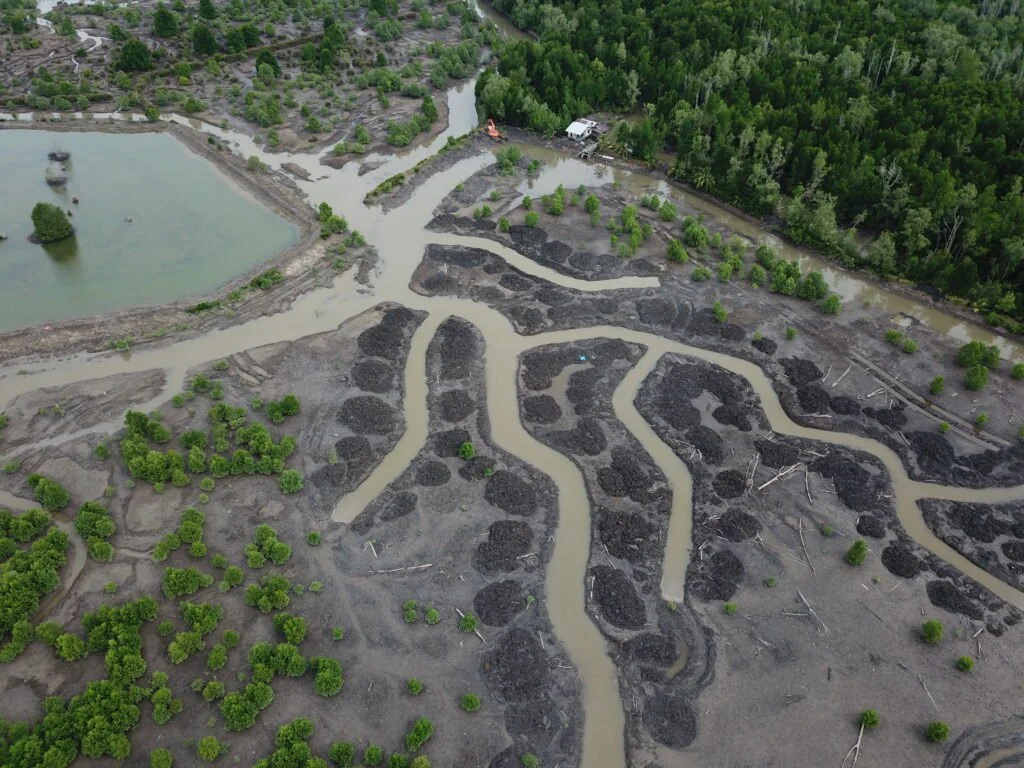
North Kalimantan, Indonesia
North Kalimantan, Indonesia: Mangroves, Tides, and a Community Reborn
At sunrise in North Kalimantan, the tide winds through young mangrove forests that only years ago were abandoned shrimp ponds—acidic, eroding, and nearly lifeless. In the 1980s and ’90s, large areas of mangroves were cleared for aquaculture. When the ponds collapsed due to disease and poor water quality, the land was left scarred. Fish nurseries vanished, crab populations declined, and storms chewed away at the exposed coastline.
The turning point came when community cooperatives partnered with Indonesian NGOs and local universities to attempt something bold: restore the tides before restoring the forest. Villagers breached the walls of old ponds, reconnecting them to the sea. Tidal waters flushed out acidity and redeposited sediment, allowing natural regeneration to begin. In the most degraded sites, women-led nurseries cultivated and planted Rhizophora and Avicennia seedlings, while local rangers and drones monitored regrowth.
Within months, mudskippers and crabs returned. Within a few years, thousands of hectares of mangrove forest took root again. Today, more than 3,000 hectares of tidal forest have been
restored—one of Indonesia’s most successful community-driven blue carbon efforts.
The community then registered the project under the Plan Vivo Standard, enabling the sale of high-quality blue carbon credits. Unlike many carbon initiatives, 90% of revenue goes directly to the villages, funding projects the community prioritizes. These include improved aquasilviculture systems that integrate mangroves with low-impact fishponds, women-led businesses producing seaweed snacks and mangrove honey, and small-scale eco-tourism centered on birdwatching and forest boardwalks.
The ecological revival has sparked economic renewal: fishers report healthier stocks, household incomes have risen by 30–40%, and shoreline erosion has visibly slowed.
As one community ranger puts it, “When we restored the mangroves, we restored our future.”
North Kalimantan now stands as a powerful example of how community-led action can revive both coastal ecosystems and coastal livelihoods.
Indonesia Mangrove Reforestation Project

Africa:
Mikoko Pamoja: The Kenyan Village Where Mangroves Protect People—and People Protect Mangroves
At low tide in Kenya’s Gazi Bay, the mangrove forest rises from the mud like a city of living stilts—roots twisted, ribbed, and gleaming in the morning light. Women gather shellfish along the mudflats, fishermen guide narrow canoes between the channels, and children race across the wooden boardwalk that threads through the forest. For generations, these mangroves shielded the villages of Gazi and Makongeni from storms and sustained families with fish, prawns, and timber.
By the early 2000s, however, years of cutting and coastal pressure had thinned the forest. Shoreline erosion accelerated and fish catches dropped. The community watched their natural protector weaken, threatening both livelihoods and safety.
In 2013, villagers partnered with scientists from the Kenya Marine and Fisheries Research Institute (KMFRI) to try something bold: generate income by conserving and restoring mangroves through carbon credits. Mangroves store immense amounts of carbon—far more than many terrestrial forests—locked into dense roots and deep, waterlogged soils. If Gazi could accurately measure this carbon, it could sell credits on the voluntary carbon market.
Local teams trained in field monitoring waded through knee-deep mud with calipers and tapes, measuring tree diameters, counting seedlings, and extracting soil cores under IPCC Wetlands guidelines. Their careful work led to Mikoko Pamoja—“Mangroves Together”, the world’s first community-run blue carbon project, certified under the Plan Vivo Standard.
Today, the project generates roughly 3,000 carbon credits a year, and the revenue flows directly back into the villages. It has funded a clean-water system serving more than 5,000 residents, strengthened local schools with desks and textbooks, and launched women-led enterprises that diversify income beyond fishing.
Ecological recovery is equally striking. Each year, teams plant 6,000–10,000 mangrove seedlings. Community patrols have reduced illegal cutting by over 90%. Fishers report returning crab and prawn populations as nursery habitats rebound. In areas once eroding, sediment now accumulates, allowing the coastline to rebuild naturally.
Walking the boardwalk today feels like entering a rejuvenated world: fiddler crabs waving oversized claws, kingfishers flickering between branches like sparks of blue, and mudskippers wriggling across the shallows like ancient survivors.
Mikoko Pamoja’s success has spurred expansion. It inspired Vanga Blue Forest, Kenya’s second community blue carbon project, and now guides efforts in Madagascar, Zanzibar, Mozambique, and Indonesia, with pilots underway in Fiji and Papua New Guinea. Gazi’s residents—once learners—have become teachers, sharing their model across oceans.
As Fatma, a local steward, reflects:
“We used to think only governments could protect forests. Now we know—we protect what
protects us.”
Mikoko Pamoja Blue Forests - People & Mangroves Together
North America
Case Study: Restoring Mangroves and Reviving Coastal Livelihoods in Mexico’s Yucatán Peninsula
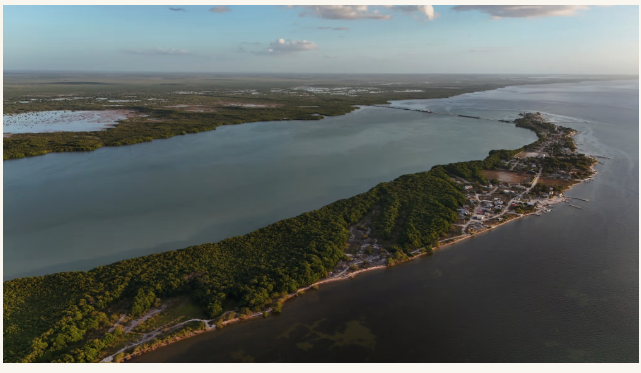
At dawn on the Yucatán Peninsula - at Ría Celestún Biosphere Reserve, in Isla Arena, the mangrove wetlands glow in muted gold—an intricate labyrinth of roots, tidal channels, and quiet pools where herons stalk and juvenile fish dart beneath the surface. Few visitors guess that just decades ago, much of this landscape was collapsing. Tourism boomed in the 1970s, carving roads, resorts, and canals across the coast. The construction severed natural tidal flows, drying out ancient basins and transforming once-thriving mangrove forests into brittle stands of dead trees. Fisheries declined, storms bit deeper into the shoreline, and families who depended on the wetlands watched their safety nets unravel.
Today, the scene is changing. A sweeping, science-driven restoration effort—led jointly by ecologists, government agencies, and coastal communities- is breathing life back into the peninsula’s mangroves. Their strategy centers on hydrological restoration: undoing decades of altered water flow. Teams re-excavate clogged channels, carve openings beneath old roadbeds, and install culverts that allow the tides to return to their natural rhythm. Once the water comes back, nature takes over. Mangrove propagules, carried in on the tide, settle themselves. Basins re-flood. Salt levels normalize. Birds, crabs, and fish rush into the revived habitat.
But the most transformative force is the people who live closest to the mangroves. Fisher associations and ecotourism cooperatives now co-manage restored sites, patrolling the waterways, conducting wildlife counts, and guiding kayakers through winding channels once too dry to navigate. Women’s groups have stepped into leadership roles—running birdwatching tours, leading educational walks, and crafting locally guided conservation experiences that visitors eagerly seek out. Their involvement is reshaping both the wetland and local economies.
Blue carbon finance has added a powerful new layer of support. Restored mangrove zones are now registered under international carbon standards, allowing communities to sell carbon credits that reflect the forests’ remarkable capacity to store CO₂. Revenue helps fund monitoring equipment, educational programs, and community priorities—from fishing gear upgrades to infrastructure improvements.
Ecologically, the rebound is unmistakable. Fish nurseries are flourishing again, and local fishers report healthier catches and shorter trips. Birdlife has surged, filling restored channels with the calls of ibises, ospreys, and egrets. The mangroves themselves stand renewed—dense, resilient, and functioning as storm buffers for villages along the coast.
Mexico’s decision to embed blue carbon into its national climate commitments has amplified the impact, turning local successes into a model for coastal nations worldwide. In the Yucatán, the mangroves are no longer fading relics; they are a restored lifeline, stitching together community resilience, economic opportunity, and a renewed relationship between people and the sea.