
The Plastic Tide: How Microplastics Are Impacting the Ocean and Us
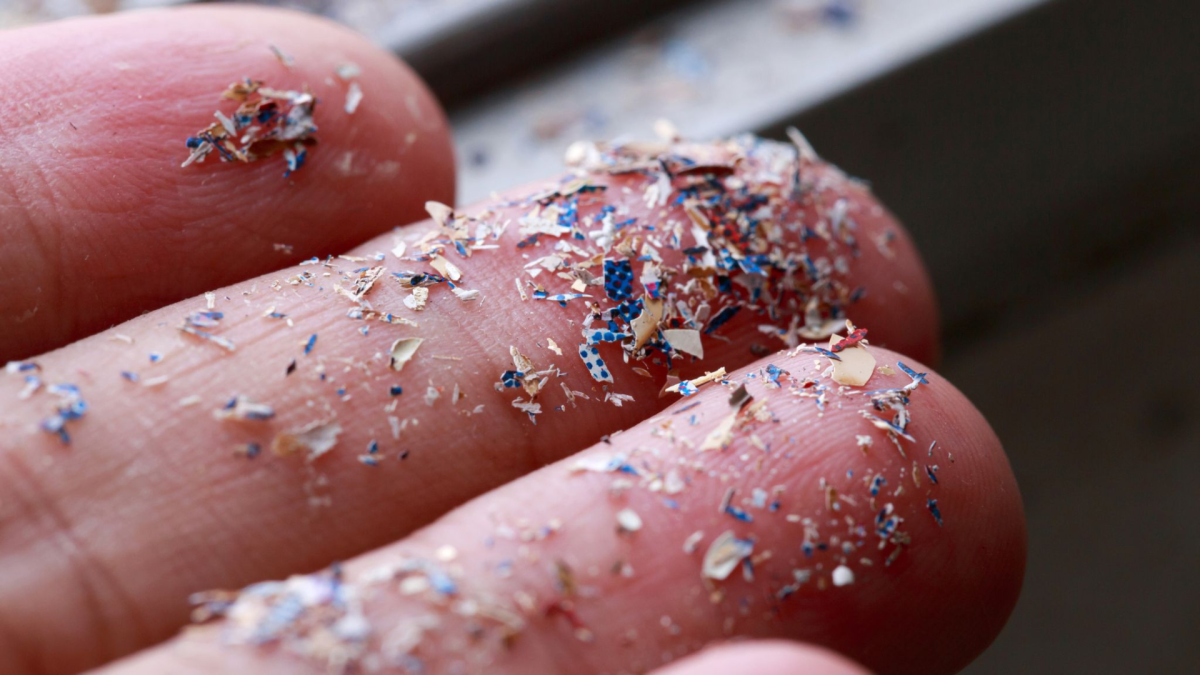
In 2022, Scientists from the University of Canterbury discovered microplastics in freshly fallen Antarctic snow for the first time, with samples from 19 sites containing an average of 29 particles per liter of melted snow.
At dawn, the ocean looks untouched. Sunlight breaks across a glassy horizon, pelicans skim the surface, and beneath the waves plankton rise in their daily migration toward light. But in that same water — invisible to the naked eye — drift billions of plastic particles smaller than a grain of sand. These microplastics, fragments less than five millimeters wide, have become one of the most pervasive pollutants on Earth.
They are now found from the Arctic sea ice to the deepest ocean trenches, inside coral reefs, in the stomachs of whales, and in human blood and breast milk.
“We used to think of plastic pollution as a visible problem — bottles, bags, fishing nets,” says Dr. Jenna Jambeck, an environmental engineer at the University of Georgia who studies global plastic waste flows. “Now we understand that the real threat is the plastic we can’t see. Microplastics move through ecosystems the way nutrients do — except they don’t belong there.”
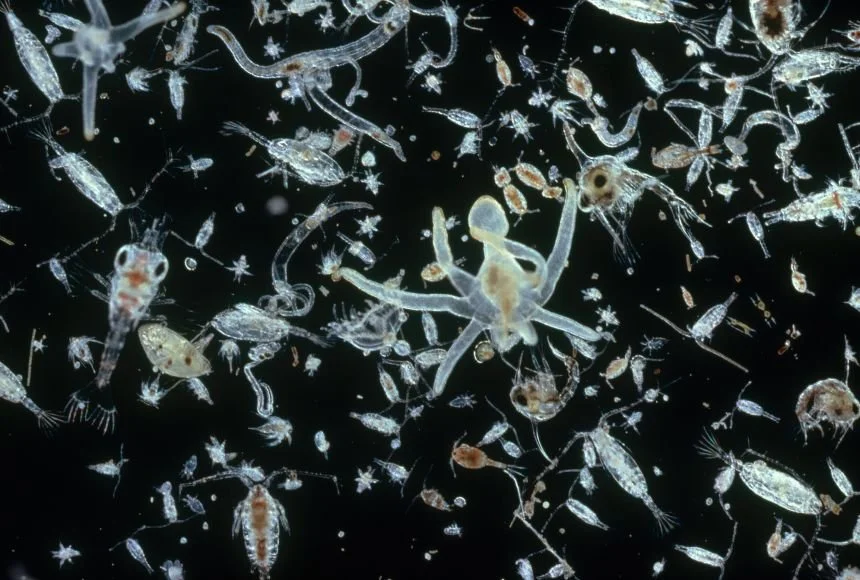
The varied translucent plankton against a black background. Credit Dr. D. P. Wilson/Science Source
A Meal That Isn’t Food
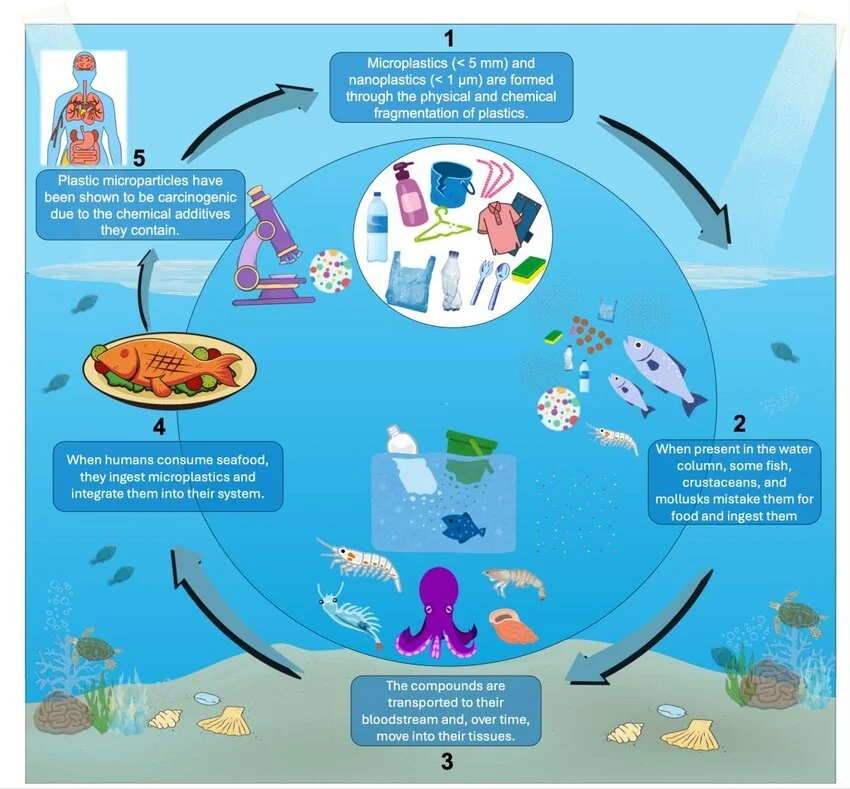
More than 1,300 marine species are known to ingest plastic. Zooplankton mistake tiny fragments for prey. Fish swallow synthetic fibers that resemble plankton. Seabirds feed shards to their chicks. Even baleen whales — filtering tons of water each day — consume microscopic plastic along with krill.
Inside the body, the consequences compound. Plastics can block digestive tracts, leaving the animal feeling full while slowly starving. Chemical additives — including the forever chemicals PFAS (per- and polyfluoroalkyl substances) from nonstick cookware, water-resistant textiles, cosmetics, and firefighting foams — leach into tissues. Meanwhile, the plastic surfaces themselves attract toxic pollutants like PCBs and heavy metals, concentrating them into what scientists call mobile “chemical cocktails.”
“We’re seeing impacts at every level of biological organization,” says Dr. Chelsea Rochman, a marine ecologist at the University of Toronto. “From cellular inflammation to behavioral changes in fish, the evidence is growing that microplastics are not inert. They are biologically active.”
In laboratory studies, fish exposed to microplastics show impaired predator avoidance. Shellfish demonstrate reduced reproductive success. Corals that ingest plastic are more likely to bleach and suffer tissue necrosis — compounding stress from warming waters.
Even plankton — the foundation of the marine food web — are affected. Microplastics can reduce photosynthetic efficiency in phytoplankton, subtly weakening the ocean’s primary engine of oxygen production and carbon absorption.
Disrupting Earth’s Climate Machinery
The ocean is more than a habitat; it is a planetary regulator. Through a process known as the biological carbon pump, microscopic organisms capture atmospheric carbon dioxide and transport it to the deep sea. When zooplankton consume phytoplankton, their fecal pellets typically sink rapidly, carrying carbon downward.
But when zooplankton ingest plastic, those pellets can become lighter and sink more slowly — potentially reducing the efficiency of this natural carbon storage system.
“We are interfering with one of Earth’s most important climate-regulating mechanisms,” explains Dr. Karin Kvale, a climate biogeochemist who models ocean carbon cycles. “Even small disruptions to the biological pump, scaled globally, could have measurable climate consequences.”
On coastlines, microplastics embedded in sand can alter thermal properties — a subtle change with profound implications. Sea turtle hatchlings develop sex based on sand temperature. Slight warming biases nests toward female offspring, threatening long-term population balance.
Plastic, once engineered for durability, now persists as a planetary variable.
From Ocean to Human Body
Humans encounter microplastics through seafood, drinking water, and airborne fibers shed from synthetic clothing. Recent studies have detected microplastics in human lungs, placental tissue, and blood.
“We’re still early in understanding the health implications,” says Dr. Philip Landrigan, director of the Global Observatory on Planetary Health. “But we know these particles can trigger inflammation and oxidative stress. Given their chemical load, we must treat this as a serious public health issue.”
While long-term epidemiological data are still emerging, scientists are investigating links to cardiovascular disease, immune dysfunction, and cancer risk.
The ocean’s pollution has quietly entered our own biology.
A Global Reckoning
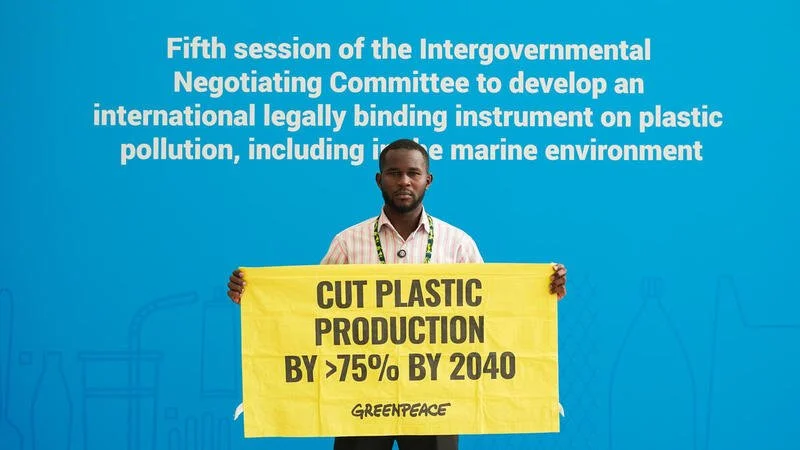
Recognizing the scale of the crisis, 175 nations in 2022 agreed to negotiate the first legally binding global treaty to end plastic pollution. The agreement — still under negotiation as of early 2026 — aims to regulate plastics across their full lifecycle, from fossil fuel extraction to product design and disposal.
“This is not just about cleaning beaches,” said Inger Andersen, Executive Director of the United Nations Environment Program, at a recent negotiating session. “We must redesign the system that produces plastic in the first place.”
Proposals include caps on virgin plastic production, global bans on high-risk single-use items, and Extended Producer Responsibility — making companies financially responsible for the waste their products generate.
Meanwhile, existing maritime agreements prohibit dumping plastic at sea, and regional frameworks — from the European Union’s packaging reforms to China’s phased single-use bans — are reshaping domestic policy landscapes.
In the United States, federal efforts emphasize research and monitoring, while individual states lead on producer responsibility laws. “Innovation and prevention must go hand in hand,” said an EPA spokesperson following the release of the National Strategy to Prevent Plastic Pollution in 2026.
The debate is no longer whether plastic pollution is a problem. It is how deeply governments are willing to transform production systems to solve it.
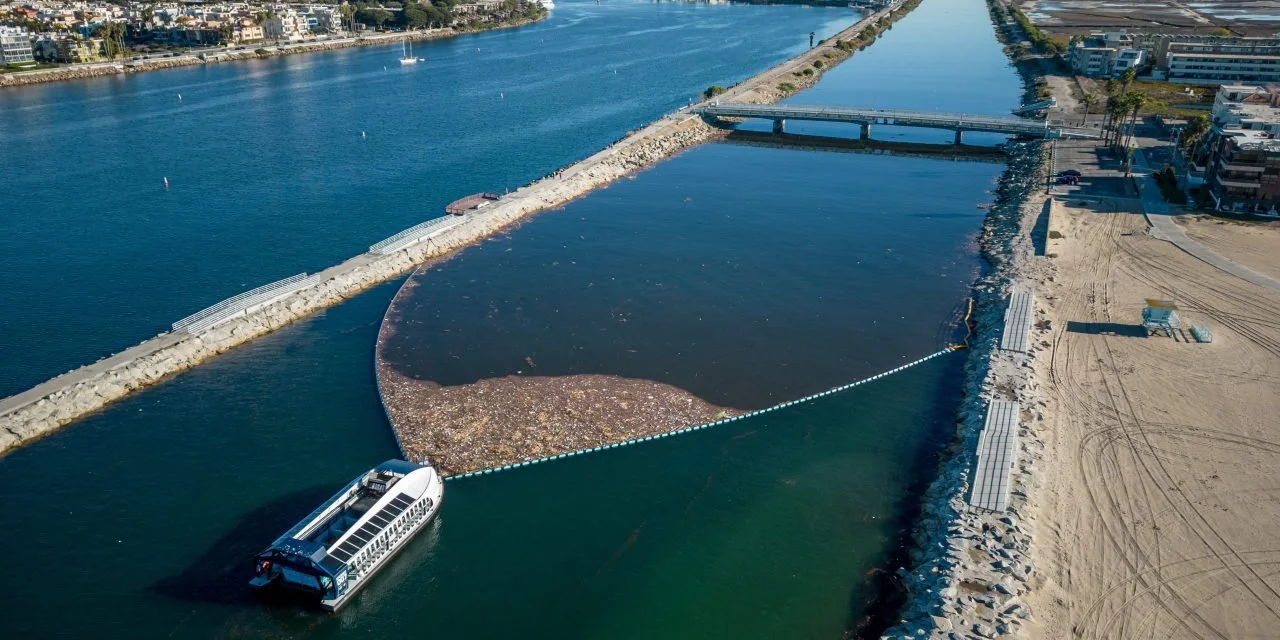
A 79-foot -long, solar-powered device installed at the mouth of Los Angeles’ Ballona Creek has stopped nearly 155,000 lbs of trash and debris from entering the Pacific Ocean during its first storm season in operation, according to a Los Angeles County Department of Public Works report.
Can the Ocean Be Cleaned?
Removing microplastics from open ocean waters is extraordinarily difficult. Once fragmented, plastic disperses widely and becomes nearly invisible.
Efforts increasingly focus upstream — intercepting plastic in rivers before it fragments at sea. New technologies use magnetic nanoparticles to bind plastic particles for extraction. Researchers are testing plant-based polymers from okra and fenugreek that clump microplastics together for removal. In controlled environments, engineered enzymes such as PETase show promise in breaking down certain polymers.
Nature itself may offer assistance. Mussels — voracious filter feeders — can process vast volumes of water. Experimental deployments near estuaries aim to harness their natural filtration capacity without introducing ecological harm.
Still, scientists caution that removal is far less effective than prevention.
“There is no technological silver bullet for microplastics,” says Jambeck. “The only durable solution is to stop producing so much plastic in the first place.”
A Turning Point Beneath the Surface
Plastic was once hailed as a miracle material — lightweight, durable, endlessly versatile. Its strength has become its legacy problem. Each bottle, fiber, and fragment now cycles through oceans in pieces too small to gather easily, yet large enough to alter life systems.
The shift underway — from waste management to full lifecycle reform — marks a profound change in environmental governance. The world is beginning to confront plastic not as litter, but as infrastructure — a material embedded in modern economies that must be redesigned at its source.
At sunrise, the ocean still appears pristine. But beneath the surface drifts a story of industrial abundance colliding with planetary limits.
Whether that story becomes one of irreversible accumulation or systemic transformation will depend on decisions being negotiated today — in laboratories, legislatures, and treaty halls — far from the tide line, yet deeply connected to it.
