
Saving Giants of the Pacific: A Conversation with Marie Harvey, A NOAA Large Mammal Entanglement Response Team Leader
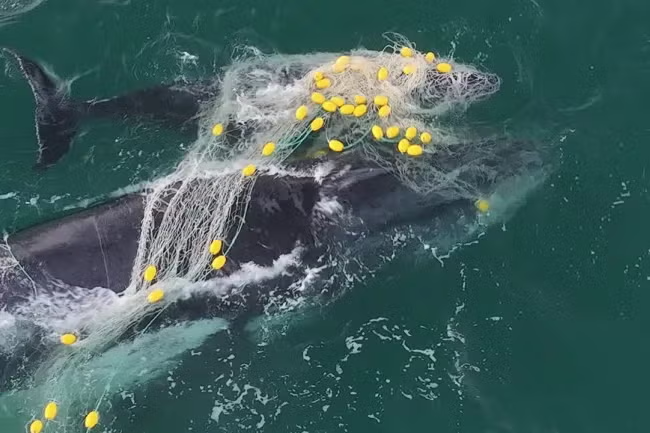
Mother humpback and calf caught in a gill net
Two years ago, we were invited to a dear friend’s wedding. We first met Austin at 18 and watched him grow into a wonderful young man. When he shared, he found love, invited us to his Maui wedding, and we bought our tickets immediately. We looked forward to reconnecting with close friends and enjoying the ocean. At Maui Airport, I saw a rash guard with the NOAA Large Mammal Entanglement Response Team logo, which sparked a chat with Marie Harvey from the Hawaiian Islands Humpback Whale National Marine Sanctuary. She was returning from assisting with whale rescue missions at the Center for Coastal Studies in Massachusetts. She invited us to visit the sanctuary’s museum. Here's a highlight from our conversation about her vital work. Harvey is part of a highly trained team that responds when a whale is found entangled in fishing gear or marine debris. Every winter, humpbacks travel thousands of miles to the warm waters of Hawaii to breed and raise their calves. But several arrive trailing hazards from their journey — ropes cutting into their bodies, nets wrapped around their fins, or lines that slowly tighten with every movement.
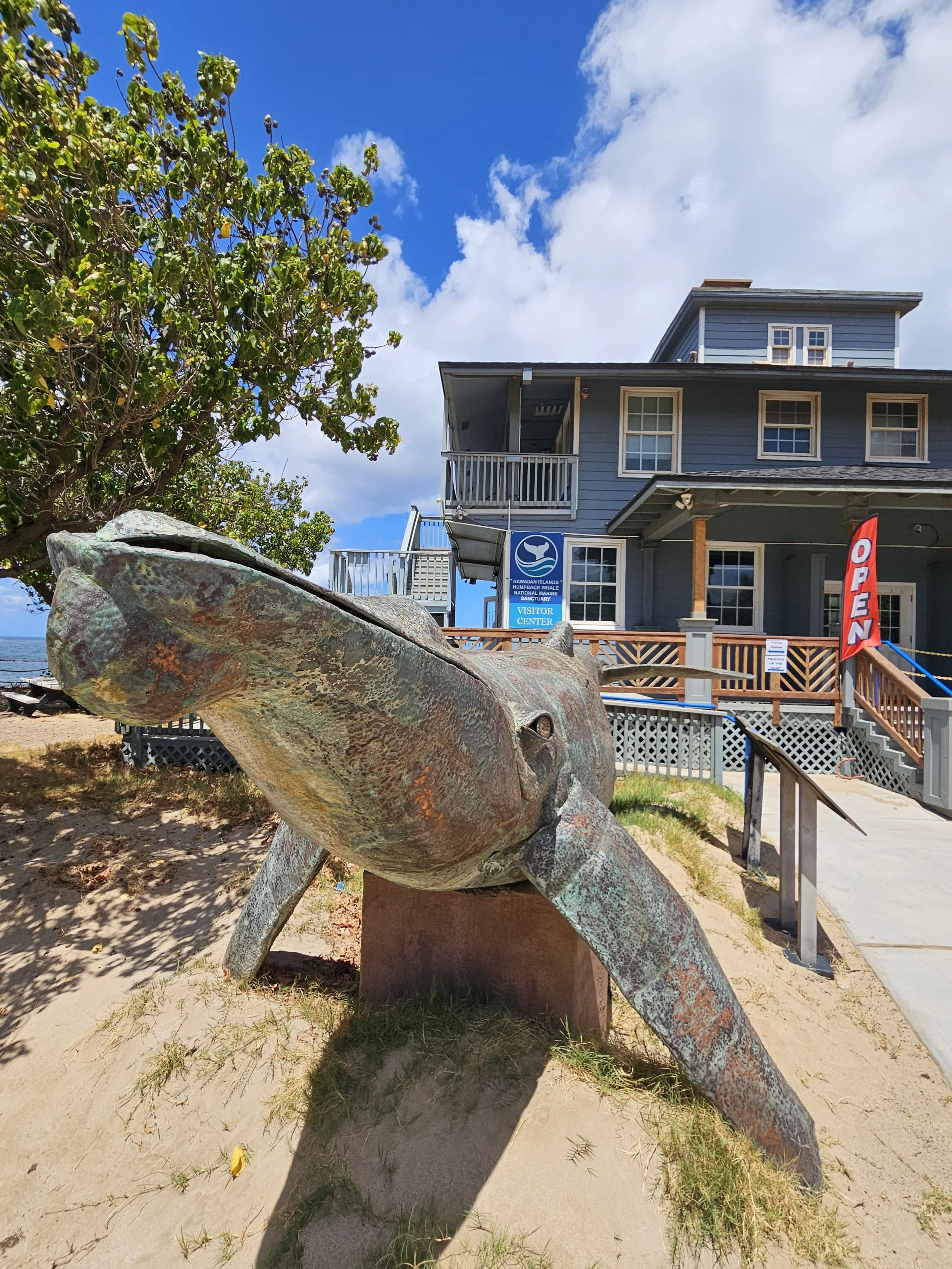
Hawaiian Islands Humpback Whale National Sanctuary Vistor Center
“What happens when a whale gets entangled?”
Marie: Large whales — baleen whales and sperm whales alike — can become entangled in active fishing gear, lost traps, or drifting debris. Some can remove the gear themselves. Others carry it for months or even years. The lines can interfere with swimming, feeding, and breathing, and injuries may lead to infection, starvation, or drowning. It can be a long, painful process.
“Are they always in immediate danger?”
Marie: Every entangled whale is considered in distress, but not all injuries are instantly life-threatening. That gives trained responders time to locate the whale, assess the situation, and decide whether intervention is safe. Human and animal safety always come first.
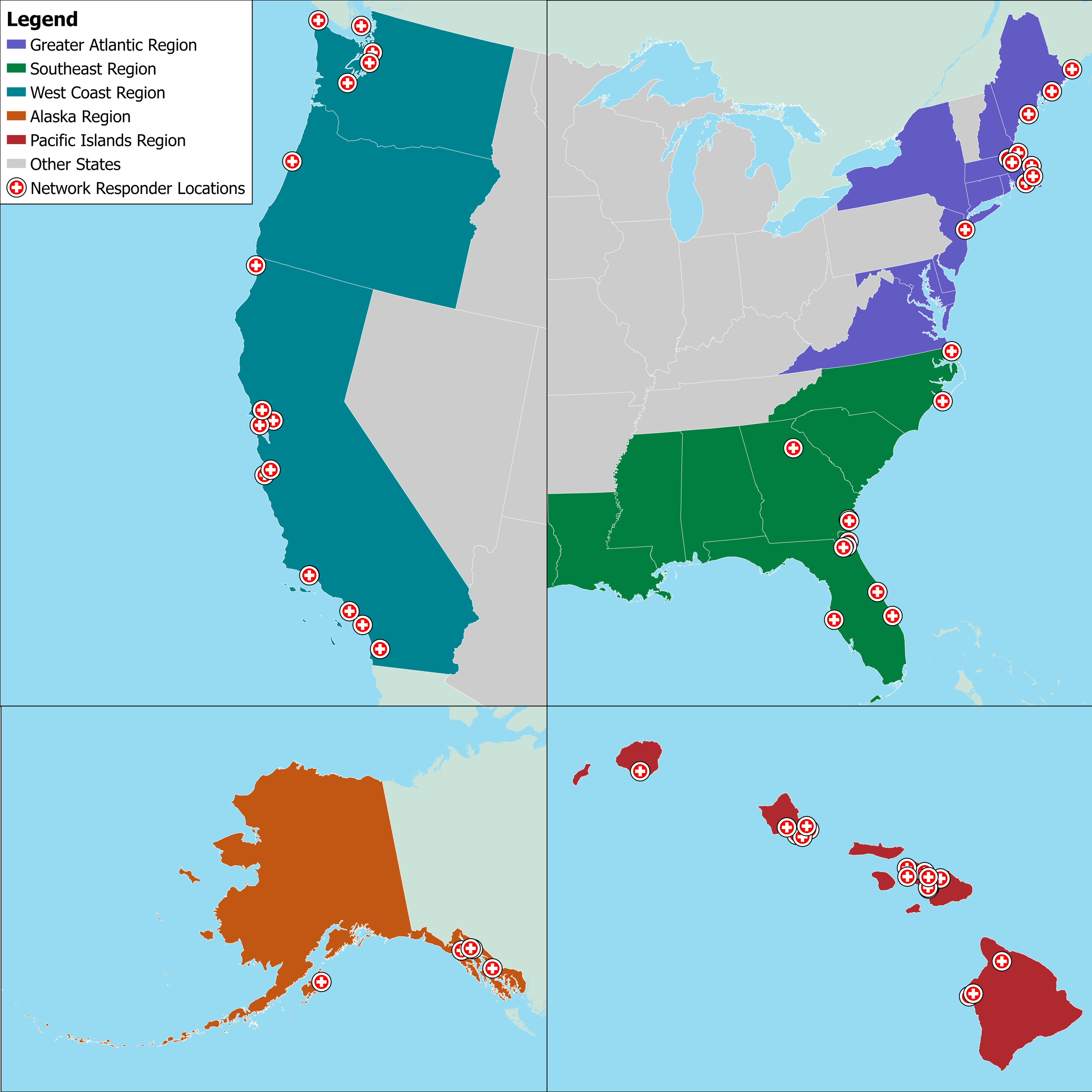
“How does your team actually respond?”
Marie: In the U.S., rescues are coordinated by NOAA Fisheries through the National Large Whale Entanglement Response Network. The network includes experts from non-profits, universities, government agencies, and industry partners. Everyone undergoes extensive training and operates under federal permits before they’re allowed to approach an entangled whale.
“What tools do you use to free a whale?”
Marie: We use specialized techniques developed over decades. One is called “kegging,” where large floats are attached to entangling gear to add buoyancy and drag. That helps keep the whale closer to the surface so we can monitor it safely and make more informed cuts.
We also use hooked knives mounted on long poles, allowing us to cut lines while keeping a safe distance from the animal. Some rescues take multiple attempts over days or weeks, and we may attach satellite transmitters to track the whale if it moves out of sight.
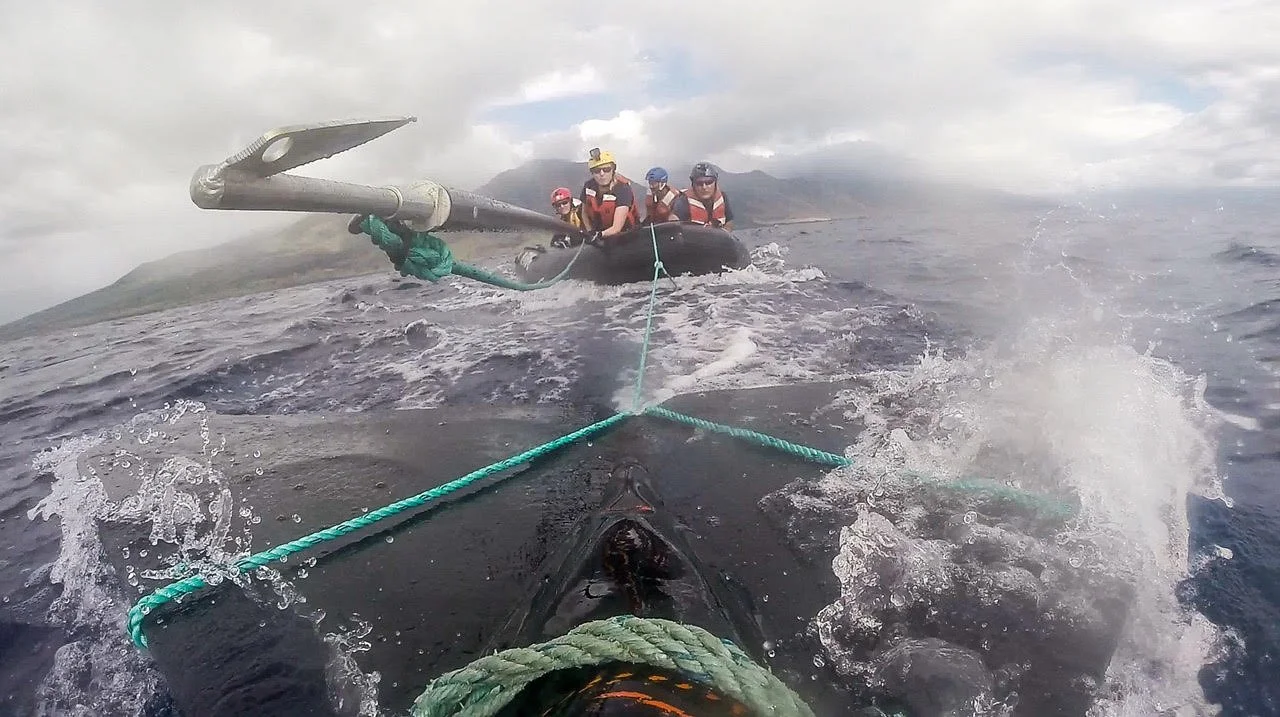
Specialized cutting device for removing ropes from an entangled whale.
“Why does rescuing one whale matter so much?”
Marie: Every rescue helps the bigger conservation picture. Some species, like the North Atlantic right whale, are critically endangered. For populations that small, saving even one individual — especially a breeding female — can help the species recover.
Each disentanglement also gives us valuable data. We analyze removed gear to identify where it came from and what fishing practices may be contributing to entanglements. That helps scientists and fisheries work together to reduce risks in the future.
“Can volunteers help with this work?”
Marie: Absolutely — but it’s important to understand the limits. Direct disentanglement is extremely dangerous and restricted to trained, authorized responders within the Marine Mammal Health and Stranding Response Program. Untrained people should never approach or attempt to free a whale; it’s both unsafe and illegal.
That said, volunteers play an essential role. The most important thing anyone can do is report sightings of entangled whales quickly. Volunteers also assist with photographing and documenting animals, helping with data collection, education, logistics, and outreach.
Many organizations offer introductory training, including free web-based courses that teach safe reporting procedures and explain how the network works. Groups like the Center of Coastal Research in Princeton, MA, Cascadia Research in Olympia, WA, and the Marine Life Studies, based in Moss Landing, California, all specialize in whale research and entanglement response. These nonprofit organizations are dedicated to whale conservation, research, and education. They provide ways for people to contribute responsibly.
Why Is This Work Especially Important in Hawaiʻi
Maui is far more than a spectacular place to watch whales — it is one of the most important nursery grounds for North Pacific humpbacks. Each winter, thousands of whales migrate to the warm, shallow waters of the Maui Nui Basin to mate, give birth, and raise their calves. Protecting whales here helps sustain the health of the entire North Pacific population, because every animal that survives has the chance to continue that life cycle for generations to come.
As Marie explained while looking out over the water, these islands become alive with whale activity during the season. Mothers guide newborn calves through their first fragile weeks, males compete for mates, and breaching whales punctuate the horizon. Although humpback populations have rebounded since the era of commercial whaling, recovery remains fragile — and every individual whale still matters.
Disentanglement work is about more than rescuing a single animal. Each operation provides critical data that helps scientists better understand the causes of entanglement and, more importantly, how to prevent them. Responders recognize that not every entangled whale can be found or freed. The larger goal is to reduce entanglements altogether while supporting sustainable fishing practices — creating solutions that protect both marine life and coastal communities.
For those who do this demanding work, the reward is rarely immediate. Whales do not offer thanks. Instead, the real gratitude comes later: seeing a whale return the following year, healthy and traveling with a calf. That quiet moment is proof that the effort matters.
Behind every breaching whale is an unseen network of scientists, responders, and volunteers working together to confront one of the ocean’s most urgent conservation challenges — one rescue, one data point, and one hopeful return at a time.
If you are fortunate enough to travel to Maui, I encourage you to visit the Hawaiian Islands Humpback Whale National Marine Sanctuary at Kalepolepo Beach Park, 726 S Kihei Rd, Kihei, HI 96753. The humpback season is January through March, with February being the best month.
