
World Whale Day, February 15th
Why Whales Need Our Protection: Reflections for World Whale Day
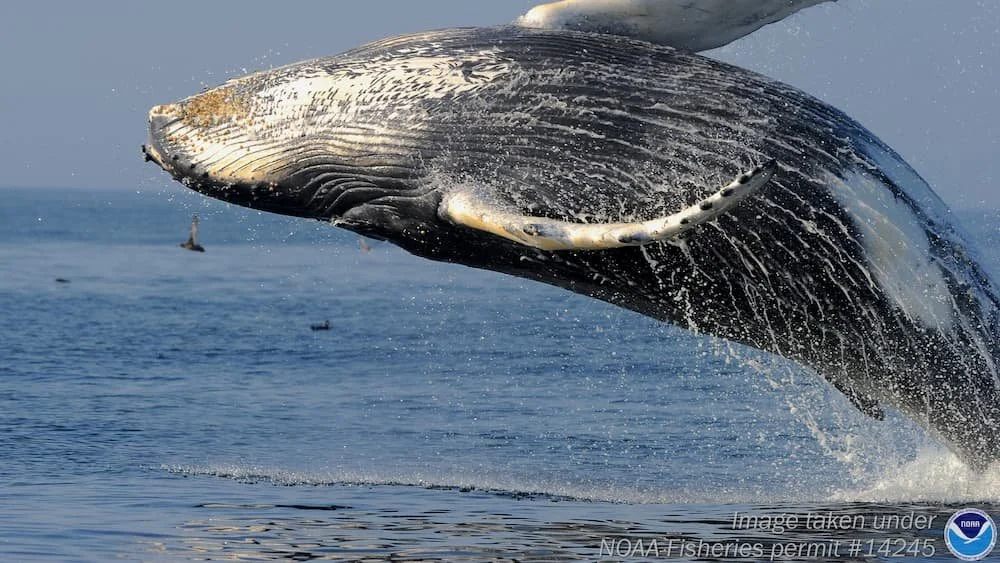
Humpback whales breach primarily to communicate over long distances, using the massive splash to send acoustic signals to other whales, especially when background ocean noise is high. This high-energy behavior also helps dislodge parasites, serves as a social display of dominance or courtship, and may be used for play. Credit: NOAA
Every February, ocean lovers around the world celebrate World Whale Day, a global reminder of whales’ beauty, intelligence, and ecological importance. Founded in Hawaiʻi to honor migrating humpback whales, the day has grown into an international movement that celebrates all whale species and raises awareness of the challenges they face in today’s oceans. More than a celebration, World Whale Day invites us to pause, learn, and consider how our actions shape the future of marine life.
Whales are among the most awe-inspiring animals on Earth. Some species, known as baleen whales, filter tiny krill and plankton from the water, while toothed whales hunt fish and squid with remarkable precision. Scientists have discovered that whales can pass behaviors and songs between generations, suggesting a form of culture rarely seen outside humans and a handful of other animals. They are also vital to ocean health: through feeding and migration, whales help circulate nutrients that support marine ecosystems and contribute to natural carbon storage, linking their survival directly to global climate stability.
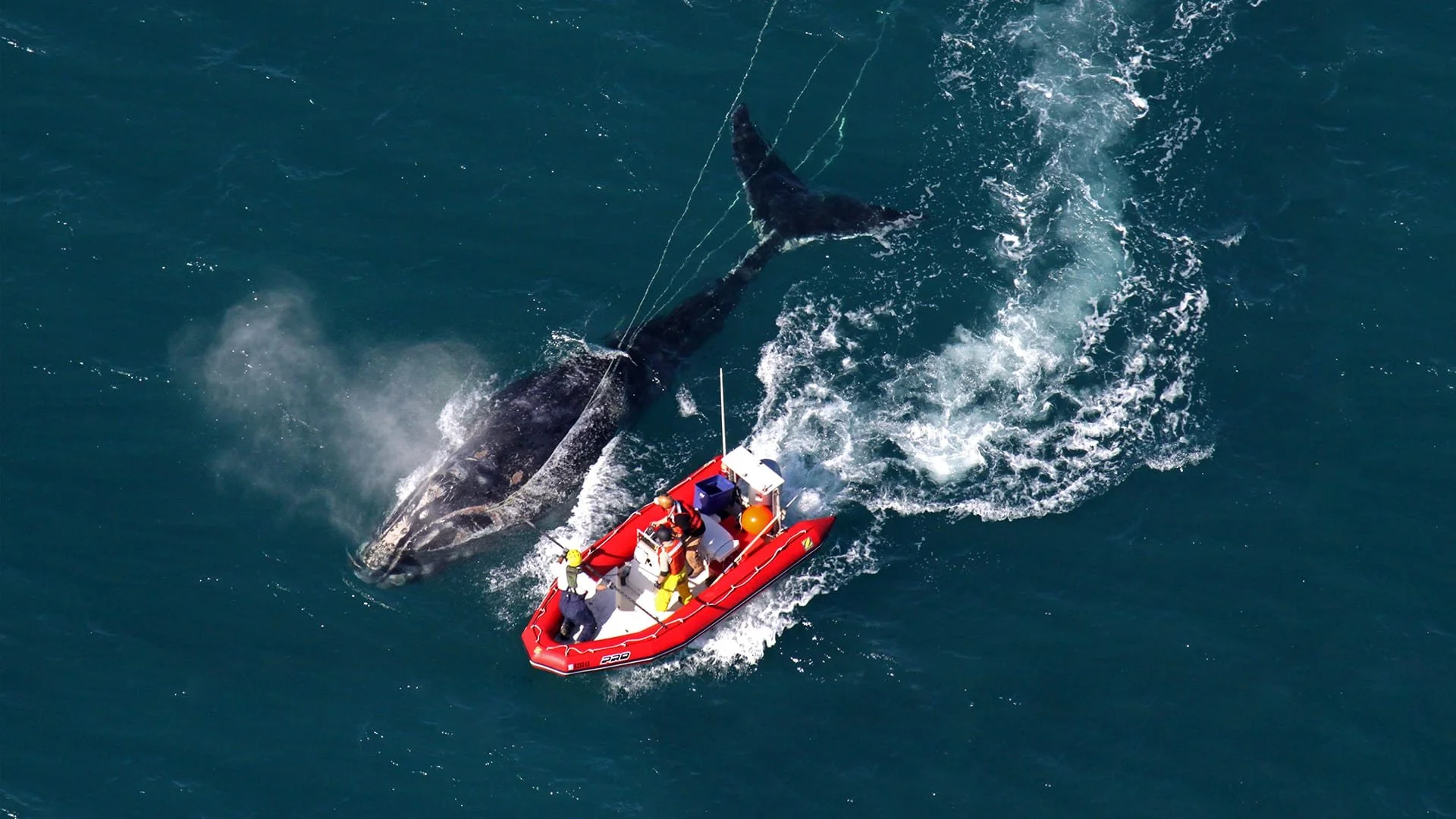
A disentanglement team attempts to free a right whale from fishing gear. EcoHealth Alliance, NOAA Permit #932-1905.
Although commercial whaling once posed the greatest threat — killing millions of whales before international protections were introduced in the 1980s — modern dangers are often less visible but equally serious. Entanglement in discarded fishing gear remains a major concern; ropes and nets can wrap around whales, causing injuries, exhaustion, and, in some cases, drowning. Pollution is another growing threat, as plastics and microplastics accumulate in the oceans and enter marine food chains, with long-term health impacts that are only beginning to be understood. Ship strikes also pose increasing risks as shipping traffic expands, with many collisions going unnoticed by large vessels.
These threats are largely human-driven, which means solutions are within our reach. Supporting responsible and ethical whale-watching practices, choosing seafood from sustainable sources, reducing plastic use, and advocating for stronger marine protections can all make a meaningful difference. Whale Heritage Sites and similar conservation initiatives demonstrate how tourism and protection can work together, enabling people to experience whales in ways that respect their natural behavior and habitat.
World Whale Day reminds us that protecting whales is not only about saving iconic species — it is about preserving the health of the oceans themselves. Whales are indicators of ocean health and symbols of the interconnectedness of life on Earth. By protecting them, we protect entire ecosystems and help ensure that future generations will continue to experience the wonder of these ocean giants in the wild.
In the end, whales do not need our admiration alone — they need our action. The choices we make on land and at sea will determine whether these magnificent creatures continue to sing across the oceans for centuries.
The recovery of whale populations is mixed: many large species are recovering from 20th-century whaling, yet 26% of cetacean species are threatened with extinction, with about 340 North Atlantic right whales remaining. Major threats have shifted from hunting to vessel strikes, entanglement in fishing gear, and habitat degradation.
Key Status Updates
Recovering Species: Humpback, Bowhead, and some gray whale populations are showing signs of recovery and are listed as "Least Concern" in some areas.
Critically Endangered: The North Atlantic right whale is near extinction, with fewer than 70 reproductive females. Other critically endangered species include the Vaquita and Rice's whale.
Endangered: Blue whales are listed as endangered, with an estimated 15,000-25,000 worldwide.
Threats: The biggest dangers today are entanglement in fishing nets, ship strikes, pollution, and climate change.
Regional and Species Data
Blue Whales: Roughly 97% of the original population was destroyed by whaling, with Antarctic blue whales at less than 1% of pre-exploitation levels.
Sperm Whales: Populations have recovered to more than 844,000 by 2022.
Gray Whales: The Eastern North Pacific population has recovered to around 20,000.
Small Cetaceans: Coastal and freshwater species, particularly in Southeast Asia, face the highest risk, with 100% of freshwater cetaceans threatened.
