
I Marched on the First Earth Day—And It Changed What I Believe Citizens Can Do
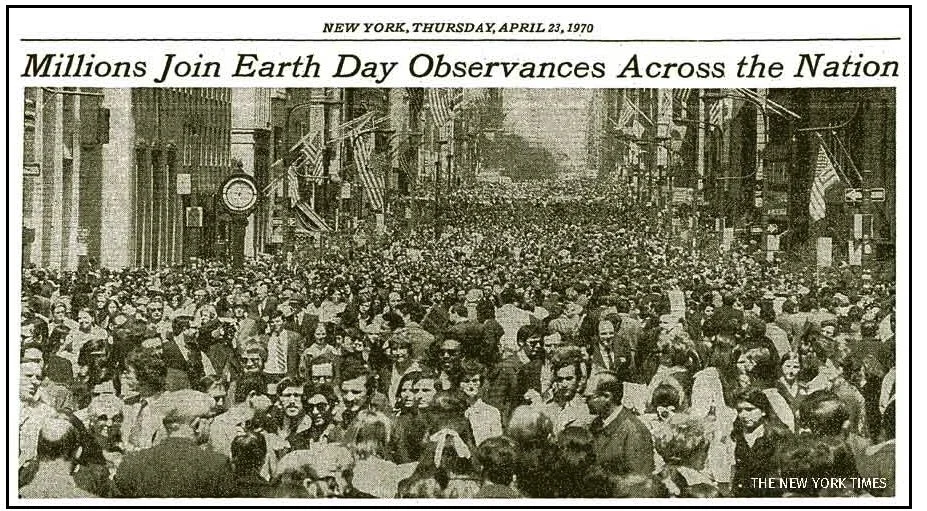
More than 100,000 people marched in New York City on the first Earth Day in 1970, the event’s largest U.S. gathering that year.
I still remember the feeling in the air on April 22, 1970. I was a high school student, standing among hundreds of others who had gathered because we believed something was wrong with the way we were treating the Earth. Rivers were polluted, cities choked with smog, wildlife was disappearing, and the images of oil-covered birds from the Santa Barbara spill were still fresh in our minds.
But that day was not about despair. It was about determination.
The late 1960s and early 1970s were a time of profound change and division in America. Civil rights protests, the anti-war movement, and the emerging women’s movement were reshaping the national conversation. Socially, there was a lively clash between the rising “counterculture” and more traditional values. Yet environmental protection cut across those divisions.
People from every background—students, teachers, scientists, fishermen, parents—came together in what became the first Earth Day. We marched, listened to speakers, and talked with strangers about clean air, clean water, and the responsibility we all share to protect the natural world. None of us knew exactly what would come of it. What we did know was that silence was no longer acceptable.
What followed proved the power of organized citizens. Within a few short years, the Environmental Protection Agency was created, and landmark laws like the Clean Air Act and Clean Water Act were passed. Those protections dramatically improved the air we breathe and the water we drink.
That experience taught me something I have never forgotten: grassroots action works.
Today, the mood in the country once again feels tense and uncertain. Political divisions run deep, public trust is strained, and debates over environmental policy are as fierce as ever. In many ways, it echoes the turbulence of the late 1960s—a time when Americans were questioning institutions, confronting injustice, and struggling over the direction of the country.
But there is another lesson from that earlier era.
Out of that turbulence came progress. Citizens organized, spoke out, and demanded that their leaders protect the health of people and the planet. The environmental protections that followed did not emerge from calm times—they emerged from public pressure and civic engagement.
We are again living through a moment when the future of our air, water, and climate is being debated. If history teaches anything, it is this: meaningful change rarely begins in quiet times. It begins when ordinary people decide that the future is worth standing up for.
I marched in 1970, believing that citizens working together could shape a better future.
Looking at our country today, I believe that just as strongly.
