Adapting to Change
LSU’s Study of Black Mangroves and Their Role in Louisiana’s Coastal Future
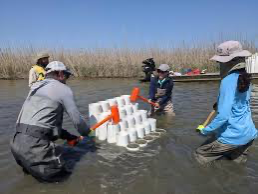
(Photo Credit: LSU CCE Media Center) Louisiana’s coastline is changing, and a new player is moving in—black mangroves. These salt-tolerant trees, once found mainly in Florida and Texas, are now spreading north due to rising temperatures. Unlike Louisiana’s traditional salt marshes, mangroves trap more carbon, grow deeper roots, and offer unique habitats for marine life. Scientists are studying how this shift affects local ecosystems, as well as how mangroves could be used to combat coastal erosion and strengthen flood protection. As climate change reshapes coastlines, Louisiana’s landscape is evolving, bringing both challenges and opportunities for conservation.