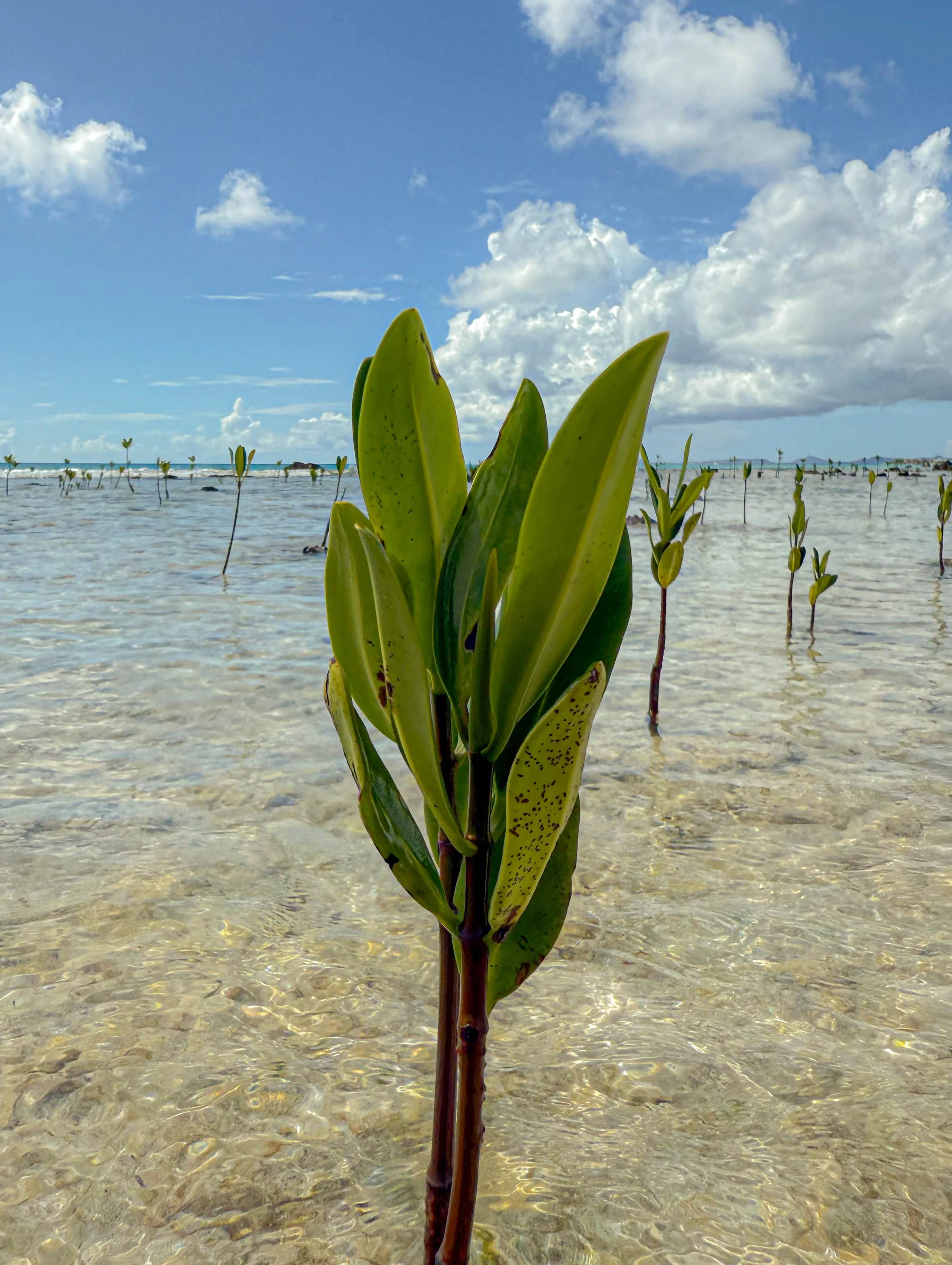
A Nursery Beneath the Roots
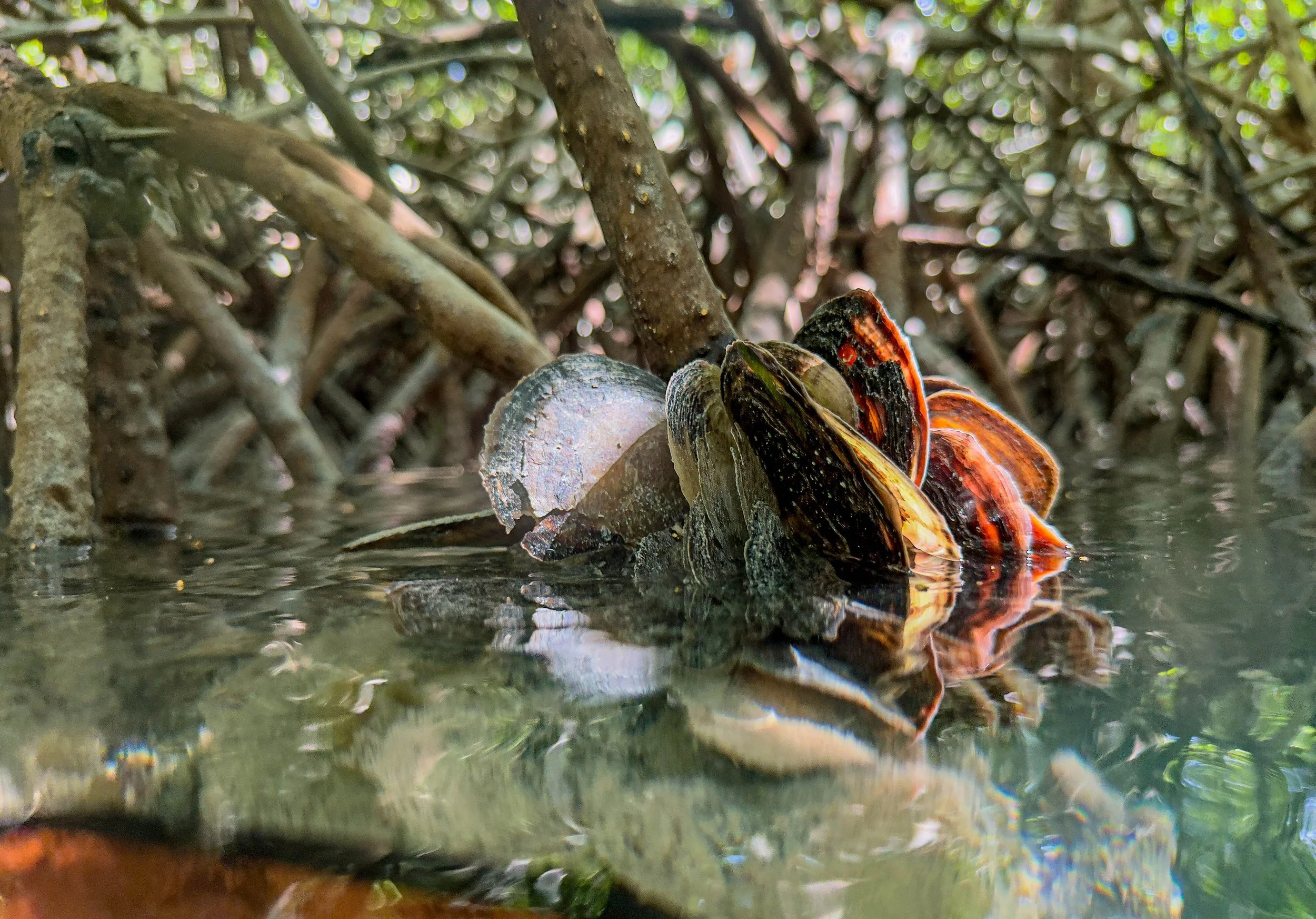
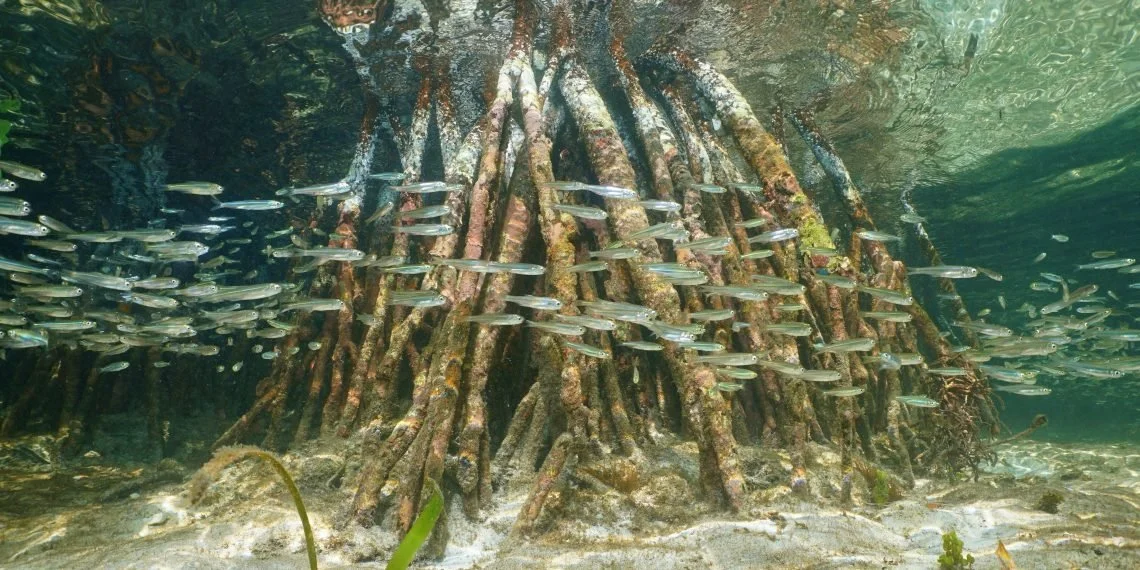
We slip on masks and dip below the surface. The underwater world teems with life — young fish dart among the roots, crabs scuttle across the mud, and flat-tree oysters cling like pearls to the trunks. “Up to 75% of tropical commercial fish and shrimp depend on mangroves during part of their life cycle,” Eric says as we watch juvenile snapper and small grouper weaving between the branches.
These forests feed the ocean. Their three-dimensional web provides shelter for the young and nourishment for coral reefs and seagrass meadows beyond. The connections are invisible but profound — one system feeding another, like veins in a living organism.
Water Keepers
As we paddle deeper, Eric asks us to trail our hands through the water. The sediment is thick and murky. Later, he asks us to do the same again — this time, the water runs clear. “That’s what mangroves do,” he says. “They filter life.”
Their roots slow the water, trapping sediments and pollutants, while microbes in their soils break down organic waste and neutralize toxins. Even oysters play a role — each one filtering up to 50 gallons of water a day, cleaning it for seagrasses and coral reefs downstream. In the mangroves, nothing goes to waste.
Feeding Communities, Sustaining Hope
On our return journey, we pass a local fisherman casting his line. Only Bonaire’s residents are allowed to fish here — part of the island’s effort to keep the ecosystem in balance.
“Mangroves are the backbone of coastal food security,” Eric explains. A 2024 IUCN report estimates that nearly 80% of global fish catches depend directly or indirectly on mangrove ecosystems. From barracuda and tarpon to snook and snapper, countless species begin their lives here before venturing into the open sea. For millions of people across the tropics, mangroves are not just forests — they are sustenance, income, and protection.
The Future in Our Hands
As we return to shore, the morning light glows through the canopy — a reminder that these ecosystems are still alive, still resilient, and still waiting for us to act.
Elly Albers calls mangroves “the protectors of blue carbon.” But perhaps they are also protectors of something deeper — our connection to the natural world, and to each other. Restoring them is not simply about carbon or coastlines; it’s about justice, community, and care.
We already know what to do. The question now is whether we’ll do it — together.